The Public Service Commission (PSC) has expressed disagreement with several provisions in the Federal Civil Service Bill prepared by the government, including proposed rules on mandatory retirement and pensions.
A source said that the commission returned the bill, sent by the Cabinet seeking its opinion, on Thursday with differing views.
The Cabinet had sent the bill to the PSC two weeks earlier. According to sources, the commission has raised questions over the proposal to retire employees compulsorily after 30 years of service or upon reaching the age of 55. The PSC has also offered differing views on the tenure of secretaries and pension provisions.
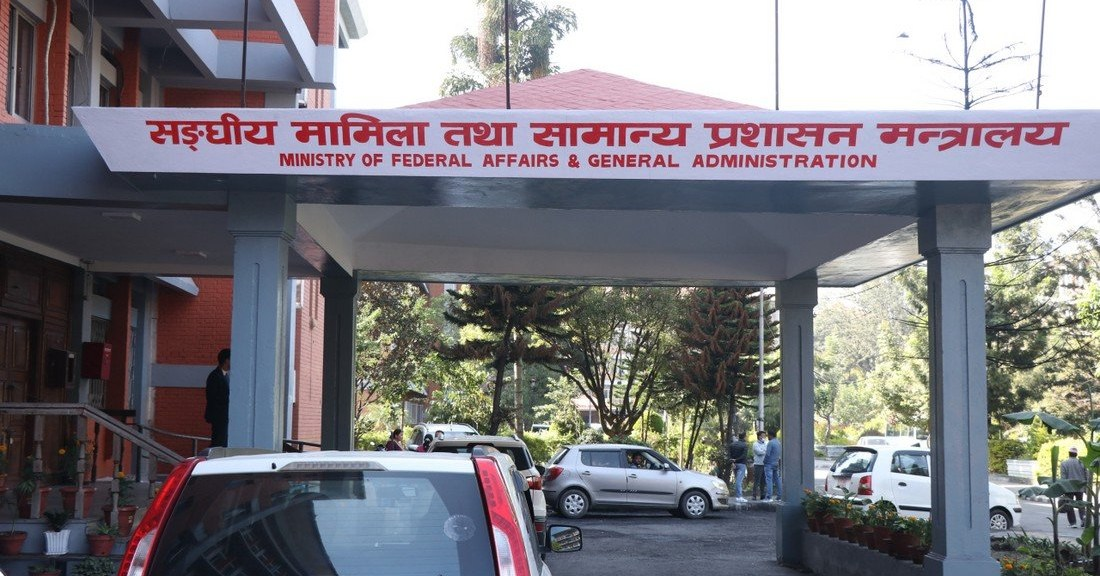
According to sources at the PSC, the Ministry of Law, and the Ministry of Federal Affairs and General Administration, the bill proposes mandatory retirement for civil servants after either 30 years of service or reaching the age of 55, as a one-time provision. It also proposes limiting the tenure of secretaries to three years.
The PSC, however, has said that setting the retirement threshold at 30 years of service or age 55 would create discrimination among civil servants.
The commission believes the retirement age should be the same for all employees. It has said that there is no clear and justifiable basis for introducing a different arrangement as currently proposed.
“The retirement age should be the same for all civil servants. A different arrangement based on 30 years of service or age 55 creates discrimination among employees,” the commission says in its opinion.
The PSC has also said that although the government may be given authority under the law to shorten or extend secretaries’ tenure, benefits must be protected for employees who were appointed under the previous terms and conditions of service.
“If the tenure of employees appointed with a five-year term under the previous terms and conditions of service is shortened, compensation or benefits for the resulting impact must be ensured,” the commission said.
Similarly, the PSC has said that pension calculations for employees recruited in the past should be based on the terms and conditions that applied when they entered government service.
If the bill is implemented in its current form, many serving secretaries would leave the civil service at the same time. The bill proposes mandatory retirement for employees who have reached 55 years of age or completed 30 years of service.
According to records from the Ministry of Federal Affairs and General Administration, there are currently 59 secretaries. Of them, 47 would be forced to retire under the proposed age and service thresholds. Secretaries at most ministries, including Finance, Home Affairs, Foreign Affairs and Law, would be affected.
The proposed provision on secretaries’ tenure would add to the impact. The three-year tenure provision could result in additional secretaries leaving the service.
If all three provisions were implemented simultaneously, around 90 percent of currently serving secretaries would leave the civil service. The impact would extend beyond secretaries to joint-secretary and under-secretary levels as well.
Of the 333 joint secretaries in the administration service, 241 would face retirement, according to a government source. Among 183 under secretaries in the revenue administration service, 34 would also be affected.
The bill also proposes new pension provisions. Under Section 62 of the bill, employees who have completed 20 years or more of service would be eligible for a pension. However, the proposed pension calculation would cap the service period at 30 years. The proposed formula would multiply the final salary by the number of years of service, capped at 30, and divide the result by 50.
This means that additional years of service beyond 30 would not be counted toward an employee’s pension.
The existing Civil Service Act, 1992, does not impose such a maximum limit. Under the current system, all 40 years of service, for example, would be counted when calculating the pension of an employee who has served for 40 years.
The provision has also become contentious for employees who entered government service before 2018. The PSC has said that their benefits should remain protected under the terms and conditions that applied when they joined the service.
For employees who entered government service after 2018, a gratuity system in place of a pension has already been introduced.
According to sources, the latest draft prepared by the government contains several changes from the initial proposal. The original draft had proposed a two-year tenure for secretaries, with the possibility of extending it by one year. It had also proposed gradually increasing the retirement age from 58 to 59 and then to 60 as a transitional arrangement.
The initial proposal had also called for continuing the existing pension provisions. Sources said that provisions concerning secretaries’ tenure, the retirement age, and pensions were subsequently changed.
Civil servants are meanwhile concerned that the bill could be introduced through an ordinance rather than being subjected to clause-by-clause discussion in Parliament.
Resignations by civil servants have increased in recent months. A total of 418 employees resigned in the months of Ashadh, Shrawan and Bhadra (June 15 to September 16) alone. The trend has continued to increase since the beginning of Ashwin.