It was exactly 2 o’clock in the afternoon.
At the apartment complex in Ichangu, Nagarjun Municipality-1, a security guard blew a whistle.
At the sound of the whistle, children, the elderly, and other residents slowly began to emerge from their rooms.
Some carried steel plates in their hands, while others held cups. Some came guiding small children.
Two staff members of the Manavsewa Ashram and a middle-aged woman stood in front of the gate. Black tea and puffed rice were placed before them.
One by one, the arriving individuals took tea and puffed rice. Some stood there and ate. Others carried their plates and cups back to their rooms.
For the people living in the Ichangu apartments, this is not a scene reserved for a special day. This is their daily routine.
Whether it is breakfast in the morning or dinner in the evening, the daily lives of 43 families revolve around the sound of the whistle.
There was a time when their routines revolved around the stove at home, the rush to go to work, their children’s school, and returning home in the evening. Now, their days are dictated by the sound of a whistle.
They have no alternative. They have neither a home nor their own kitchen. Many do not have regular work either.
And, most importantly, they do not know where they will go next.
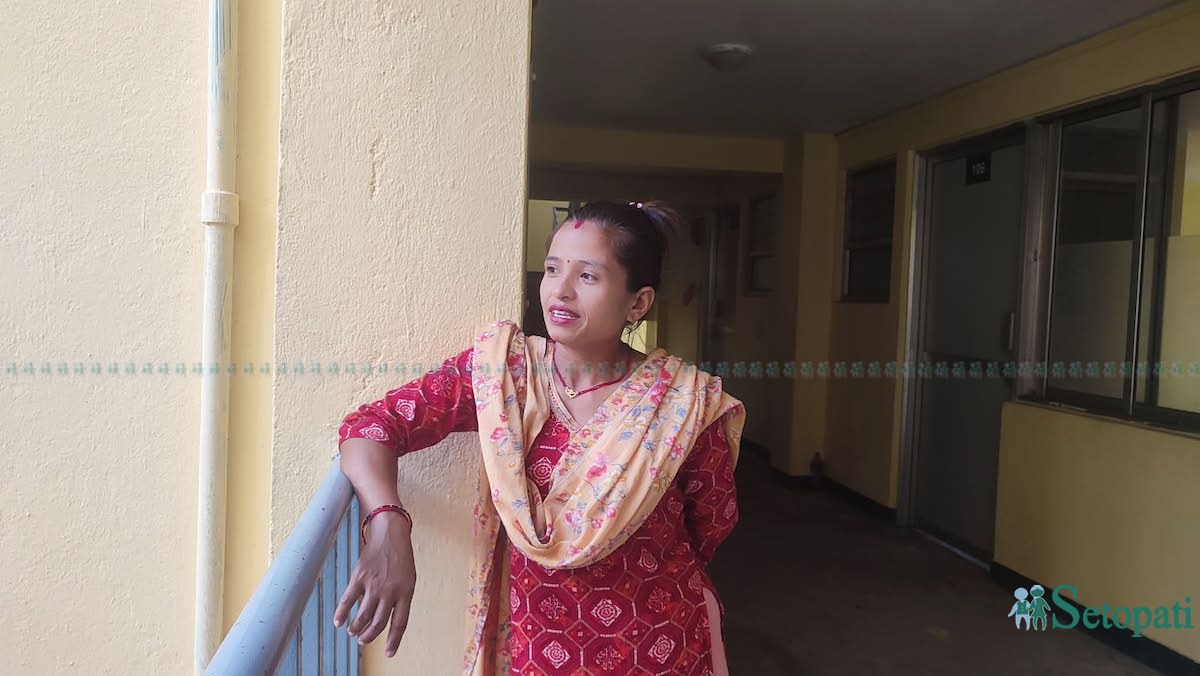
Twenty-seven-year-old Apsara Malik lives in the apartment with her three daughters. Her daughters, aged three, seven and eight, attend Bal Bikash Secondary School in the same ward. Malik, meanwhile, spends her days walking around the area looking for work.
"Maybe because this isn't such a big city, jobs are hardly available," she said. "I don't have the bus fare to go far. My husband works and stays around Balkhu. He visits occasionally. Commuting every day costs too much in fare."
Malik arrived in Ichangu with her three daughters after the government used bulldozers to clear settlements along the Manohara riverbank on April 25. She has been living here for nearly five months.
She now has a room of her own, but she does not know how long she will be allowed to stay. Nor does she know how she will secure the future of her three young daughters.
Among those displaced from riverbank settlements and housed in various holding centers, 43 families comprising 102 people are currently staying at the Ichangu apartment. They include 17 children, eight elderly people, and five people with physical disabilities.
Some have been living here from the beginning, while others arrived after staying at the Kharipati holding center.
For these families, the biggest question now is what the future holds for themselves and their children.
Where will they live? How will they eat? How will they find work? How will their children continue their education? These questions trouble them every day.
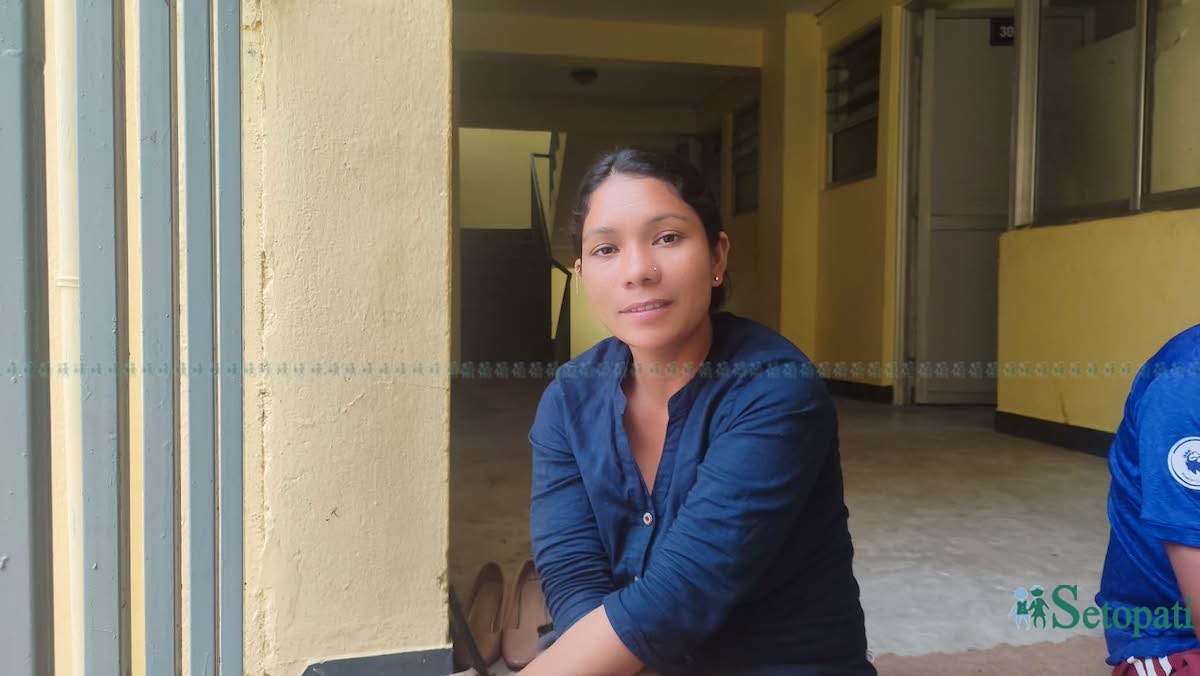 Shanti Pariyar
'Not just the home, the foundation of our life was also shattered'
Ghana Bahadur Khatri, whose ancestral home is in Okhaldhunga, spent a large part of his life in Kathmandu. Born in 1947, he had been living in Shantinagar for 32 years.
He worked there as a laborer, supported his family, and built a place to live. But when he reached old age, that home was gone.
After a bulldozer demolished his house, he ended up at the Ichangu holding center with his wife and daughter.
"Why did they run dozers on our homes without notice when they couldn't provide a permanent place to live?" he said. "It would have been better if they had arranged a permanent roof over our heads before uprooting our shelter."
Khatri’s grievance is not limited to the demolition of his house. He is also frustrated by the lack of clarity over where and how they will be housed afterward.
He does not want a big house or extensive facilities. He says it would be enough to have a safe place to live and arrangements for regular meals.
The story of 73-year-old Ram Bahadur Ghimire is similar.
After his riverside home was demolished, the belongings he accumulated through years of earnings have been left stranded in Thankot.
Starting life over in a new place at an advanced age is not easy for him.
“Our home was demolished by a bulldozer and we were left stranded here,” he said. “But no one comes to ask how we are doing.”
After pausing for a moment, he added: "It would be good if they provide a roof, employment for those who can work, and rations for those who cannot."
That is what Ghimire’s needs now: those who can work should be able to earn a living, while elderly people who cannot work should receive regular meals and basic support.
According to him, everyone living in the holding center cannot be treated the same way. There are elderly people, children, and people with physical disabilities. Their health and dietary needs are also different.
“Right now, we get two meals a day and tea and puffed rice in the afternoon. But feeding people just to keep them alive is not enough,” he said.
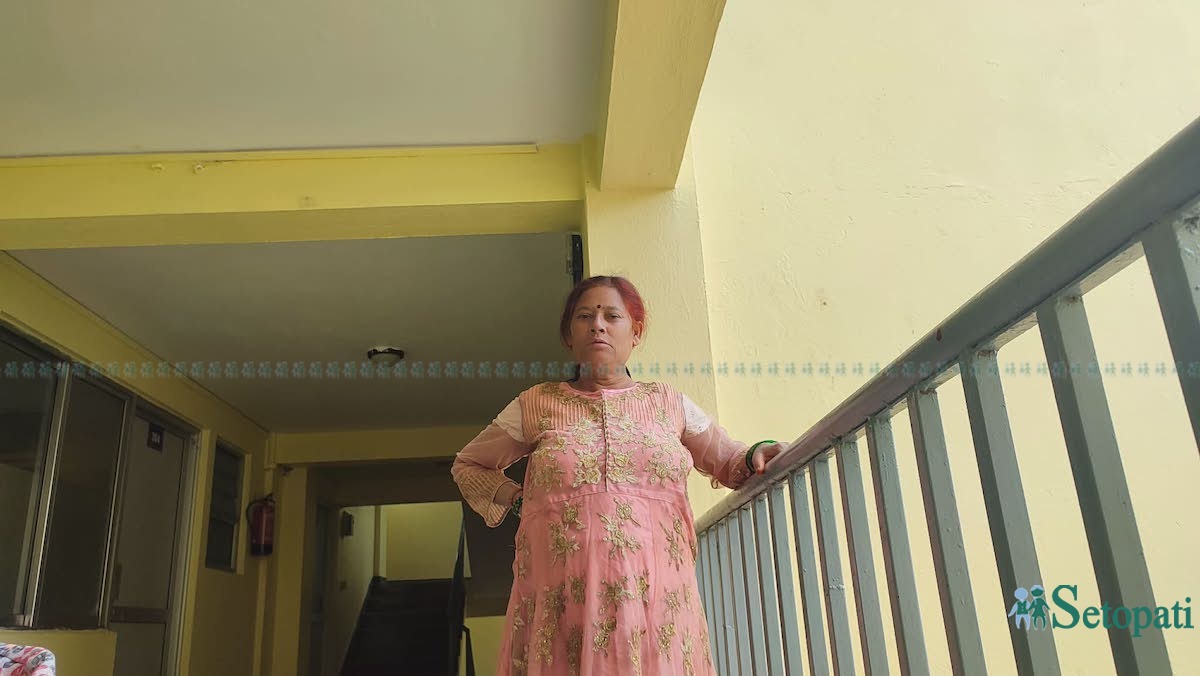 Anju Pariyar
'Even if we go back home, where do we stay?'
For 50-year-old Anju Pariyar, who lived in Manohara for 22 years, life today is completely different from what it used to be.
A single woman who had supported herself through work, Pariyar was forced into temporary accommodation after the settlement was cleared. She says she has also been deprived of some government benefits because she does not have a citizenship document.
According to the displaced families, the demolition of their homes also affected the foundation of their livelihoods.
Many families living along the riverbanks depended on daily wage labor and small jobs. When the settlements were cleared, they lost not only their homes but also their workplaces and their old routines. That is why their demands go beyond relief assistance.
“We don’t want charity,” they say. “Give us a roof over our heads in return for the land taken from us by operating bulldozers. Give jobs to those who can work. Arrange rations for the elderly and disabled people who cannot work.”
Although relief provided by the government or relevant agencies has helped meet some immediate needs, the families say it is not enough for everyone.
Especially for the elderly, individuals with diabetes and high blood pressure, and young children, the food provided by the ashram is not suitable, they note.
For them, food is not merely a matter of getting one meal. Medication for sick people, children’s needs, elderly care, and the daily costs of living are all connected to it. That is why they are asking for resettlement, rather than relief alone.
Sixty-year-old Purna Tamang wanted to receive the Rs 25,000 the government had said it would provide for self-managed resettlement. But his citizenship certificate was buried along with his house when the Manohara settlement was demolished. As a result, he could not immediately receive the financial assistance.
A few months ago, he traveled to his home district of Sindhupalchowk and obtained a copy of his citizenship certificate. However, he still has not received the financial assistance.
“A notice was published saying we should go to the place where our citizenship was issued. But even those who go there are being sent back by the ward office,” he said. “We don’t know where the government publishes such notices.”
His demand, too, is simple: a roof to live under and regular assistance to put food on the table.
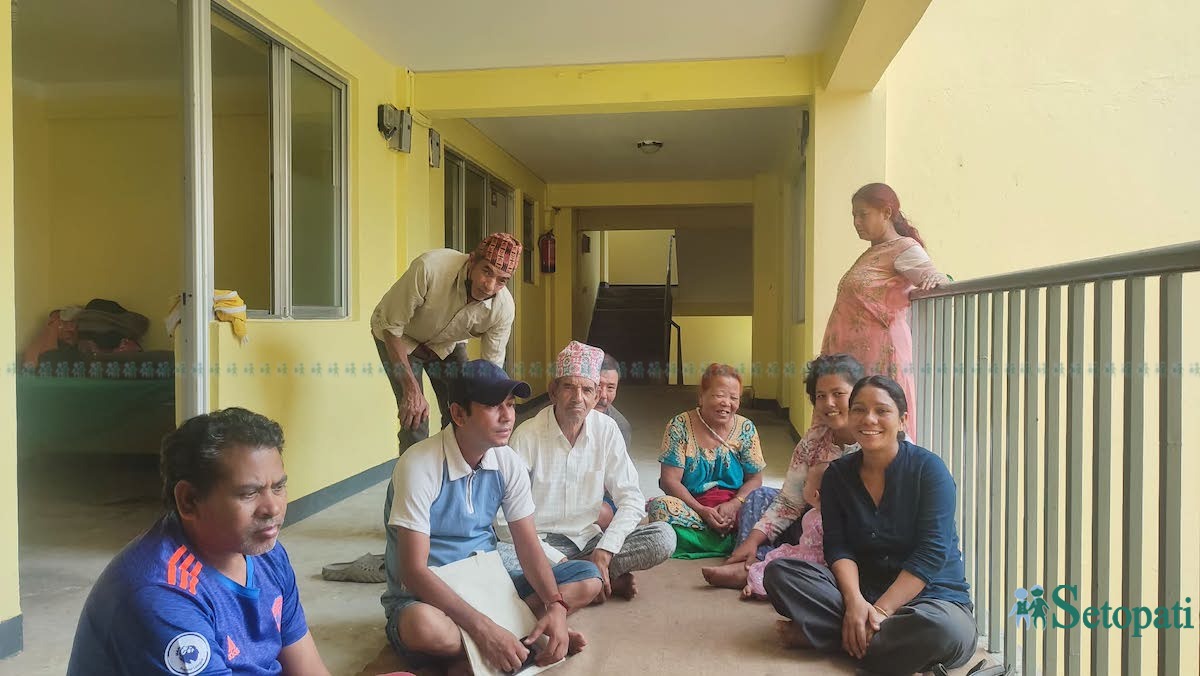
Children ask: ‘Where do we go next?’
The future of the 17 children living in the holding center is also tied to this uncertainty.
They do not understand why their settlement was demolished, why the bulldozers arrived, or what the resettlement plan is. They only know that their former homes are gone and it is not certain where their next home will be.
For Shanti Pariyar, who sits holding two children, the biggest concern is how their education will continue after their temporary accommodation ends.
“We are living here for now and sending them to school here. If we are moved somewhere else tomorrow, we will have to send them to another school again,” Pariyar said. "Whatever happens now, it would be good if they provided permanent housing and work."
This is a view shared by all 43 families living in Ichangu because for families who have lost their homes, resettlement means more than simply providing a room. It also means restoring the means to rebuild their lives.
For that, those who can work need employment. Elderly and disabled people who cannot work need regular support. And children need an environment where they can continue their education without disruption.
Just as Ram Bahadur Ghimire put it: "It would be good if they provide a roof, employment for those who can work, and rations for those who can't."