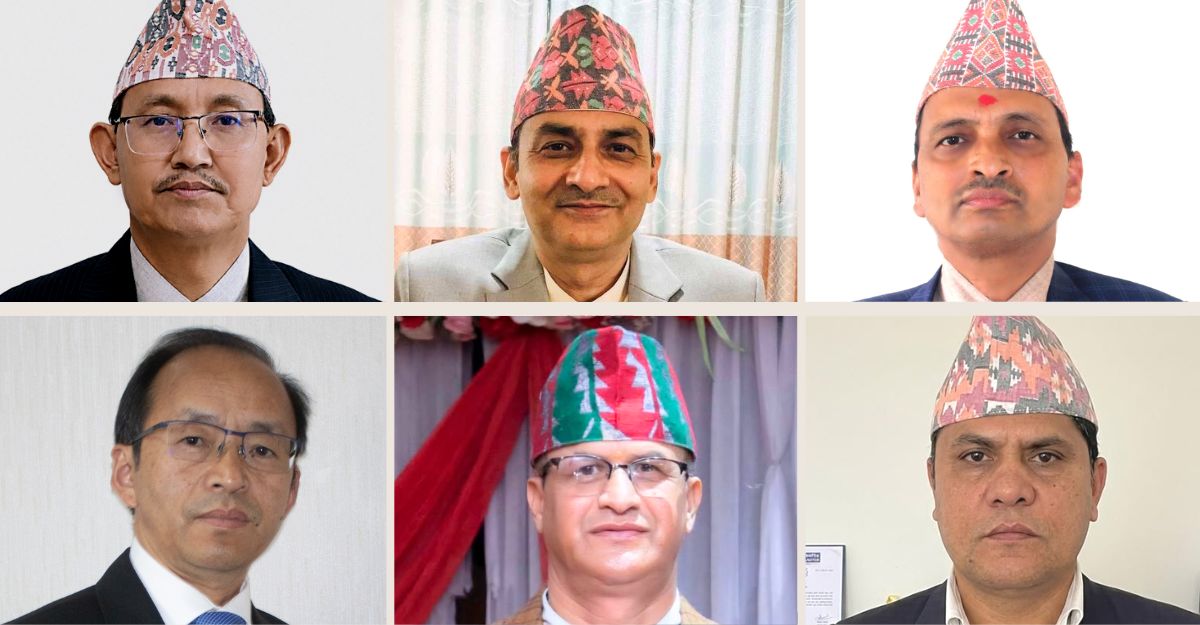
If the proposed Federal Civil Service Bill is implemented as it is, most government secretaries with years of administrative leadership, experience, and subject-matter expertise are likely to exit the service all at once.
The bill proposes mandatory retirement for civil servants who have reached the age of 55 or completed 30 years of service. It also proposes limiting the tenure of secretaries to three years.
According to records at the Ministry of General Administration, there are currently 59 secretaries, of whom 47 would have to leave the service because of the proposed 55-year age limit and 30-year service requirement. Secretaries at most ministries, including the Ministry of Finance, Ministry of Foreign Affairs, and Ministry of Law, would be affected.
In addition, another five or six secretaries could retire because of the proposed three-year tenure limit.
Overall, nearly 90 percent of the currently serving secretaries could leave the civil service under the three proposed provisions for mandatory retirement.
The provisions would also affect many joint secretaries and some under secretaries.
Of the 333 joint secretaries in the administrative service, 241 would reportedly retire, according to a government source.
The bill would also affect the revenue administration. Of its 183 under secretaries, 34 would reportedly retire.
Experienced officials from home, law, and foreign ministries to retire
Many of the secretaries who would leave the service if the bill is passed have extensive experience in important administrative and specialized areas and are regarded as brilliant civil servants. Chief Secretary of the Nepal government, Govinda Bahadur Karki, would also lose his job.
Karki began his administrative career in local development and later handled responsibilities related to foreign trade and industry at the Ministry of Industry and Commerce. He also has experience serving as a consul in China.
Law Secretary Parashwar Dhungana is an administrator with extensive experience in drafting legislation. He has worked at the Law Commission, Ministry of Finance, Office of the Prime Minister and Council of Ministers, and Ministry of Law, where he was involved in drafting laws, regulations, and ordinances. He would also leave the civil service under the proposed provisions.
Another secretary to retire would be Home Secretary Kedar Nath Sharma, who is regarded as having extensive experience in home administration, peace and security, and district administration.
Revenue administration expert Shobha Kanta Paudel, who recently served as chief secretary of Madhesh province, would also be required to retire. He has worked in economic and revenue administration, government auditing, and general administration.
Foreign Secretary Amrit Rai has served as Nepal’s permanent representative to the United Nations and as Nepal’s ambassador to South Africa, among other positions. Rai, who is regarded as an experienced diplomat, would also be affected by the bill.
Similarly, Health Secretary Dr Bikash Devkota is a specialist administrator who has worked in the health sector since becoming a joint secretary. He would also be among those required to retire.
Thus, secretaries with long experience in drafting legislation, home administration, finance and revenue, health, trade diplomacy, and foreign affairs would leave the service at the same time.
In addition, joint secretaries who have gained experience in their respective fields and risen to senior positions in the civil service would have to leave just as they reach a point where they can make greater use of their expertise.
Some civil servants have expressed concern that the simultaneous departure of many experienced senior officials could create shortages of institutional experience and specialized expertise within the bureaucracy.
“If all three provisions are implemented at once, only a few secretaries would remain in their positions for a short period as exceptions. Otherwise, most secretaries would face mandatory retirement,” an official at the Ministry of Land Management, Cooperatives, Federal Affairs, and General Administration said.
Retirement at 55 and after 30 years of service
The proposed bill introduces the 55-year age limit as a one-time provision that would result in the retirement of such a large number of secretaries.
Clause 57 of the bill provides that civil servants would normally retire upon reaching 60 years of age. The current age limit is 58. However, as a transitional provision, the bill proposes that employees who have already reached the age of 55 when the law comes into force would also retire.
Once the one-time 55-year age limit is applied, the regular retirement age would remain 60.
The bill also proposes mandatory retirement after a civil servant completes 30 years of service. This provision would apply to all employees serving when the law comes into effect.
These two provisions alone would result in the retirement of a large number of currently serving employees at the same time.
Some secretaries who do not qualify for retirement based on age or years of service would nevertheless be affected by the proposed tenure provision.
Clause 24 of the bill proposes a two-year tenure for the chief secretary and a three-year tenure for secretaries.
This would also affect officials who entered the civil service early or were promoted to secretary relatively quickly.
Some officials promoted to secretary before October 2023 would reportedly reach the end of their service before completing the proposed three-year tenure.
Pensions could also be reduced for those with more than 30 years of service
The bill proposes new provisions concerning pensions alongside retirement.
Under Clause 62, civil servants who have completed 20 or more years of service would be entitled to a pension upon retirement. They would also remain eligible for a pension if they resign or are removed from office without being deemed ineligible for future government service.
However, the proposed pension formula sets a maximum of 30 years for calculating the length of service.
Under the proposed formula, total years of service would be capped at 30, multiplied by the employee’s final salary, and divided by 50.
This means that service beyond 30 years would not be counted when calculating the pension of employees who have worked for more than 30 years.
The Civil Service Act, 1992 currently in force does not impose such a 30-year limit for pension calculations. Therefore, if someone has served for 40 years, all 40 years are currently counted when calculating their pension.
Since the Civil Service Act, 1955, prepared during the tenure of then-prime minister Tanka Prasad Acharya, pension calculations have been based on total years of service and the final salary.
This is the first time a maximum 30-year service period has been proposed for pension calculations.
The bill has not yet been made public, so many provisions remain unknown to civil servants. The proposal to cap the service period for pension calculations at 30 years has been kept particularly confidential. A source said that the provision was not included when the ministry initially drafted the bill. It is unclear how it was added during the final stages.
A senior official said that news of the provision could cause a major stir in the civil service and that all employees with more than 30 years of service could consider resigning before the bill becomes law.
“They may resign now so that their entire period of service is counted toward their pension,” the official said.
The bill also sets minimum and maximum pension limits.
Under the proposed provision, the minimum pension would not be less than half the minimum salary of a serving civil servant in the same position. Allowances and incentive payments would not be included in this calculation.
Likewise, the maximum pension would not exceed the starting salary on the pay scale of a serving civil servant.
Provisions were not in the initial draft
The provisions currently being proposed differ from those in the initial draft of the bill.
Initially, the bill proposed a two-year tenure for secretaries, with the possibility of extending it by one year. The chief secretary’s tenure was also set at two years.
Regarding the retirement age, the initial draft proposed retiring employees who had reached 58 when the law came into force, followed by a 59-year age limit for the next year, and then a permanent 60-year limit.
For pensions, the initial draft proposed continuing the provisions currently in force.
However, the source said that the provisions concerning the tenure of secretaries, retirement age, and pensions were subsequently changed.
Bill sent to Public Service Commission for opinion
The proposed Federal Civil Service Bill, 2026, has now been sent to the Public Service Commission for its opinion.
The Ministry of Land Management, Cooperatives, Federal Affairs, and General Administration prepared the bill, which was sent to the Public Service Commission after going through the Ministry of Law, Justice and Parliamentary Affairs.
The government plans to move the bill forward after receiving the commission’s opinion.
Civil servants are also concerned that the bill could be introduced through an ordinance rather than undergoing clause-by-clause discussion in a parliamentary committee.
Officials say the proposed changes are already having an effect, including through employee resignations.
A total of 418 employees resigned during Ashadh, Shrawan, and Bhadra (June 15 to September 16) alone. Officials say the number of resignations has continued to increase since the beginning of Ashwin (September 17).