I am in my early fifties. Yet, in an important sense, I feel that I am beginning a new chapter of my academic life. I completed my PhD in global governance only a few years ago and now teach university students at Wilfrid Laurier University and Conrad Grebel University College at the University of Waterloo. Much of my current research concerns some of the newest transformations of our time—artificial intelligence, algorithmic hiring, digital technologies and emerging forms of remote work. I spend much of my working life reading, researching, teaching and, above all, learning. So when I recently encountered a Setopati headline (“Prime Minister Tells Gen Z MPs: Don’t Speak in Parliament Like MPs in Their 50s”), I found myself wondering about a deceptively simple question: What exactly does a person in their fifties sound like?
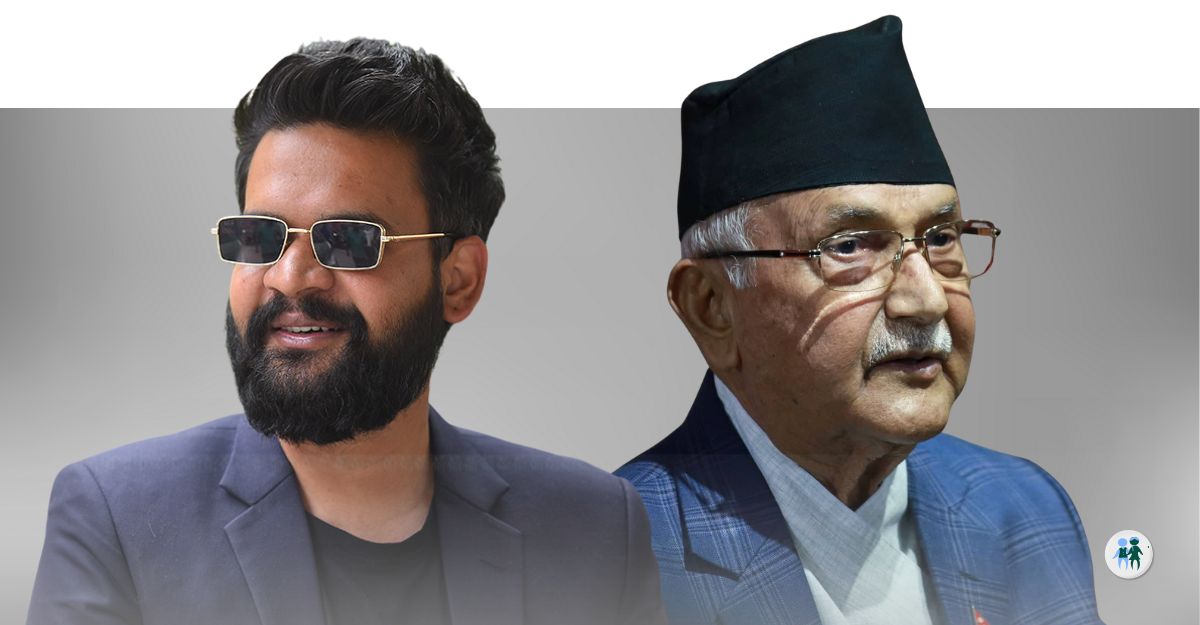
According to Setopati, Prime Minister Balendra Shah, during a meeting with Gen Z parliamentarians from the Rastriya Swatantra Party, encouraged them to bring the concerns of their generation and younger Nepalis into Parliament. He reportedly spoke about students, startups, employment, artificial intelligence and data. There is something important in that message. If Nepal’s generational political change merely replaces older faces with younger ones who reproduce the same ideas and political practices, little will have changed. But Setopati also reported MP Shraddha Kunwar as saying that the prime minister told them that what a Gen Z parliamentarian says should not be the same as what a 50-year-old parliamentarian says. Another participant, Manish Khanal, said Shah advised them not to speak like people in their sixties and seventies. If these accounts accurately convey what was said and intended, they raise a larger question: when did chronological age become shorthand for the intellectual quality or political imagination of a person’s ideas?
This question should not obscure the political circumstances that produced Nepal’s remarkable demand for generational change. Younger Nepalis had legitimate reasons to be frustrated with an established political leadership in which familiar personalities repeatedly returned to party leadership and government, while meaningful succession remained difficult. The Gen Z uprising itself emerged from grievances much deeper than a conflict between young and old: anger over corruption, nepotism, unemployment, poor governance, political impunity and an establishment many citizens regarded as increasingly unresponsive. The subsequent arrival of a much younger generation in political leadership is therefore significant. It represents the opening of a political system that had become resistant to renewal.
But this is precisely where we need to distinguish chronological aging from political aging. Nepal’s political establishment had certainly aged chronologically. But Nepal’s politics had also aged in another sense: leadership stopped circulating sufficiently, patronage networks hardened, and familiar political habits reproduced themselves across governments and election cycles. These are not the same phenomena. A 35-year-old politician captured by corruption, patronage and authoritarian habits can represent very old politics. A 70-year-old committed to institutional reform, intellectual openness and democratic accountability can represent something considerably newer. Nepal needed to retire an old way of doing politics. It did not need to retire old people.
The distinction matters because political frustration can easily transform a demographic category into a moral one. Youth can quietly become associated with innovation, intelligence, technology, courage, honesty and the future, while age becomes associated with rigidity, incompetence, corruption and the past. Yet none of these qualities follows logically from the year in which someone was born. There are intellectually curious people in their seventies and intellectually incurious people in their twenties; technologically sophisticated people in their sixties and digitally disengaged people much younger. There are honest and dishonest politicians in every generation. Youth is not evidence of integrity, just as age is not evidence of corruption.
The World Health Organization describes ageism in terms of stereotypes in how we think, prejudice in how we feel and discrimination in how we act toward people based on age. Young people themselves know how damaging age stereotypes can be. They have long been told that they are too inexperienced to lead, too idealistic to understand reality or too immature to exercise sound judgment. One of the encouraging dimensions of Nepal’s recent political transformation is precisely its rejection of such assumptions. But dismantling one age stereotype should not require constructing another. If it is wrong to dismiss a 25-year-old’s argument because she is only 25, it cannot become reasonable to dismiss a 65-year-old’s argument because he is already 65. In both cases, chronology substitutes for the more demanding task of evaluating the individual and the idea.
This is also why we should distinguish Nepal’s legitimate anger toward an entrenched older political establishment from a judgment about older people themselves. A politician who refuses to allow leadership succession should be criticized for monopolizing power, not for having grey hair. A corrupt politician should be condemned because of corruption, and an obsolete idea rejected because it is a bad idea. Otherwise, we take the conduct of a relatively small political elite and project it onto millions of people who happen to share their age. A farmer in her sixties did not monopolize Nepal’s political parties. A retired teacher did not create political patronage. A 70-year-old grandmother did not produce youth unemployment. A migrant worker returning to Nepal in his fifties does not become responsible for political stagnation because some politicians of his generation remained in power for too long. Old politicians and old people are not the same category.
Nor should the excitement surrounding younger leadership tempt us to romanticize youth. Young people are capable of extraordinary courage, creativity and moral clarity, as Nepal has recently witnessed. But youth does not automatically confer democratic values, honesty, compassion or wisdom. The reverse assumption is equally mistaken: living longer does not automatically make someone wise. Experience can deepen judgment, but it can also harden prejudice. This is precisely why neither youth nor age is a moral achievement. Integrity, competence, imagination and democratic commitment must be demonstrated. Our date of birth cannot demonstrate them for us.
My own experience has made me particularly skeptical of imagining age as a straight line from learning and innovation toward intellectual obsolescence. I began teaching when I was young, first as a schoolteacher and later at Tribhuvan University. After migrating to Canada, I became a student again, eventually completing a PhD and sitting in classrooms with people considerably younger than me. Now I am a teacher again, but I increasingly find the boundary between teacher and learner artificial. I bring experiences my students do not possess; they bring knowledge and perspectives I do not possess. They sometimes force me to reconsider assumptions I did not realize I carried. An intellectual life does not move neatly from learning when we are young to knowing when we are old. It repeatedly moves us between knowing and not knowing, experience and curiosity. Perhaps democracy should work similarly.
Different generations possess different forms of situated knowledge. A 25-year-old parliamentarian may understand how younger Nepalis experience artificial intelligence, social media, contemporary education or precarious employment in ways that a 70-year-old colleague does not. That knowledge belongs in Parliament. But a 70-year-old may carry lived memories of the Panchayat era, the democratic movement, the Maoist conflict, the peace process and repeated cycles of political promise and disappointment that someone born decades later cannot possess in the same way. That knowledge belongs there too. Neither is inherently superior or complete. A democracy becomes intellectually richer when these forms of knowledge encounter and challenge one another rather than when one generation declares the other obsolete.
Seen this way, there is an important insight within the prime minister’s reported advice that should be preserved. Gen Z parliamentarians should speak differently. They should ask why so many young Nepalis continue to imagine their futures outside Nepal. They should examine how artificial intelligence will transform employment and education. They should debate technological innovation, climate change, mental health, digital governance and emerging forms of work. Above all, they should refuse to reproduce a political culture of patronage and unaccountability. But they should do so because Nepal needs better ideas and institutions, not because people in their fifties, sixties or seventies are intrinsically incapable of imagining them. Imagine instead a 27-year-old parliamentarian explaining an emerging technology to her 67-year-old colleague, while that colleague explains an institutional failure from 30 years earlier whose consequences she has never encountered. Each listens; each learns. That is neither gerontocracy nor youthocracy. That is democracy.
There is, finally, something peculiar about age prejudice. The boundary between “us” and “them” is temporary. A young person who stereotypes someone in their sixties is describing a category that, if fortunate enough to live a long life, they will eventually enter. Today’s 25-year-old parliamentarian may one day become a 50-year-old parliamentarian, then 60 and perhaps 70. The young and the old are not two permanently separate peoples competing for ownership of society. They are human beings standing at different points along the same journey. Older people should remember that being young does not mean being ignorant; younger people should remember that becoming older does not mean becoming irrelevant.
Nepal’s generational transformation presents an extraordinary opportunity, but its success should not ultimately be measured by the average age of its leaders. It should be measured by whether they create institutions more democratic than those they inherited, circulate power rather than monopolize it, replace patronage with accountability, remain intellectually curious and listen to citizens whose experiences differ from their own. Generational renewal should open doors that remained closed for too long; it should not close them behind itself. The question for Nepal’s new generation of leaders is therefore not whether they can remain young—they cannot. It is whether they can build a political culture in which ideas remain fresh, institutions remain open and human beings remain capable of learning as they grow older. The real achievement of Nepal’s generational transformation would not be to replace the rule of the old with the rule of the young, but to build a democracy in which no generation needs to rule another.