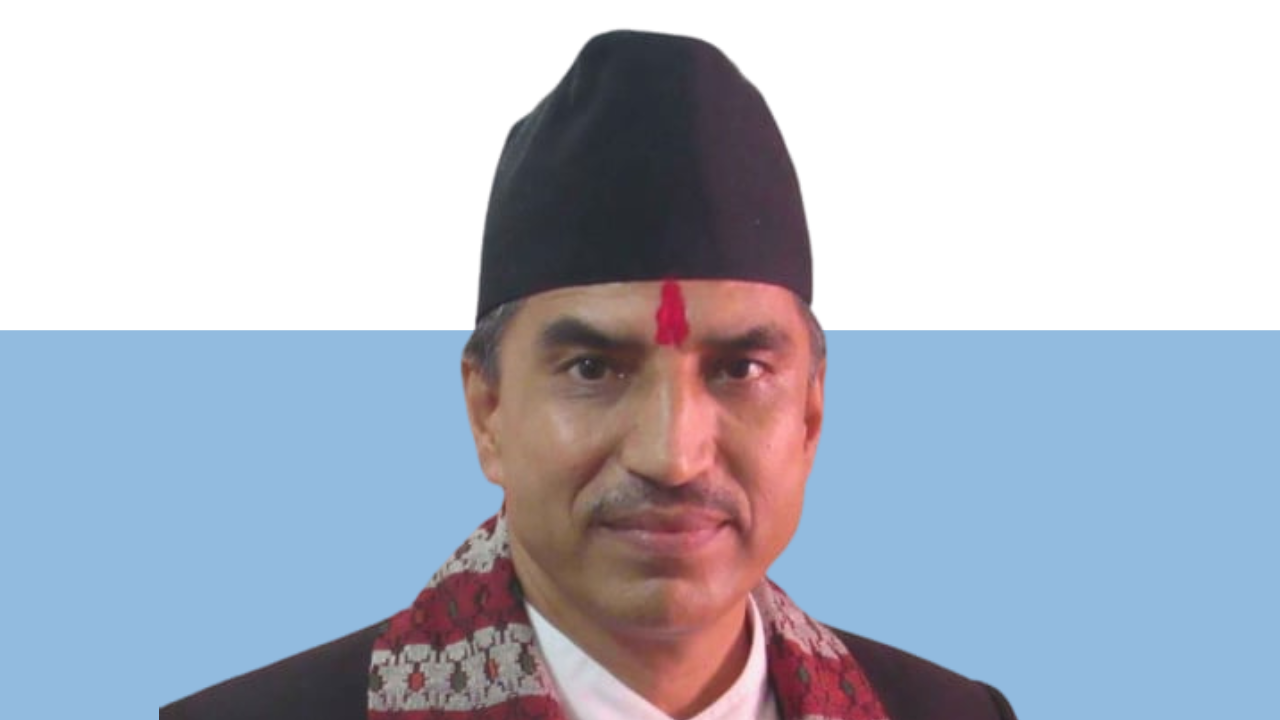
The Judicial Council has recommended district judge Himal Belbase, who has only four days left before retirement, for appointment as a high court judge.
Belbase is due for mandatory retirement upon completing 63 years of age on September 20. According to the Constitution, judges of district courts and high courts must retire upon reaching the age of 63.
A meeting of the Judicial Council held on Tuesday recommended Belbase and two others for appointment as high court judges and one as district court judge.
The meeting also decided to transfer judges serving in those courts.
While recommending Belbase as a high court judge for just four days, the Judicial Council has also overlooked seniority. He ranks 13th on the seniority list. According to the Judicial Council’s 2025 bulletin, he was born on September 20, 1963.
Belbase entered the judicial service in 1995 and became a district judge in 2013. Despite spending 13 years as a district judge, he had not previously been appointed as a high court judge.
A judge becomes eligible for high court appointment after serving five years in a district court.
There is a practice of appointing those who demonstrate excellent performance as district judges to high courts after five years. Some judges who became district judges around the same time as Belbase have already been promoted to high courts.
Therefore, the recommendation made only four days before retirement, long after he became eligible for high court appointment, has raised questions in the judicial sector.
The Judicial Council, however, has not made public the basis or reasons for recommending Belbase.
Asked about the basis for the recommendation, Judicial Council Secretary Ram Prasad Bhattarai said that the contents of the decision are confidential and therefore cannot be disclosed.
“We have already put whatever information we are allowed to disclose on the website. Beyond that, we cannot say anything because of confidentiality,” he told Setopati. “We implement decisions made wisely by the council. Please should ask the council chair and members about the basis and reasons.”
Attempts to obtain comments from Judicial Council Chairman and Chief Justice Manoj Sharma and Law Minister Sobita Gautam were unsuccessful as they did not answer their phones.
Controversy over link to Rabi Lamichhane case order
The recommendation of Belbase for high court judgeship has also been questioned by linking it to an order he issued on May 22.
On that day, his bench modified the charges against Rastriya Swatantra Party (RSP) President Rabi Lamichhane. It ordered that the charge of cooperative fraud be retained while removing charges related to organized crime and money laundering.
An official within the Judicial Council has described the recommendation as a “reward” for withdrawing the charges against Lamichhane.
Another senior official at the Supreme Court also commented that although Belbase had become eligible for high court appointment seven years ago, it now appeared that “a reason to reward him” had finally been found.
Then-attorney general Sabita Bhandari had authorized the District Government Attorney’s Office, Kaski, to file a petition seeking removal of the organized crime and money laundering charges against Lamichhane. The government attorney’s office subsequently filed an application with the court seeking to drop those charges from the case against him.
It was on that application that Belbase’s bench issued its order.
The order stated that the request of the government attorney’s office appeared reasonable.
The court said that the request to remove the organized crime and money laundering charges was aimed at ensuring the complainants could recover their savings as quickly as possible, and that there appeared to be no malicious intent behind the request.
The court cited four grounds for its decision.
First, the government had not initially filed charges of organized crime and money laundering. Nor had the victims’ complaints alleged those two offenses.
Second, the court noted that retaining the two charges would make it impossible for the victims and accused parties to reach a settlement for the return of savings, while making the legal process more complicated.
Third, the court said that removing the two charges would not defeat the core spirit of justice.
Fourth, the court stated that there was no indication of malicious intent on the part of the prosecutor who had applied for the charges to be dropped.