Top leaders of the ruling coalition partners, Nepali Congress (NC) and CPN-UML, are engaged in continuous discussions regarding the leadership of all seven provincial governments, their policies, programs, and budgets.
The main issue under discussion is whether the two parties should continue with the current chief ministers in the provinces until the upcoming provincial elections or implement the previously agreed power-sharing arrangement of rotational leadership.
The NC has assigned Vice-president Bishwa Prakash Sharma the responsibility of discussing and reaching a conclusion regarding the provincial governments. Following this, Sharma initiated talks with the UML.
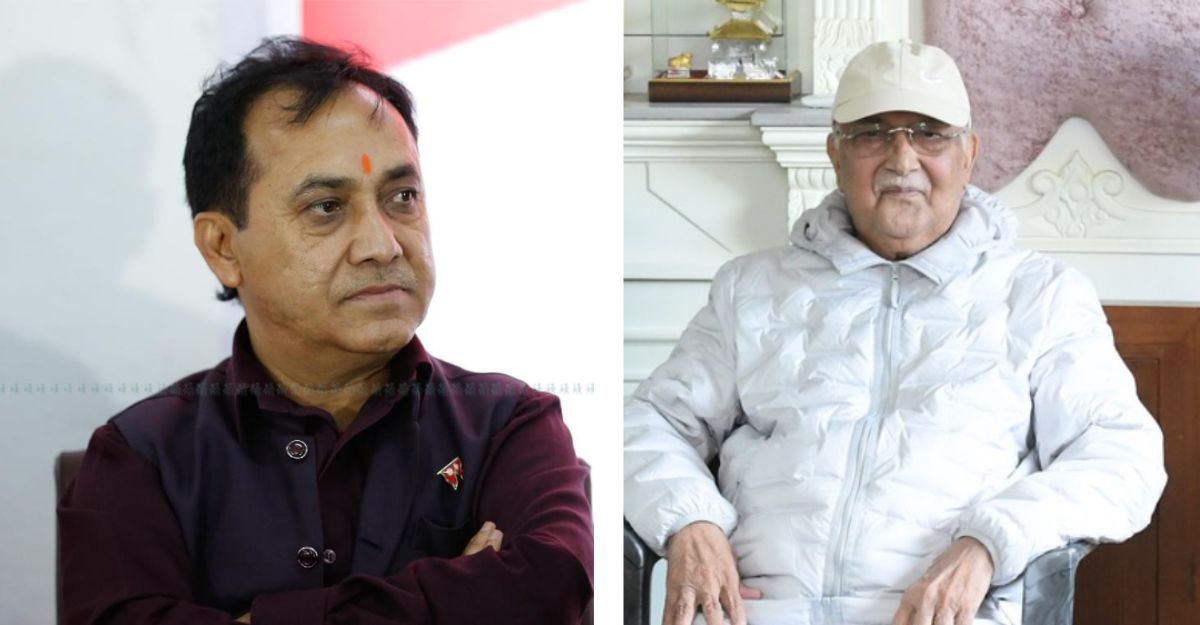
On Tuesday evening, Sharma and Joint General Secretary Uday Shumsher Rana met UML Chairman KP Sharma Oli at his residence in Gundu.
According to a leader who participated in the meeting, only preliminary discussions have taken place so far.
After the talks with Oli, Sharma is set to consult NC President Gagan Thapa. Top leaders of both parties will then meet again to discuss leadership of provincial governments and other matters, according to leaders.
The NC recently held provincial gatherings in Sudur Paschim and Karnali. During those meetings, participants raised the issue of changing chief ministers and ministers, while also reviewing the implementation status of past agreements with coalition partners.
The NC and UML had previously agreed to rotate the chief minister position. Under that arrangement, the two parties are jointly governing six provinces, while in Madhesh province, the NC leads the government with support from the Maoists and others.
Currently, the UML leads the government in Koshi, Karnali, and Lumbini, while the NC leads in Madhesh, Bagmati, Gandaki, and Sudur Paschim.
Provincial assembly elections were held in November 2022, and the next elections are expected in about one and a half years. The NC and UML are now discussing whether to retain the current chief ministers until then or implement the earlier rotational agreement.
During a conversation with party leaders Lalit Jung Shahi and Jeevan Bahadur Shahi in Surkhet, NC Vice-president Sharma reportedly said that it is now the NC’s turn to lead the Karnali government according to the previous agreement.
“Congress will lead the Karnali government now. Prepare yourself, Jeevan dai,” Sharma said. “Whether we take over before or after the budget will be finalized soon after discussions with UML Chairman KP Sharma Oli.”
Immediately after returning to Kathmandu from Surkhet, Sharma and Joint General Secretary Rana visited Oli’s residence for talks. However, it has not been disclosed what Oli said during the meeting.
Earlier, Gandaki Chief Minister Surendra Raj Pandey reshuffled ministers after consultations with UML parliamentary party leader Khagaraj Adhikari. The chief minister remained unchanged, but all NC and UML ministers were replaced. According to NC leaders, some provinces may adopt a similar model to reshuffle ministers.
Speaking at a provincial gathering in Sudur Paschim, NC President Thapa said that no provincial government would be formed under the leadership of parties other than the NC or UML.
“Discussions are ongoing between the Congress and UML regarding the governments’ policies and programs, budgets, and leadership. The vice-president will hold discussions regarding this. Our concern is that the provincial governments should function properly,” Thapa said.
“We recently had long discussions with UML leaders. Bishwa Prakash Sharma is leading the discussions. We are in government together with UML in six provinces. Provincial elections are approaching. The understanding between the Congress and UML was to form governments through cooperation, and leadership changes are part of that understanding.”
Bagmati Chief Minister Indra Bahadur Baniya, however, claimed that he was unaware of any agreement between the NC and UML regarding rotational chief ministership.
Speaking to journalists on April 6, Baniya said, “I do not know anything about an agreement to rotate the chief minister position. UML ministers are also here, and they too are unaware of such an arrangement.”
Meanwhile, Tulsi Chaudhary, UML chief whip in Lumbini province, said that the time had come to implement the prior agreement between the NC and UML regarding rotational leadership.
“This cannot be implemented only in Lumbini; there may also be decisions from the central leadership. We will abide by whatever decision comes from above,” he said.
When forming coalition governments, parties generally agree to divide the remaining term equally, with each party taking turns leading the government for half the tenure.
Since no single party has a majority in any provincial assembly, provincial governments have been formed with the support of two or more parties.