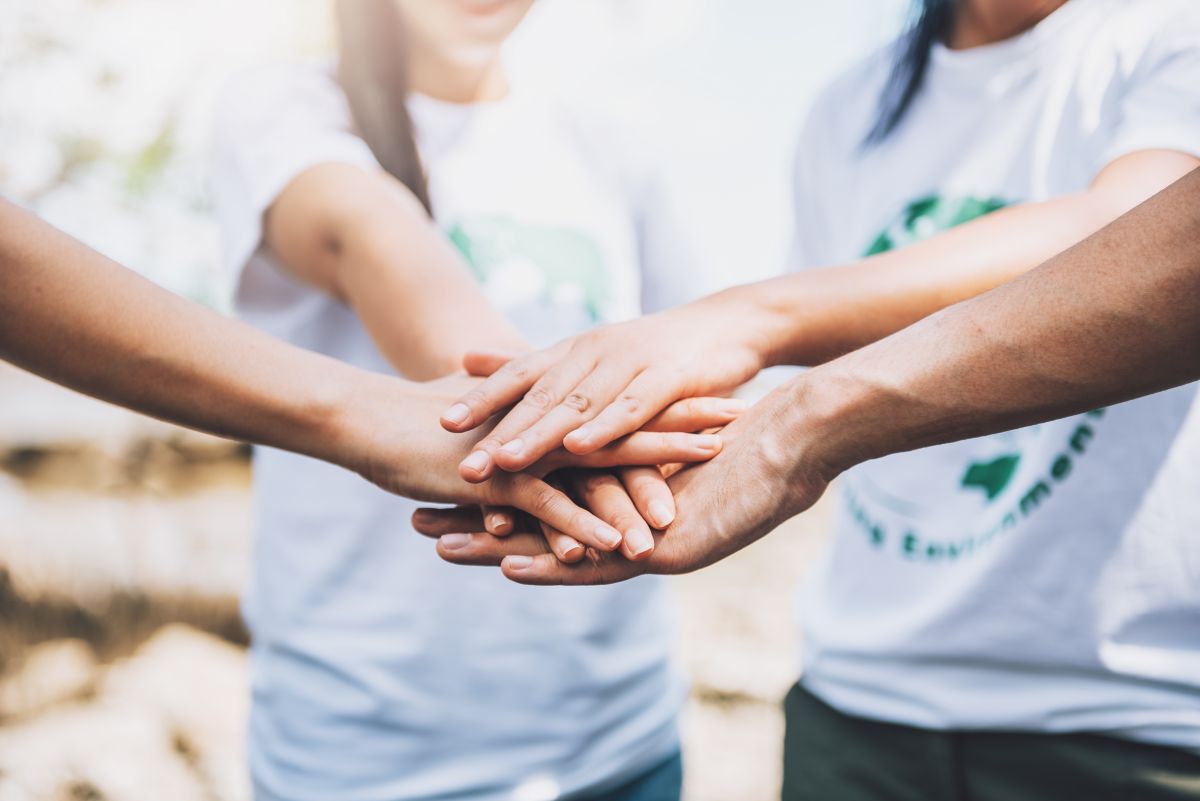
Why does volunteering always end up being forgotten?
To me, this is a conundrum because volunteerism and the broader and more encompassing concept of civic engagement are vital for the development of a nation like Nepal that, with the new Shah Administration leading the federal government, is attempting to overhaul its governance system.
The new federal government has come up with a very ambitious reform agenda that, if and when implemented, could really turbocharge Nepal into a dynamic lower middle income economy.
Call it a Start-Up Nation, a country that is tech-savvy and ICT-focused, where public services are fully digitalized and therefore efficient, fast and reliable, and, most importantly, free of corruption and mismanagement.
There is no doubt that the targets set by the federal government in its 100 Points Policy Roadmap are ambitious and certainly needed.
Yet, unfortunately, the new administration is forgetting volunteerism, one of the most powerful tools to mobilize citizens for the common good.
Enabling a system where citizens from all walks of life can engage in well-defined and clear social initiatives at the service of the public good is one of the most effective ways to bring change at the societal level.
Boosting and promoting volunteerism among the people creates a sense of ownership and meaningful contribution to the development of the nation.
If you look at the existing 100 Points Roadmap, the areas being tackled are intrinsically going to impact the day-to-day life of millions of people, but, at the same time, the vast majority of them do not require the involvement of the people.
Certain policies, especially those that are more technical in nature, can be introduced from the top, and this is a prerogative of any executive.
There is nothing inherently wrong with implementing such an approach, even if the citizens have no active role to play.
But did the voters only elect a technocrat government based on the assumptions that its style and attitudes toward policy-making centered on expertise will save the nation? Or are their expectations beyond this know-how driven style?
It is fair to say that the overall level of governance had reached the bottom, and frustrated voters might just be satisfied with a radically different way of governing, one that puts honesty, transparency, and competence first.
Yet, will this understanding at the foundation of a new compact between the elected and the voters be enough to radically and ambitiously create a pathway for a $100 billion economy as envisioned by the new federal government?
Implementing the 100 Points Roadmap will definitely be of great help in achieving this overarching goal, but can the nation, as a whole, really make it without the contributions of its own people?
Paying taxes and not indulging in corruption practices, basically the tenets of good and responsible citizenship, will be undoubtedly paramount in the quest for a better and stronger Nepal.
But aren’t these, after all, the expected behaviors of any just and functioning society that puts the interest of the majority, in other words, the common good, above personal interests?
That’s why volunteerism can be so important in the days ahead because civic engagement, of which volunteerism is one of the most potent manifestations, is really the engine to support the delicate transition that Nepal is facing at the moment.
After all, the vision of the country that the vast majority of voters wanted, when at the ballot box they voted for a radical change in the future trajectory of Nepal, requires also bottom-up approaches.
Democratic practices can undeniably open up and become more accessible for the people.
Transparency is a core foundation of good governance, and effective policy delivery is the essential element that gives legitimacy to those democratically elected.
Without it, as experiences from around the world teach us, populism emerges, and with it comes the erosion of the same democratic fabric that enables cohesion and unity within a polity.
Injecting elements of deliberative practices in the current system, where citizens have opportunities to engage in decision-making, will certainly be of help.
While we are living in an era where populist approaches can easily gain traction, there is also a real possibility that a different modality of “doing democracy,” more open, more direct, and more accessible, can also emerge.
It is already happening around the world with some promising results, especially at local levels.
Yet the “jump” that Nepal aspires to make, thanks to the mandate given by the people to the Shah Administration, also requires ways for the citizens to contribute practically.
This is where volunteerism can make a difference because it offers practical and tangible options for every citizen to do something.
Promoting and enabling a volunteering wave in Nepal would entail a serious commitment on the part of the federal government that combines policy level ambitions driven by technocrats with facilitating the creation of new spaces for civic engagement open to everyone.
Committing to volunteerism should not be too complex, considering the fertile ground in which reciprocity has been, for centuries, a key hallmark of the local fabric of the country, an essential ingredient that supported local communities in times of hardship.
There are many modalities the federal government can use to promote a positive civic revolution.
A national volunteering program can be designed to attract youths in specific areas of intervention, while a national volunteering portal could also be created to enable the demand and supply of volunteering opportunities, especially the ones run by not-for-profit organizations that have a key role to play in this endeavor.
Local governments will definitely have a big role as well because they are the ones closest to the people.
They can be the “bridge” institutions that can foster civic engagement across the nation, and they can be supported and incentivized to involve and engage their own citizens to meet the many challenges existing at the grassroots level.
In addition, a national draft volunteering policy that has been gathering dust for years could be reopened, revised in a participatory fashion, and finally put into practice.
Promoting volunteering seriously can also be part of a wider project of nation-building where people from different backgrounds can come together, regardless of their entrenched and stratified positions in society.
Investing in volunteering is the right thing to do because the changes envisioned by the new government, its vision for the whole nation, are so enormous that only a whole of society approach can work.
Volunteering can offer a platform for people to participate and have ownership in the process of rebuilding Nepal.
Moreover, the year 2026 has been designated as the International Volunteer Year 2026 by the United Nations.
The fact that this global effort to promote and develop volunteerism has not yet captured the attention of the nation’s policymakers could also be a stimulus for the federal government to initiate a national volunteering wave.
The stakes are so high that change can happen not only through competent leadership at the top, but also through a shared understanding among the citizens and their government that prosperity can be generated not only with the right policies but also through a common effort.
The latter is what volunteering can support and enable.
Making Nepal a different, better, and stronger nation is, after all, everyone’s responsibility.