The government and victims of loan sharking reached a nine-point agreement on Friday.
Following the agreement, the victims have suspended their protest, which had been continuing for the past nine days.
After the victims’ “Justice March,” which began on July 9 from Tritiya Gachhi in Janakpur, reached Nijgadh in Bara, an agreement was reached between Home Minister Sudan Gurung and representatives of the victims on July 16 to hold talks in Kathmandu.
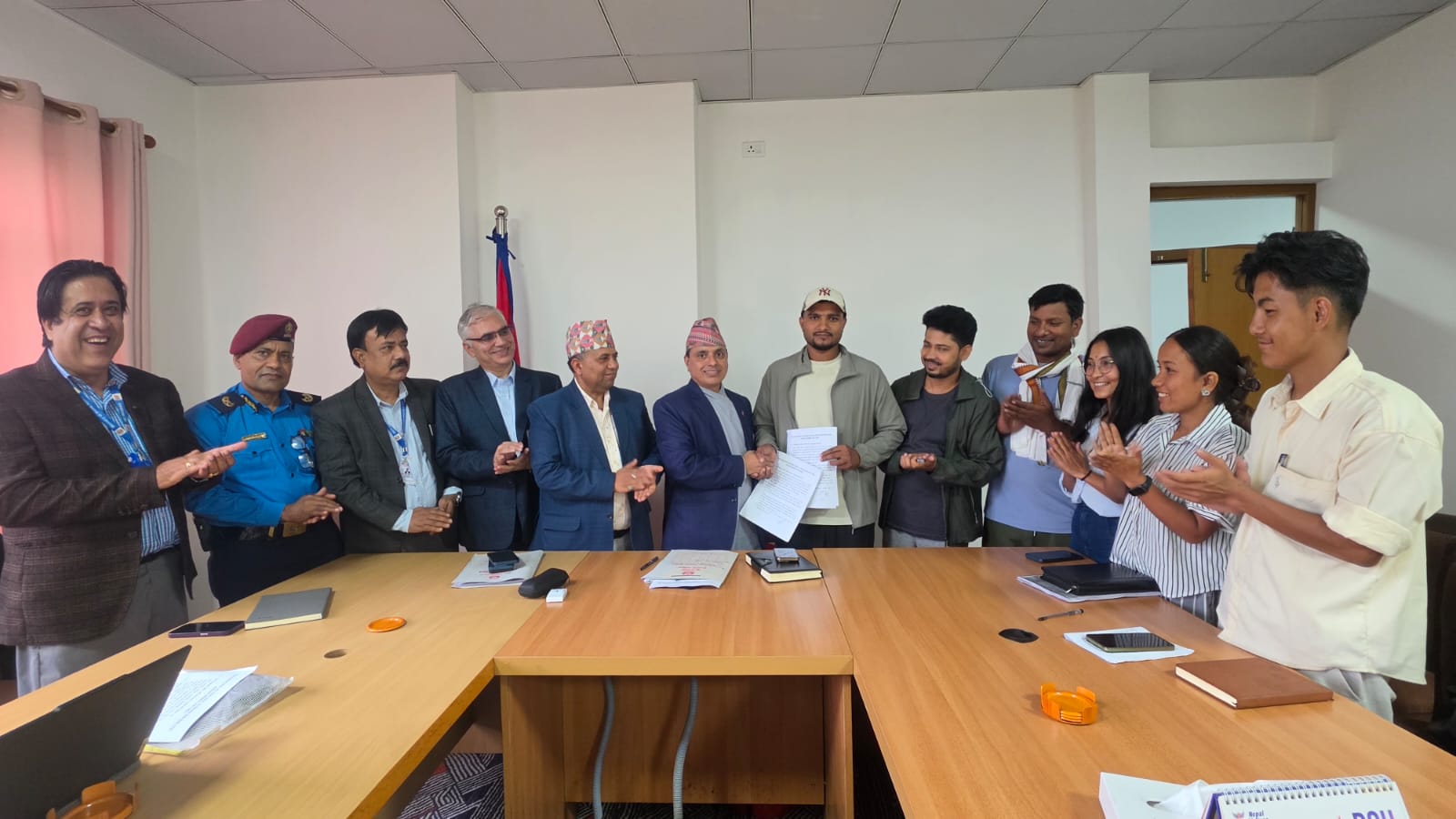
In line with that agreement, intensive talks were held on Friday between the victims’ negotiation team, which had arrived in Kathmandu, and the government team led by Pushkar Sapkota, secretary at the Office of the Prime Minister and Council of Ministers. The talks resulted in the agreement.
According to the Prime Minister’s Secretariat, the agreement was signed by Secretary Sapkota on behalf of the government talks team and Awadhesh Kushwaha on behalf of the victims.
Under the agreement, the government will present a proposal to the Cabinet to recognize predatory lending as an economic crime and declare the complete eradication of this practice. This will automatically invalidate and nullify all fraudulent promissory notes, mortgage deeds, forced transfers of property, and coercive checks.
The Ministry of Home Affairs will draft a special bill within three months to enact legislation controlling predatory lending. The law will provide for a separate tribunal to hear such cases, the return of victims’ property, and guarantees of appropriate compensation.
Similarly, when transactions are verified at ward offices, proof of the lawful source of funds and evidence of banking transactions will be made mandatory. Strict action will also be taken against those who invest proceeds from criminal gains or corruption in predatory lending.
The new law will criminalize preparing documents showing amounts higher than the actual transaction, adding interest to the principal, failing to provide borrowers with receipts, charging excessive interest, issuing threats, subjecting borrowers to physical or psychological abuse, forcing them to sign blank checks or documents, and seizing their property.
Investigations into predatory lenders will include forensic laboratory testing of documents, tracing the sources of assets, and investigations under anti-money-laundering provisions, in accordance with criminal procedure. Legal obstacles will also be removed to ensure justice for victims in cases currently pending in courts.
To address victims’ grievances, a high-level coordination committee headed by the secretary of the Office of the Prime Minister and Council of Ministers will be established at the central level, along with a separate desk.
At the district level, facilitation committees led by assistant chief district officers and including three representatives of the victims will be formed. All complaints will be resolved within six months, with monitoring carried out by committees led by the respective chief district officers.
The government has also agreed to introduce financial assistance and relief packages in the annual budget to prevent victims from falling back into the cycle of predatory lending.
Following the agreement, the victims have suspended all their protest programs, according to the Prime Minister’s Secretariat.