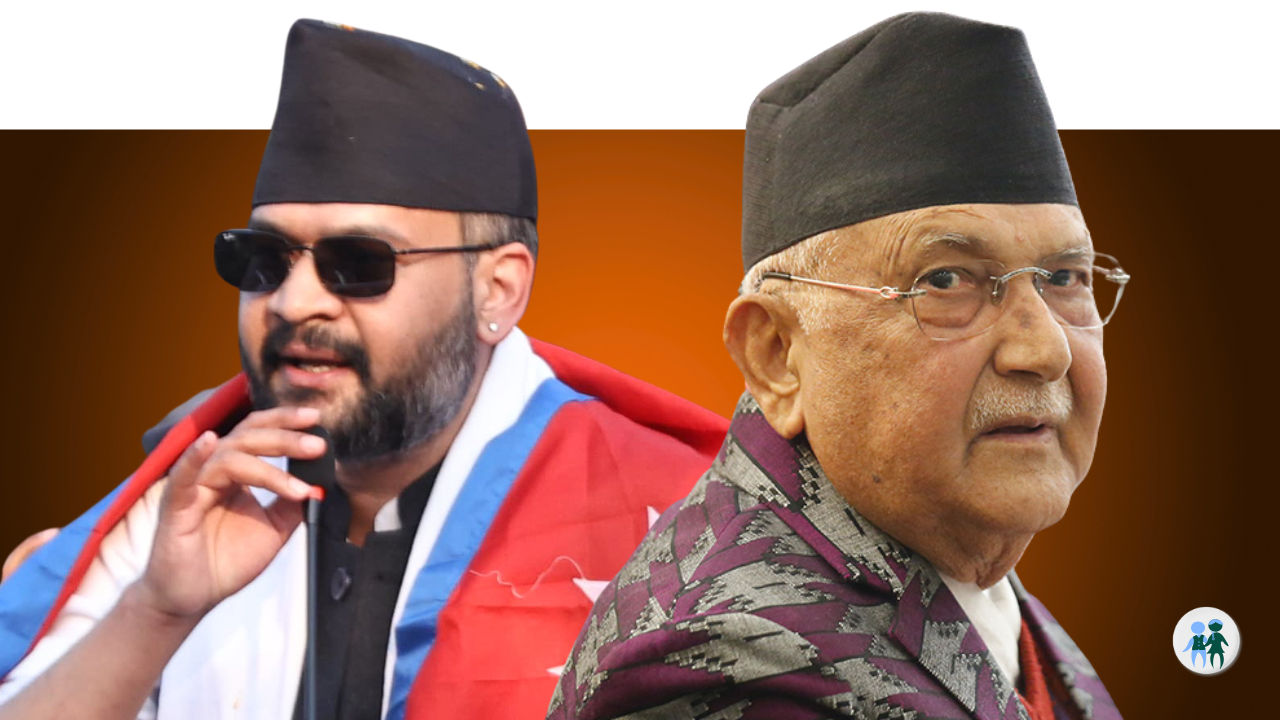
As the phrase “a specter is haunting Europe—the specter of communism” opens up the Communist Manifesto, in the political context of Nepal also, the political opponents of the current government have collectively racked up and desperately resurrected a dangerous specter, “the deception of a nationalist," as a boggy trap for the current government. Opposition political groups have effectively used nationalism as a manipulative tool both in the public sphere and in Parliament to portray the current government under the leadership of Prime Minister Balendra Shah Balen as weak on national sovereignty and to put pressure on the government to make some sort of socio-political error that would save them from ruin and spark their political comeback.
Balen Shah, when he was the mayor of Kathmandu Metropolitan City, had also used the same nationalist trap to put political pressure on the KP Sharma Oli government back then, with the public display of a greater Nepal map and pungently reminding KP Oli to discuss issues of border disputes of the Kalapani region, Limpiyadhura, and Lipulekh with President Xi Jinping during his visit to China.
The abuse of nationalism for political gain is a well-ragged and utterly abused tactic in Nepali politics. Even so-called communist, Marxist, and socialist parties, when they were in government, preached a hollow sense of national exceptionalism derived from historical and legacy-based narratives such as the birthplace of Lord Buddha; the land of Mount Everest, sacred pilgrimage and Vedic sages; and a brave nation that was never ever colonized without any consequences of these narratives on the socio-economic well-being of citizens. Our political elites have mastered the art of using nationalist ethos as a convenient distraction to cover up their dismal governance failures. Sadly, Nepal remains as the second poorest in South Asia, with a large portion of its youth forced to seek livelihoods abroad to send remittances that keep the economy afloat.
Exclusionary nationalism and India obsessions
Nationalism in Nepal has also become a game of othering that frames people from certain ethnic, linguistic, religious, or regional identities within the nation’s boundaries as traitors, anti-nationals, and foreign agents. When it comes to nationalist ethos especially the Madheshi community has been vilified as the “others.” Hence, from public discussions to casual social media comments, even the criticism directed at our prime minister, Balen Shah and Deputy Speaker of the House of Representatives Ruby Kumari Thakur at times has been extended beyond political, policy or procedural disagreements to subtle loathing about their social background and regional roots.
Moreover, so much of exclusionary nationalism in Nepal still revolves around anti-India sentiment. India, as a political entity, occupies an outsized position in the political imagination of Nepal. Therefore, during parliamentary sessions and committee discussions, we have seen rhetoric time and again returning to India-related controversies, diplomatic disputes, and historical grievances. Parliamentary sessions have been hijacked by this singular obsession with border disputes, the Kalapani region, Limpiyadhura, Lipulekh, and the China-India agreement.
Although Nepal has legitimate concerns about unresolved border issues, slogans, parliamentary grandstanding, and emotional mobilization do not resolve boundary disputes. Even China and India have significant boundary issues; however, both these nations have kept border disputes from becoming the central plank of domestic political discourses. Besides, the consistent use of India as a punching bag in parliamentary sessions indicates that as a nation, we are still not prepared to look inward and examine issues related to governance failures, leadership compromises, political immaturity, collective ethical corruption, and systemic weaknesses that have put us in this dismal state.
“Holier than thou” mindset
The “hoax” of the nationalist image becomes ghastly evident with the historical record of old political parties. Political parties now attempting to monopolize nationalist rhetoric with a “holier than thou” mindset were themselves responsible for decades of misgovernance, corruption scandals, patronage networks, institutional decay, and economic stagnation. They have suppressed dissent, signed all sorts of clumsy bilateral agreements and soaked themselves in one corrupt scandal after another without any concern for the socio-economic upliftment of poor, marginalized, and oppressed people.
Rather than focusing on comprehensive national interests, political parties in Nepal when in power have mostly prioritized personal gain, a commission-based source of income, cash for post exchange, benefited from a political-business nexus, and solidified divisive identity-based vote bank politics. Hence, the outcry of nationalism from the old political parties is just a political deception, not a principled stance, against the current government.
Inclusive nationalism and socio-economic priorities
Instead of allowing parliament to be hijacked by the hoax of nationalism, the current government needs to prioritize socio-economic issues that affect the lives of Nepali people. Without proper development and economic integration, the burden of nationalism can’t be simply pasted over poor people living in impoverished border areas through haphazard rules and regulations from the center. They see the actions of government as a threat to their survival rather than as a commitment to nationalism. Furthermore, the government needs to realize that people living near borders depend on cross-border markets, services, and economic networks because domestic alternatives remain inadequate. Our collective discourse around nationalism in Nepal must shift from performative patriotism to a focus on building a prosperous, self-reliant, and inclusive nation.
More importantly, we need to be aware that even the current government will start to play its bittersweet symphony of nationalism when the lofty dreams it has conjured for the uncritical masses of Nepal begin to tone down. Hence, as conscious citizens, we need to see through the “holier than thou” mindset of both old and new political parties, and we shouldn’t allow local political discourse to become hijacked by the deception of emotive nationalism without substance, which constantly searches for enemies without building a nation that works for its people.
(Ojha is a writer, researcher, and educator at different educational institutions)