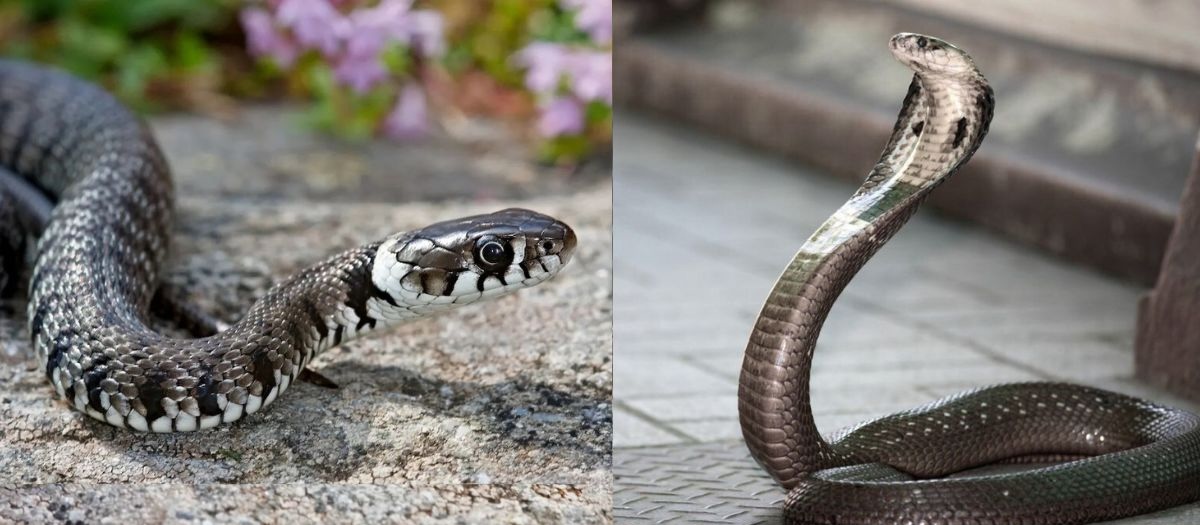
The historic hill capital of Kandy will become the global epicenter of snake science and conservation when an international snake congress gets underway from October 1 to 4, bringing together some of the world’s leading herpetologists, toxinologists, wildlife researchers and conservation experts.
The four-day confab is expected to draw scientists and conservationists from across Asia, Europe, Australia and the Americas for discussions on biodiversity conservation, snakebite mitigation, climate change, venom research and ecosystem health.
Organizers say the congress is one of the most ambitious international gatherings ever dedicated to snakes and their role in science, ecology and public health.
The event will place Sri Lanka — recognized internationally as a biodiversity hotspot — firmly on the global conservation map while highlighting the urgent need to protect reptiles often misunderstood and persecuted despite their ecological importance.
Among the keynote speakers is Vivek Menon, founder and executive director of the Wildlife Trust of India and current chair of the IUCN Species Survival Commission.
Menon’s presentation, “SSC and how the snakes fit in to the overall thrust area,” is expected to explore how snake conservation fits within broader international biodiversity priorities and conservation frameworks.
An influential conservation strategist and author, Menon has served on several international conservation platforms including UNESCO, CITES and Convention on the Conservation of Migratory Species of Wild Animals.
Another major attraction at the Kandy congress will be legendary Indian herpetologist Romulus Whitaker, whose session, “Guardians on the ground: integrating community, conservation and snake bite mitigation,” will focus on the role of indigenous communities and venom-harvesting programs in reducing human-snake conflict while conserving snake populations.
Whitaker is expected to emphasize that snakebite prevention is closely linked to environmental and social well-being.
The congress program reflects the rapidly expanding scope of modern snake research.
Indraneil Das of Universiti Malaysia Sarawak will discuss how rare serpents act as ecological sentinels that reveal subtle changes in tropical rainforest ecosystems.
American herpetologist Julie Ray will present her experiences in community-based snake conservation throughout the New World, while Thailand’s Taksa Vasaruchapong of the Queen Saovabha Memorial Institute Snake Farm will examine the sustainability of venom production and captive snake management.
Internationally renowned taxonomist Aaron Bauer from Villanova University will explain how documenting hidden snake diversity provides early warnings of environmental change, while Polish researcher Bartosz Borczyk will explore evolutionary morphology and sexual dimorphism in snakes.
Sri Lankan toxinologist Anjana Silva from Rajarata University of Sri Lanka will discuss the local dynamics of snakebite and the socioeconomic burden it places on rural communities.
Chinese herpetologist Jia Tang Li of the Chinese Academy of Sciences will explore how snake genomes reveal evolutionary responses to environmental change and climate adaptation.
Australian toxinology expert Geoff Isbister will focus on controversies surrounding snakebite treatment and antivenom use, while Japanese scientist Akira Mori will discuss the unique defensive “nuchal gland” systems evolved by certain Asian snakes.
Australian wildlife trade researcher Daniel Natusch will examine sustainability in the global snake trade, and Indian reptile educator Gerry Martin will advocate more empathetic approaches to snake handling and conservation outreach.
One of the most anticipated sessions will be delivered by Australian evolutionary ecologist Rick Shine, who will trace the evolution of snake ecology research from early naturalists to modern citizen-science platforms such as iNaturalist.
The congress was founded by internationally respected conservationists including Anslem de Silva, Julie Ray and Daniel Natusch.
Widely regarded as the Father of Herpetology in Sri Lanka, Dr Anslem de Silva said hosting the congress in Kandy represented a major milestone for Sri Lankan wildlife science and conservation.
“Snakes are among the most misunderstood creatures on Earth, yet they are essential to ecological balance,” de Silva said. “This congress aims to replace fear with scientific understanding while promoting coexistence and conservation.”
He added that Sri Lanka’s rich reptilian diversity made the country an ideal venue for a global congress of this nature.
Dr Nimal D Rathnayake, secretary general of the congress, said the October 1-4 gathering would connect science, public health and conservation under one international platform.
“This confab is not just a scientific meeting,” Rathnayake said. “It is a collaborative platform that brings together researchers, conservationists, educators and healthcare professionals to address some of the most urgent environmental and public health challenges linked to snakes.”
He said the congress would also inspire younger researchers while strengthening international cooperation in biodiversity science and snakebite mitigation.
He added needless to say for Sri Lanka, the Kandy congress represents a significant opportunity to showcase its environmental heritage and scientific potential on the global stage.
In a world increasingly shaped by climate change and biodiversity decline, organizers say the event will demonstrate how snakes — often feared and misunderstood — can become powerful symbols of conservation, coexistence and ecological resilience.