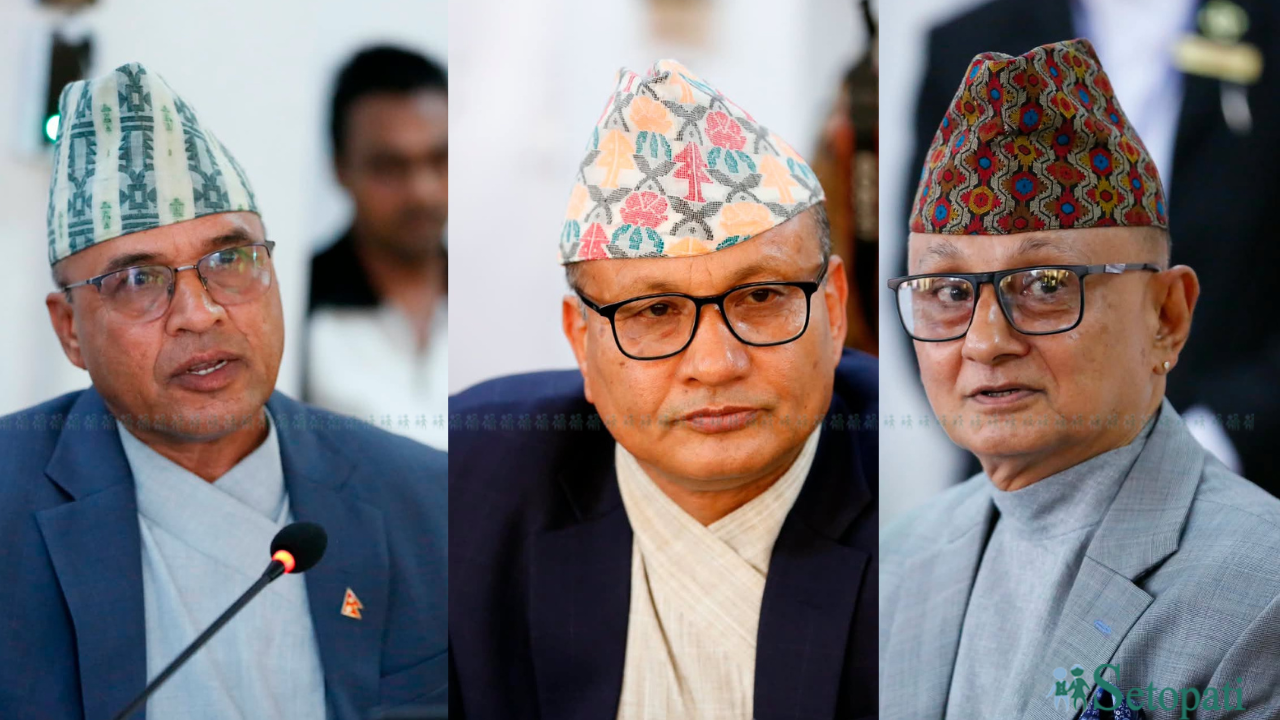
The Parliamentary Hearing Committee on Wednesday unanimously endorsed the nominations of Man Bahadur Karki as chief election commissioner and two proposed election commissioners.
The endorsements came after the Constitutional Council recommended the appointment of the three officials, whose nominations were subsequently reviewed and approved by the parliamentary committee.
Karki, who has been endorsed as chief election commissioner, previously served at the Office of the Attorney General and the Supreme Court. He also held the position of registrar at the Supreme Court.
The committee also unanimously approved the nominations of Rajib Subba and Guru Prasad Wagle as election commissioners.
Parliamentary hearings for Wagle and Subba were held on Tuesday, while Karki appeared before the committee on Wednesday.
A complaint had been filed against Karki over his decision to reject the registration of a case while serving as the Supreme Court registrar.
During the parliamentary hearing, Karki expressed confidence that elections would be conducted fairly under his leadership of the Election Commission.
"Once I take charge, there will be no allegations of electoral fraud. We will make arrangements for overseas voting and electronic voting, and the number of invalid ballots will be reduced," he said.
Karki said that he had learned the values of impartiality and independence throughout his career and stressed that the Election Commission is a constitutional body that upholds those principles.
Committee Chairman Bodh Narayan Shrestha asked Karki why he wanted to join the Election Commission.
Responding to the question, Karki said, "Personally, we are career civil servants. My tenure will also be extended. There is naturally a civil servant's mindset, but I also have the determination to work."
He also said that he intended to transform the Election Commission.
Karki noted that legal provisions must first be enacted before allowing out-of-district and overseas voting.
"To enable out-of-district and overseas voting, the necessary laws must first be in place. Political parties need to be consulted, and the Election Commission must also do its homework. There is no data on how many eligible voters are living abroad," he said.
He added that if the required law is available, he would be able to make arrangements for out-of-district and overseas voting during his tenure.