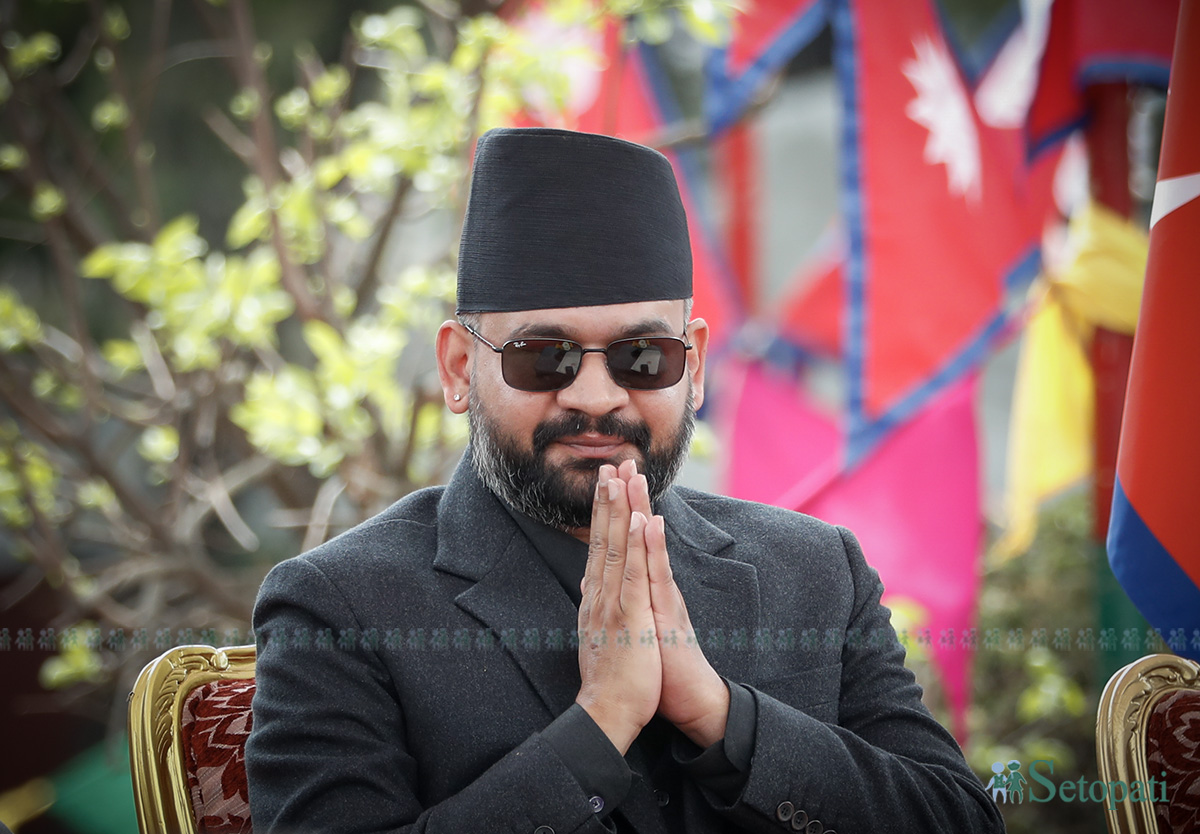
The government is set to issue a public apology to Dalit and historically excluded communities who have been victims of oppression for centuries.
This commitment is outlined in the fifth point of the "100-Point Governance Reform Agenda" that was approved on Friday by the Council of Ministers led by Prime Minister (PM) Balendra (Balen) Shah.
The specific provision states that the state will provide an official acknowledgment of the injustice, discrimination, and deprivation of opportunities inflicted upon Dalits and historically excluded communities by the state, society, and policy structures. This move aims to prepare the groundwork for social justice, inclusive rehabilitation, and historical reconciliation. To achieve this, a decision has been made to announce reform-oriented programs alongside an official apology on behalf of the state within 15 days.
Dalit activists have welcomed this acknowledgment of historical oppression and the declaration of an apology—the first of its kind in the nation's history. Dalit activist Hira Lal Bishwakarma remarked that it is a significant step for the state to realize that it must apologize to oppressed communities. He noted that while the state has previously claimed that such discrimination should not exist, it had never formally admitted that discrimination was actually practiced, which is why it has yet to be eradicated.
"Before moving past any historically tragic event, there must be an acknowledgment that the event occurred. Only then can reform efforts be honest," he told Setopati.
He added that the tradition of apologizing to oppressed communities began in countries like Australia, Canada, and New Zealand, where the state issued public apologies after recognizing the atrocities committed against indigenous and tribal populations.
He believes it is a welcome move for the government to internalize this practice. Pointing out that those countries followed apologies with economic packages and legislation for the upliftment of oppressed groups, he expressed that starting this process in Nepal is commendable.
Nepal was declared a nation free of caste-based untouchability on June 4, 2006, and in 2022, the National Assembly passed a resolution regarding the rights of the Dalit community. However, at the time of the declaration to ban untouchability, the state did not offer a public apology. "The current decision is honorable, but there is a fear that it might just be 'lip service' like in the past," Bishwakarma cautioned. "Once such programs are announced, they require policies, programs, budgets, and structures. Without them, these declarations look good outwardly, but the Dalit community will not receive justice."
He noted that while the Dalit Commission exists, it has not been able to work effectively, and although "Dalit Cells" have been established in 86 police units, implementation remains weak due to lack of manpower, resources, and dedicated desks.
Writer and researcher JB Bishwakarma also views the state's decision to apologize as a positive milestone. He highlighted how the state systematically marginalized Dalits based on culture, values, and governance systems. "Dalits were kept at the bottom by denying access to land and educational opportunities. The state committed atrocities by creating specific laws and policies. Acknowledging this and apologizing today is positive," he said, characterizing the decision as an achievement of eight decades of organized Dalit movements.
He emphasized that the community has long demanded justice including compensation, and that the apology must reach a point where the community can truly feel its impact. He urged the implementation of reform programs that establish self-respect and ensure justice, noting that immediate action against current incidents of violence, untouchability, and discrimination would send a powerful message.
Anthropologist and writer Sanjeev Pokharel also shares a positive outlook but notes that past efforts to honor Dalits and minorities have often been merely symbolic. He argued that while every community is often described as part of a "single garland," the state has failed to bring forth effective policies and programs to provide political, social, and economic opportunities to marginalized groups.
He stressed that instead of debating against the quota system under the guise of "meritocracy," it is vital to design sustainable development programs for marginalized communities. Pokharel pointed out that reform doesn't always require massive resources, and small initiatives can bring big changes. For instance, he noted that the mortality rate for children under five is higher among Dalits than other communities, and even higher among Madhesi Dalits compared to Hill Dalits. He concluded that initiating efforts to end discrimination in basic services like healthcare would be the most significant step forward.