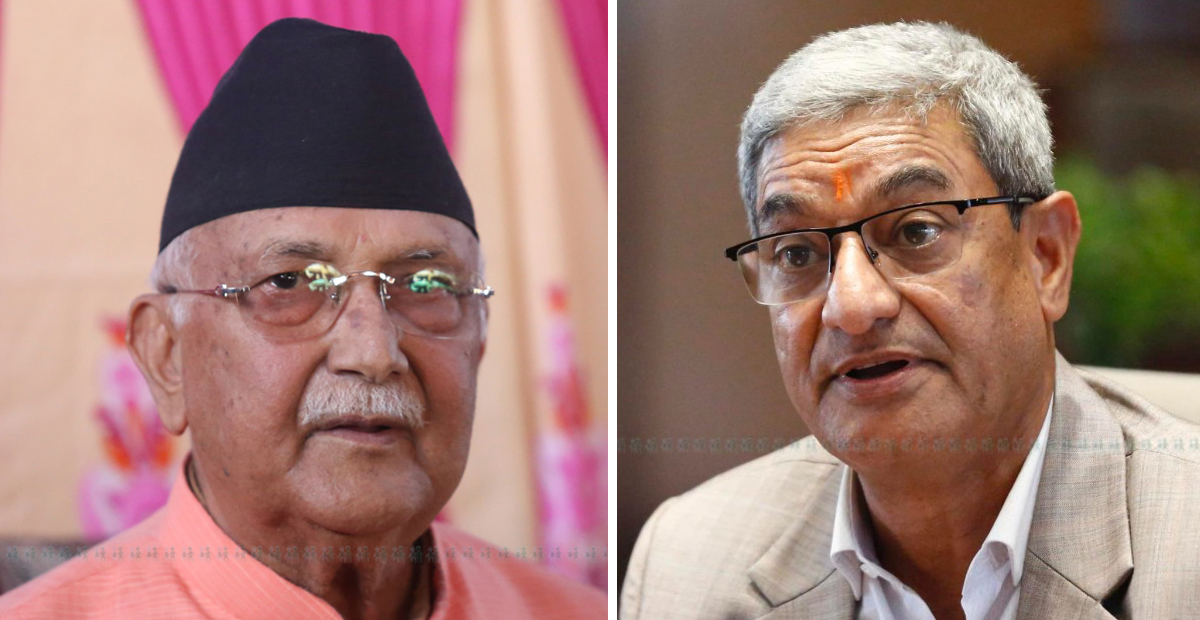
The National Human Rights Commission has concluded that then-prime minister KP Sharma Oli and two former ministers violated human rights.
The commission investigated the Gen Z movement that took place on September 8 and 9 last year. Along with Oli, the commission found then-home minister Ramesh Lekhak and then-communications minister Prithvi Subba Gurung responsible for human rights violations.
The commission also made a recommendation that allows for legal cases to be filed against the three individuals.
“It has been confirmed that then-prime minister KP Oli, then-home minister Ramesh Lekhak, and then-minister for information and communications Prithvi Subba Gurung committed human rights violations. Therefore, action should be taken against them in accordance with Article 249(2)(c) of the Constitution of Nepal,” the commission’s recommendation states.
The report reveals that Oli ignored advice from other ministers who suggested that the ban on social media must be lifted immediately, warning that the situation could otherwise become terrifying.
“The protest on September 8 began because of the ban imposed on social media, and the circumstances that later developed across the country indicate that then-prime minister KP Oli was the primary factor,” the report states.
The commission said that Oli failed to make a decision regarding the mobilization of the army and remained indifferent without fulfilling responsibilities required by law, resulting in human rights violations.
Regarding former home minister Ramesh Lekhak, the report said that he cannot avoid responsibility simply by claiming that he did not order police to open fire.
Similarly, the commission concluded that Prithvi Subba Gurung violated human rights by issuing directives that restricted constitutional fundamental rights through the banning of social media platforms.
The commission also noted that Nepal currently lacks a dedicated law specifically dealing with human rights violators, and recommended taking action against them by making a new law.
It recommended considering international practices, concepts related to human rights, and Nepal’s own needs while drafting such legislation. The commission suggested provisions allowing punishments of up to six months imprisonment, fines of up to Rs 300,000, or both.
The commission further recommended that such cases should be handled by a special court.
It also suggested introducing legal provisions barring individuals found responsible for human rights violations from contesting elections or holding political appointments for at least five years.
In addition, it recommended banning them from administrative responsibilities for at least three years and restricting foreign visits for the same period.