The National Human Rights Commission (NHRC) has raised questions over the indifferent role of the Nepal Army (NA) in preventing the violent activities that took place during the Gen Z Movement on September 8 and 9 last year.
Although documents show that the chief district officer of Kathmandu had sought assistance from the Nepal Army after the protest on September 8 turned violent and went beyond the control of security personnel, the NHRC pointed out in its investigation report that such assistance was not received in practice.
According to the report made public by the NHRC on Wednesday, there was no consistency in the NA’s role in controlling the damage caused during the movement.
On one hand, the NA stated that it was not mobilized because there had been no formal decision from the government, while on the other hand, the fact that it was mobilized at 10 pm on September 9 without a government decision showed inconsistency in the NA’s statements, the NHRC said.
The report states that even while protesters were vandalizing and setting fire to the Federal Parliament building, Singha Durbar, the presidential residence, the Supreme Court, and government and private structures across the country on September 9, the security agencies failed to act effectively.
“While protesters on September 9 were vandalizing and setting fire to the Federal Parliament building at Baneshwor, the historically important Singha Durbar, the presidential residence of the Supreme Commander of the Nepal Army, the Supreme Court, government office buildings across the country, residences of political party leaders and cadres, residences of government employees, and private commercial buildings, all security agencies remained mere spectators,” the report states.
The report also pointed out that if the NA had merely come out of the barracks, incidents of vandalism and arson causing such extensive damage to the nation could have been prevented.
“It appears that the NA, which had already been deployed at those locations specifically for the security of Singha Durbar and the presidential residence, did not even make basic efforts to protect them,” the report states. “While it was said that the NA could not be mobilized throughout September 8 and 9 because the government had not made a decision, the fact that it was mobilized from 10 pm on September 9 without a government decision shows inconsistency in the NA’s statement.”
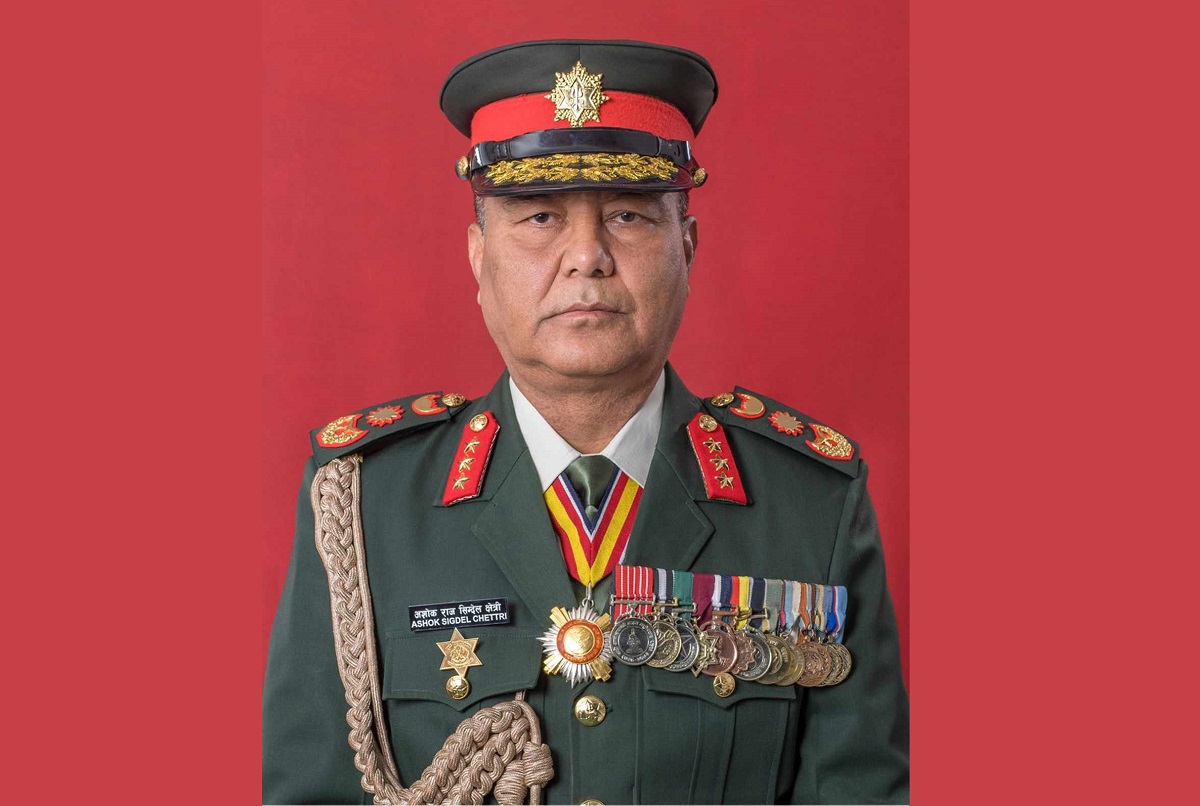
The investigation report also indicates that the NA did not cooperate when the NHRC’s investigation committee summoned the Chief of Army Staff Ashok Raj Sigdel and other high-ranking officials for statements regarding this apparent indifference.
The NA later submitted written statements from the Chief of Army Staff Sigdel and others through sealed questionnaires after the investigation committee submitted its report to the NHRC chairperson, the report mentions.
“Because the NA did not respond on time or appear for statements, the NHRC did not receive the level of cooperation it had expected from the NA. In the statement later received through sealed questionnaires, the NA stated that the Nepal Army can only be mobilized according to law, that the Constitution itself provides provisions regarding army mobilization, and that no government decision regarding mobilization of the army was found on that day, nor had the NA received any such order, therefore the army was not mobilized,” the report states.
The NHRC report states that although 76 people lost their lives during the Gen Z Movement and the country’s major state structures and major business establishments had already been destroyed by arson, there was no sign anywhere of the existence of the state or government, and the army was mobilized only from 10 pm on September 9.
However, the report states that when the army was mobilized in that manner, no statements mentioned under what government decision taken on which date the deployment had taken place.
“Through detailed analysis of the evidence collected during the investigation, it appears that the vandalism and arson carried out at Singha Durbar, the Supreme Court, the presidential building and elsewhere during the demonstrations on September 8 and 9, which caused extensive human, physical and economic losses across the country, also revealed weaknesses on the part of the Nepal Army,” the report said.
The NC has also called for instructions to be given to the Chief of Army Staff to prioritize responsibility toward the protection of ordinary citizens.
“Since it appears that there was failure to protect national property and insufficient sensitivity toward the protection of the human rights of ordinary citizens, the Government of Nepal should, under Section 5 of the National Human Rights Commission Act 2068, direct the Chief of Army Staff to take such matters seriously in the future and prioritize the protection of national property and the human rights of ordinary citizens, and also caution the then commander of the Army battalion stationed inside Singha Durbar for its security and the then commander of the Army at the Presidential Residence, Sheetal Niwas,” the NHRC said.
Likewise, since policy-level and institutional reforms appear necessary to prevent such incidents from recurring in the future, the NHRC has suggested making immediate legal and policy arrangements regarding whether or not the Army should be used during internal riots and violent movements, and if so, under what provisions.