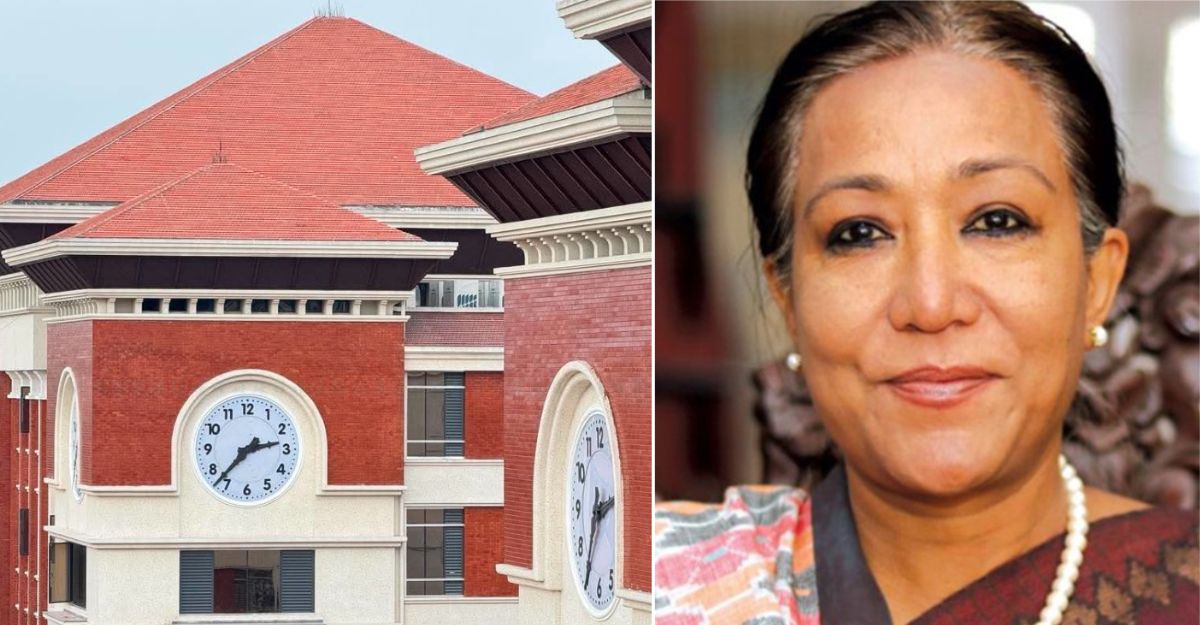
Acting Chief Justice Sapana Pradhan Malla has ordered the registration of writ petitions filed against the Constitutional Council's decision to recommend Manoj Sharma for the position of chief justice.
Malla ordered that all petitions filed against the chief justice recommendation and applications filed against the order to reject those petitions be registered by 1 p.m. on Monday and scheduled for a hearing on Tuesday.
In her order, she noted that the Supreme Court administration’s refusal to register the petitions – allegedly on Sharma’s own instructions – has been taken seriously.
"Refusing to register an application brought by a petitioner through the authorized official in accordance with the law not only obstructs access to justice, but also clearly violates the lawful judicial process," the order states. "When the attention of the chief registrar was drawn to the matter in front of all honorable justices, he informed that the petitions were not registered because the honorable justice recommended for chief justice had given such instructions."
The acting chief justice's order also criticized the registrar handling cases and the chief registrar for attempting to obstruct the judicial process.
The order further reads: "While the chief registrar holds the authority to register or reject documents brought to the court, the actions of the case-handling registrar and the chief registrar on dates including May 6, 2026, and May 8, 2026, to cause delays in the writ registration branch and stall the process is an obstruction of the judicial process. This reflects inaction and incompetence toward the integrity, impartiality, capability, and independence of the judiciary."
The Supreme Court administration has put on hold applications that were filed against its decision to reject petitions challenging the decision to recommend Sharma for chief justice.
On May 8, the registrar of the Supreme Court had ordered the rejection of three petitions filed against the chief justice recommendation. Subsequent appeals filed against that rejection have also been put on hold by the court administration.
Expressing dissatisfaction over this, a delegation of 30 lawyers met the acting chief justice on Monday morning. The delegation included advocates Bishnumaya Basyal and Gita Thapa, among others.
Senior Advocate Dinesh Tripathi, along with Advocates Gita Thapa and Prem Raj Silwal, had submitted separate petitions at the Supreme Court administration challenging Sharma's recommendation. After their petitions were rejected, they filed appeals against the decision, saying they were dissatisfied with the registrar's decision.
According to Rule 10 of the Supreme Court Rules 2017, applications can filed against orders issued by the chief registrar or registrar.
"Any person dissatisfied with an order passed by the chief registrar or registrar during the course of case proceedings may file an application before a bench within 15 days," the rule states.
According to this rule, the Supreme Court administration must register such an application and present it before a bench. It is then up to the bench to decide whether the decision of the chief registrar or registrar was correct or incorrect.
Sub-rule (2) of Rule 10 further states: "...If the order appears improper upon reviewing the application, the bench concerned shall, if deemed necessary, call for an explanation report within seven days or issue an order to proceed in accordance with the law."
Had the rules been followed accordingly, the Supreme Court administration would have registered the appeals against the rejection and presented them before a bench by Sunday. The bench could then have either upheld or overturned the registrar's rejection.
This time, however, the Supreme Court administration has not only held back the appeals against the rejection but is also sitting on petitions challenging the Ordinance Related to the Constitutional Council.
Senior Advocate Tripathi had filed his application against the rejection order on May 11. He says the Supreme Court has put the application on the backburner instead of registering it.
Supreme Court spokesperson and Joint Registrar Arjun Prasad Koirala, however, maintained that the applications are currently "under review."
Four other petitions were also submitted to the Supreme Court on May 8. The court administration claims those petitions are also undergoing "review."
According to Supreme Court sources, after the administration put the applications and petitions on hold, Acting Chief Justice Sapana Pradhan Malla instructed the administration to register them immediately. However, the administration had defied her directives.
Sources add that the petitions and applications brought for registration were forwarded to Registrar Man Bahadur Karki and Chief Registrar Bimal Paudel for review. Yet, even after a week, no decision has been made.
Setopati tried to contact both officials for comments, but they did not answer their phones.
Following this obstruction of registration by the judicial administration, the Nepal Bar Association (NBA) issued a press release on the matter. Prem Raj Silwal, one of the petitioners, had filed a formal complaint with the association regarding the issue.
Senior Advocate Kedar Prasad Koirala, NBA spokesperson and general secretary, issued a statement on Friday urging the Supreme Court administration to stop stalling the petitions.
"An application has been registered with this association stating that the administration has rejected and refused to register writ petitions submitted to the Supreme Court over the past few days, and that when the files containing the appeals against the rejection were submitted to the relevant branch to be presented before a bench as per the law, the esteemed Supreme Court’s administration maintained complete silence by neither registering nor officially rejecting them. Therefore, we wish to bring this serious matter to the attention of the Supreme Court administration," the press release states.
The NBA also questioned what would the state of affairs be elsewhere if registration of applications is stalled at the apex court. It urged the court to clear the way for the registration of the appeals to ensure constitutional rights and justice are not obstructed, and to restore public faith in an impartial judicial administration.