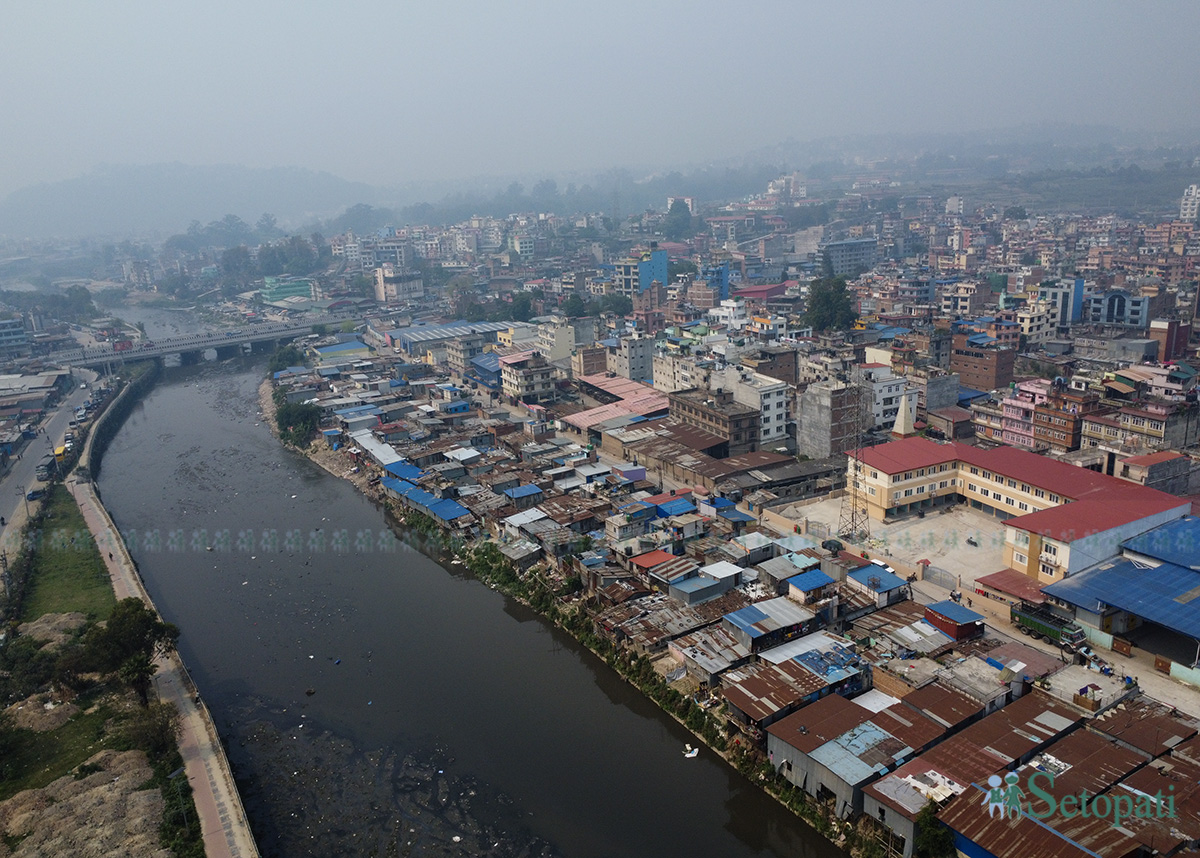
Prime Minister Balen Shah has instructed security agencies to clear the squatter settlements located along the rivers and streams of Kathmandu by Saturday or Sunday.
According to a source at the Ministry of Home Affairs, he summoned Nepal Police Inspector General Dan Bahadur Karki, Armed Police Force Inspector General Raju Aryal, and National Investigation Department chief Tekendra Karki to the Prime Minister’s Office on Wednesday and issued this directive.
PM Shah’s directive comes immediately after he took charge of the Ministry of Home Affairs following the resignation of Sudan Gurung as home minister.
The source said that the meeting between the prime minister and the heads of the security agencies lasted about five minutes.
After the meeting, IGP Karki held discussions on clearing the squatter settlements with Kathmandu Metropolitan City (KMC) Acting Mayor Sunita Dangol, according to a source at the KMC.
“IGP Karki briefed that the prime minister has given instructions to clear the squatter settlements along the rivers and streams in Kathmandu preferably in a single day on Saturday, or by Sunday,” the source said.
According to the source, police have requested resources such as municipal police and bulldozers from the metropolitan city to implement the directive.
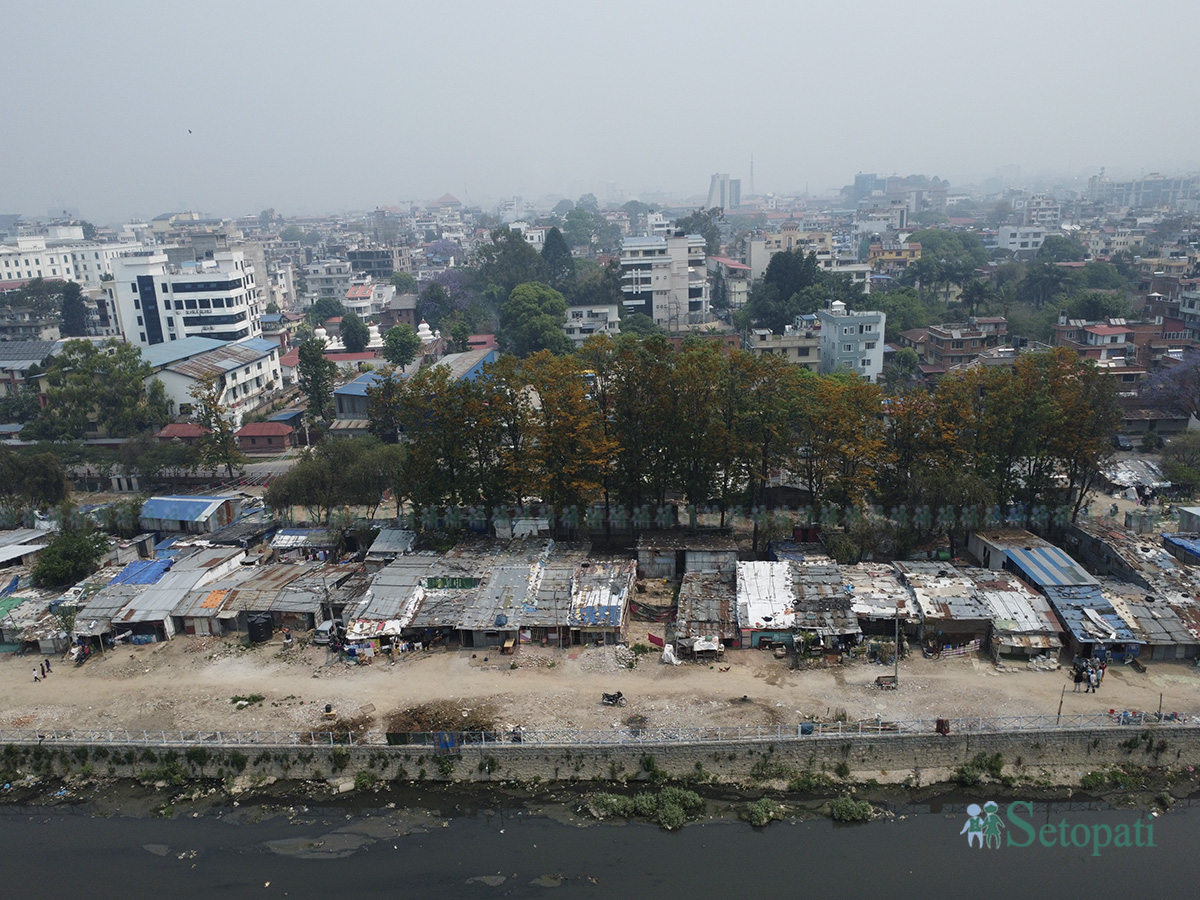
On Thursday evening, KMC Police began making announcements using loudspeakers in the settlements at Thapathali, Sinamangal, and Manohara, urging the squatters in those areas to vacate the settlements by Friday evening.
According to the source, the Ministry of Urban Development has also requested coordination with Kathmandu Metropolitan City regarding the matter.
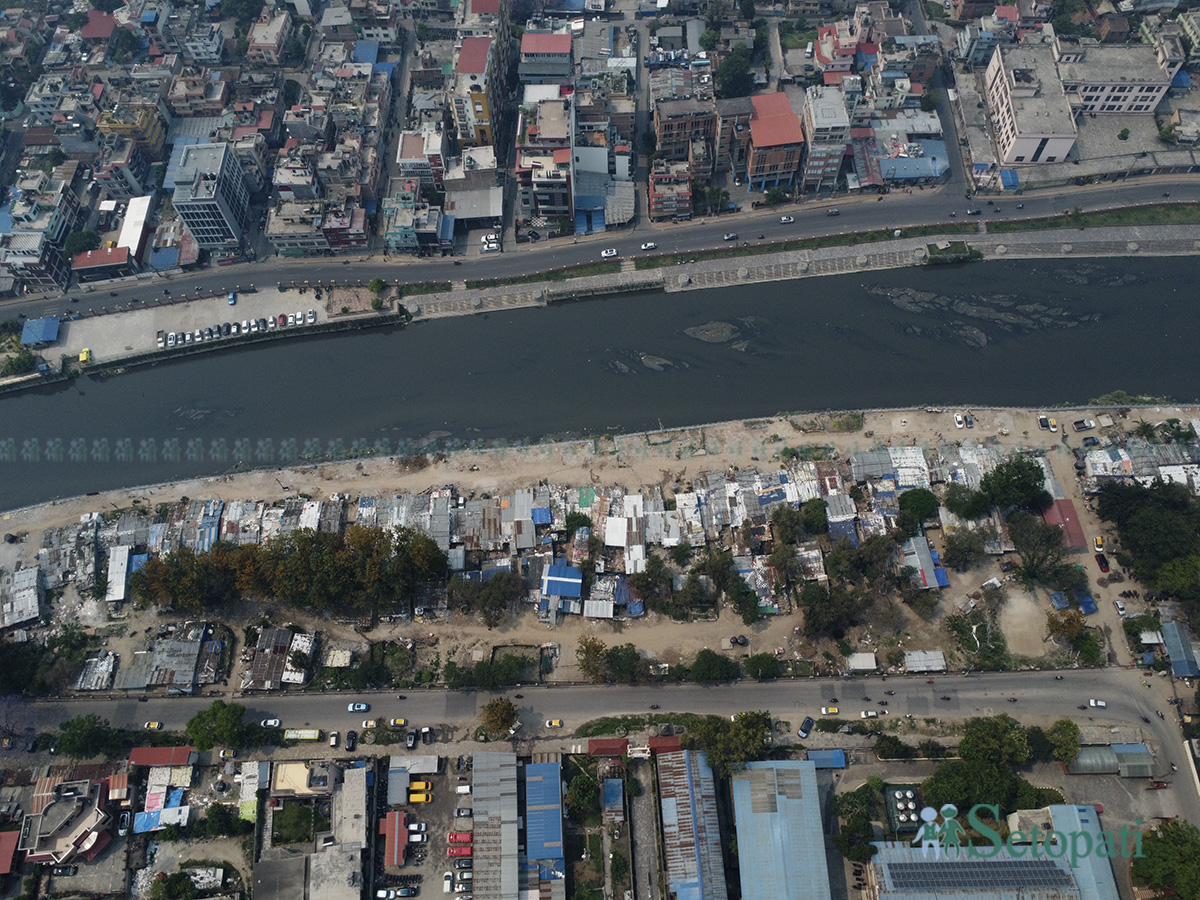
We spoke with senior officials from the Ministry of Home Affairs and KMC about the government’s preparations for clearing the squatter settlements.
According to them, PM Shah plans to remove all families living in the settlements by Saturday or Sunday. He has said that they will be removed from the settlements and relocated to various lodges for the time being, and that the KMC has been asked to bear the expenses of the lodges.
The prime minister has said that after moving everyone to lodges and arranging food and accommodation for them, the work of collecting and verifying their records will be carried out there.
“The prime minister is intent on clearing the squatter settlements by Sunday at any cost. When we asked how it would be possible without verification, he said that if the process of verification is started now, it would take a long time. Therefore, he said, the settlements should be cleared and the families living there should be moved to lodges first, and then the verification process should begin,” officials from the Ministry of Home Affairs and KMC told Setopati.
The prime minister’s directive has already reached the District Administration Office through the Ministry of Home Affairs. Similarly, the directive has also been issued within the police force. Sources say instructions have been given to keep the necessary police force on standby.
“We will now coordinate with the District Administration Office regarding the directive. There will also be coordination with the relevant bodies. The police will manage security arrangements,” said an official from the Kathmandu Valley Police Office.
A source in the administration said that preparations are underway to remove squatter settlements along riverbanks in Bhaktapur as well after Kathmandu.
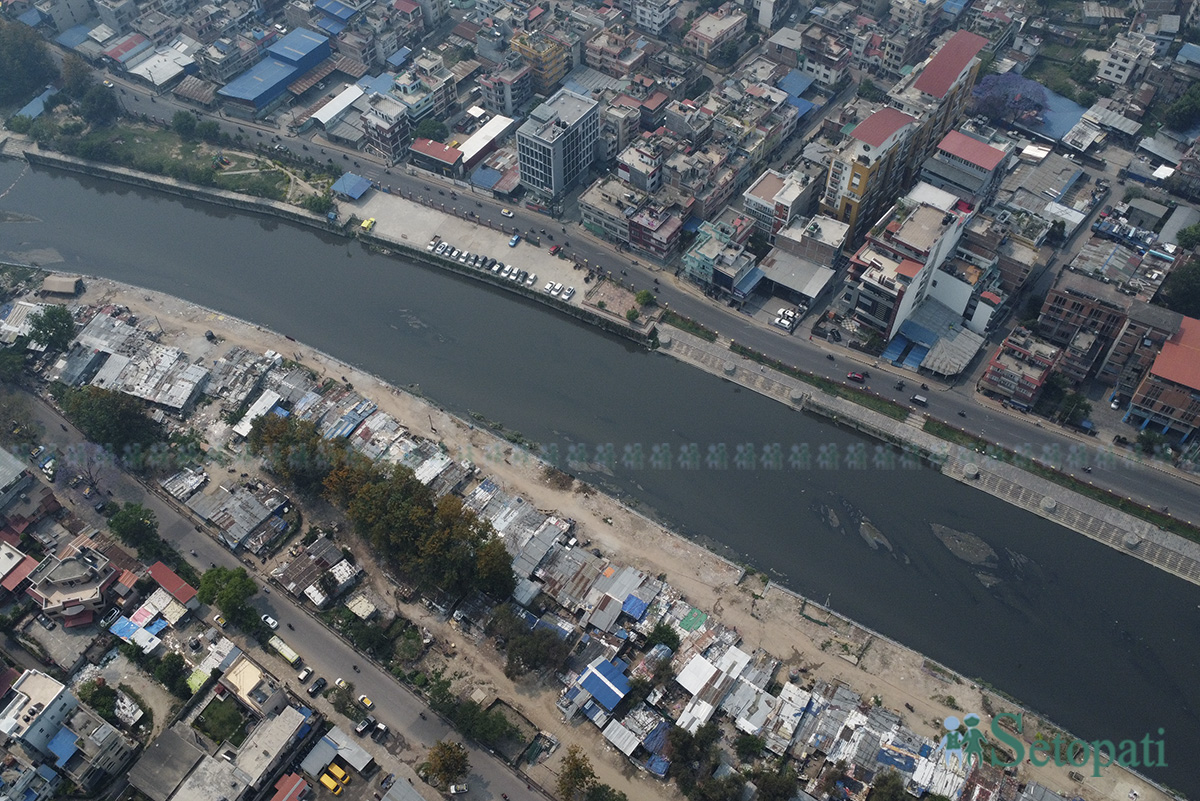
"The message has already been conveyed to remove the squatter settlements in Bhaktapur after Kathmandu. Preparations are underway to sit for a meeting and make the necessary decisions on this matter. It has been said that the riverbanks must be made safe," a Ministry of Home Affairs source said, "However, the exact date could not be confirmed."
When we spoke to KMC’s Acting Mayor Dangol about this, she said that she had been informed about the preparations to remove the squatter settlements.
"This matter has come to my knowledge," she told Setopati. "There is no doubt that the squatter problem must be solved. However, for that, we must move forward in a lawful and procedural manner. No inhumane acts of any kind should be committed in the name of clearing the settlements. Situations where children, women, and the elderly there are manhandled must not be allowed to occur. This will only serve to increase conflict."
When asked, Deepa Dahal, the press advisor to PM Shah, said that she had no information regarding this matter.

Although PM Shah has issued the directive to clear the squatter settlements and keep the squatters in lodges for now, and then start the verification process, there are questions about how this will be implemented. He has left no room for dialogue with the squatter groups. It appears he has only given direct instructions to clear the settlements by Saturday or Sunday.
The haste shown by PM Shah to clear the squatter settlements also contradicts the 100-point governance reform agenda passed by the government through its first Cabinet meeting.
The said agenda mentions in detail how to solve the squatter problem in points 91 and 92.
According to point 91, the integrated digital data collection and verification of landless squatters and unmanaged settlers across the country is to be completed within 60 days. This is the first step in managing squatters. This task falls under the responsibility of the respective local government. In the case of Kathmandu, the Kathmandu Metropolitan City performs this task.
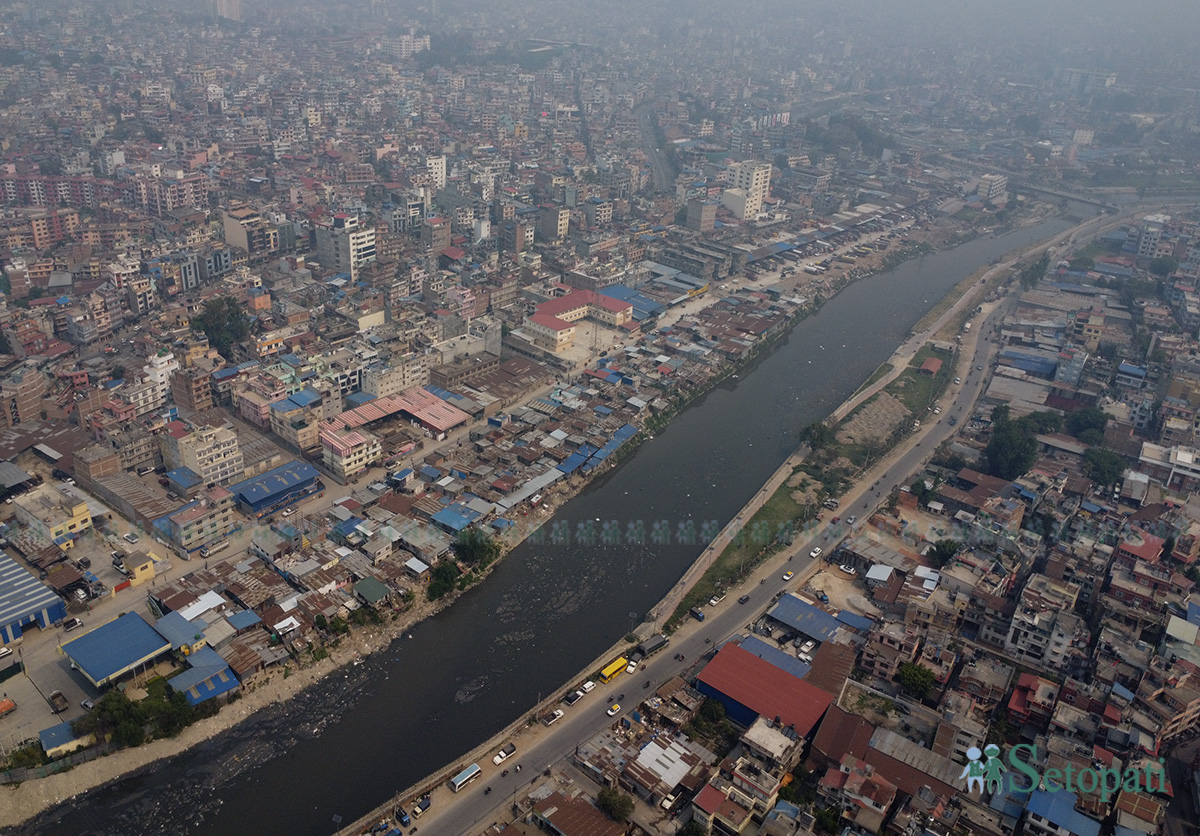
When Shah was the mayor of Kathmandu, he did not even start this work throughout his three-year tenure. Instead of following the process of record collection and verification, he attempted to remove the squatter settlements directly by using bulldozers. This led to a clash between the municipal police and the squatters.
This time too, the work of data collection within the 60 days, as mentioned in the agenda, has not been started. This task still lies with the KMC.
The agenda also states that after record collection, the problem of landless squatters and unmanaged settlers will be solved within 1,000 days (approximately 3 years). This means the agenda passed by the Shah government itself has set a timeframe of nearly three years for this. But here too, the government has shown haste in clearing squatter settlements by violating its own agenda.
The agenda mentions conducting household surveys in coordination with local levels, implementing clear criteria (cut-off dates, income levels, other property ownership) to identify actual beneficiaries, updating records of public, unregistered, and guthi land, and preparing a digital database based on mapping and geographic information systems (GIS).
The agenda states that genuine squatters identified through all these processes will be provided land in phases, or arrangements will be made for their rehabilitation in dense urban areas as an alternative through integrated housing.
Under the agenda, a public dashboard will be operated to make the land distribution and resettlement process completely transparent, and the overall program will be coordinated, monitored, and implemented under the direct supervision of the relevant ministry.
Similarly, point 92 of the agenda states, "To protect public land and control encroachment, work will begin immediately to prepare digital records, strengthen monitoring systems, and remove illegal occupations."
It also mentions strictly stopping new encroachments and conducting a special campaign to remove illegal occupations.
At present, the government appears to have skipped the first point and directly jumped to the second.
Some lawmakers from the ruling Rastriya Swatantra Party (RSP) have said that it is not in line with the rules to clear squatter settlements by jumping to the second point before the work mentioned in the first point has begun.
“The directive issued by the prime minister in haste will create a situation of conflict,” said an RSP lawmaker. “During the election too, our party had vowed not to let injustice happen to squatters. To try to clear the settlements directly now without record collection and verification is also contrary to the promise made by the party."
Earlier, RSP President Rabi Lamichhane had said that if bulldozers were used in squatter settlements, he would be the first to stand in resistance. Journalists asked him about this issue during a central committee meeting.
“I am not aware of such a decision by the central government. We have said that we will manage, not displace. That is the government’s policy,” he said. "It has been heard that the local government has done such a thing somewhere. You might be asking about the responsibilities carried out by the local government. We stand firm on the central government's policy."
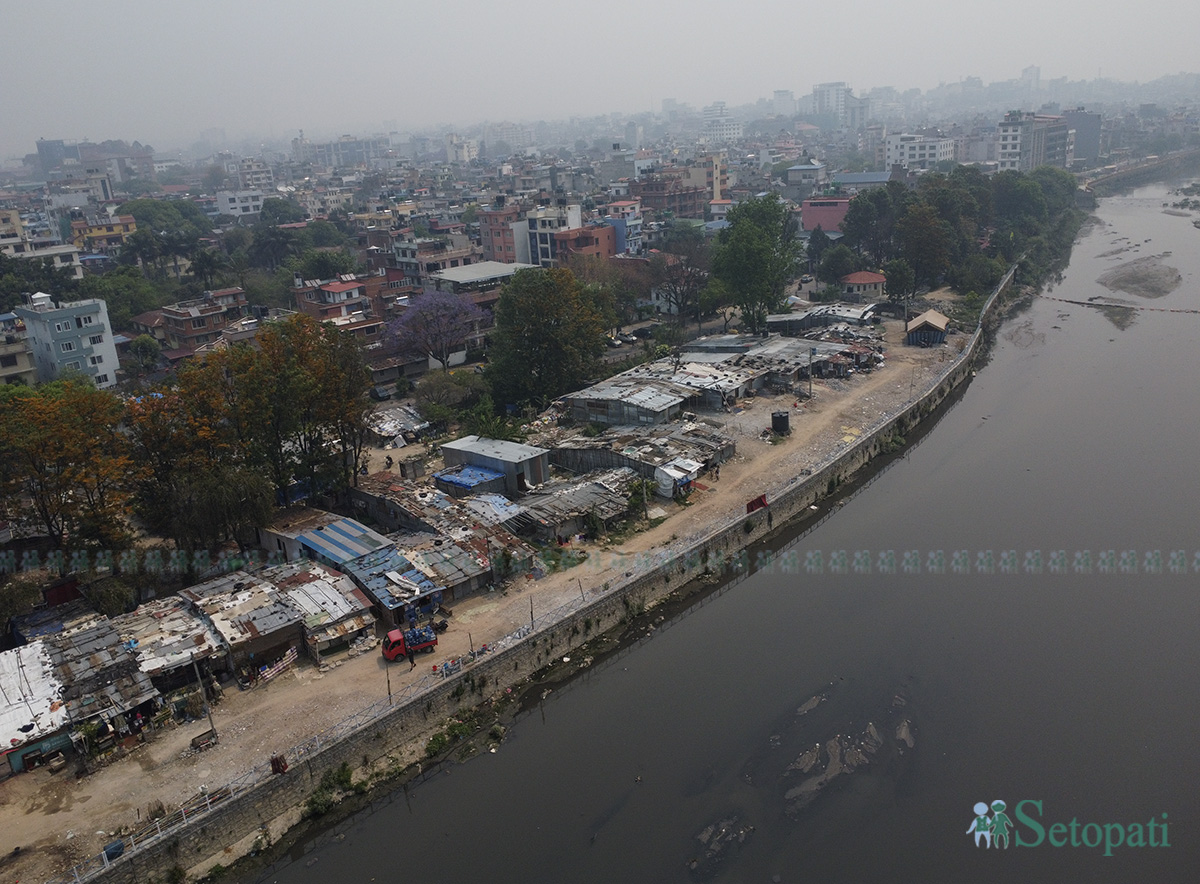
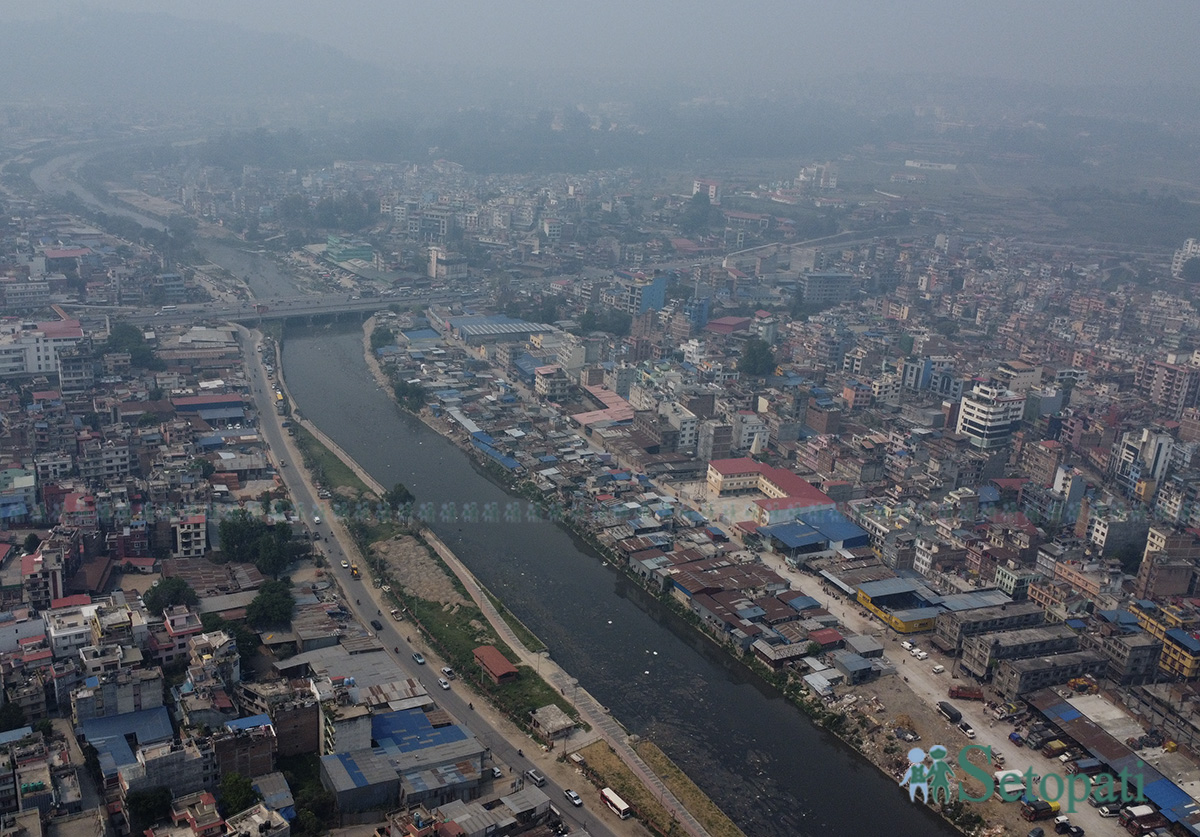
In the Kathmandu Valley, there are problems related to squatters and unmanaged settlers in areas such as Balkhu, Thapathali, Sinamangal, and Shantinagar. People have even occupied land on the pathways of the Bishnumati and Manohara rivers. There is no clear data on how many of them are genuine squatters and how many are not.
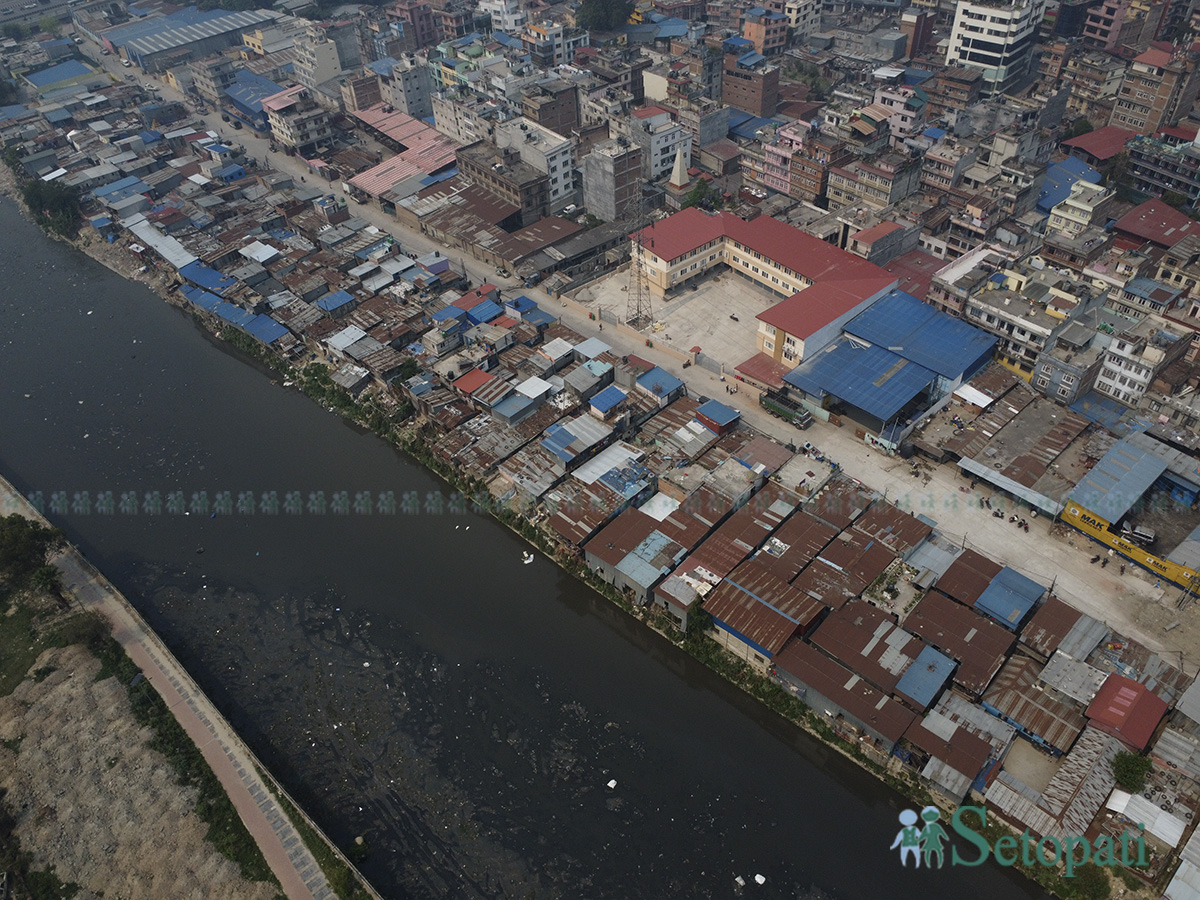
According to a 2022 report prepared by the High Powered Committee for Integrated Development of Bagmati Civilization, there are 3,496 households of unmanaged settlers on the valley’s riverbanks.
Among them, 2,245 households are in Kathmandu Metropolitan City, 90 in Kageshwari Municipality, 156 in Budhanilkantha, 17 in Lalitpur Metropolitan City, and 773 in Bhaktapur Municipality.
In the past three years, some additional households may have been added. Based on this, it is estimated that there are nearly 4,000 unmanaged settlers in the Kathmandu Valley. It is not certain whether all of them are genuinely landless.
According to the law, Kathmandu Metropolitan City must visit squatter settlements and have each household fill out a form. There is a rule that employees of the ward office itself must be deployed for this. The Land Commission has already prepared the format of the form.
Many local governments that have agreements with the commission have already completed this process and submitted the forms to the commission.
However, Kathmandu Metropolitan City has not yet started this process.
According to the commission, applications have been submitted along with the forms by 168,441 landless squatters, 872,181 unmanaged settlers, and 88,895 landless Dalits across the country. After verification, land is to be provided once to genuine landless Dalits, squatters, and unmanaged settlers.
Since the promulgation of the new constitution, 8,848 landless Dalits, squatters, and unmanaged settlers have received land ownership certificates. Among them, the number of unmanaged settlers is the highest.
In Kathmandu, however, no one has received a certificate yet. The reason for this is that the metropolitan city has not had the forms filled out in the squatter settlements.
According to the law, landless squatters are to be provided land once on the condition that it cannot be sold or transferred for 10 years.
The law also states that land in religious, cultural, and strategic areas cannot be provided to such people. They also do not get public land, or land that is located on the banks of rivers, streams, or canals, in risk-prone areas, in national parks or protected areas, or on roadsides.
Therefore, the law does not allow for providing land in those same locations to landless squatters residing on the banks of the Bagmati, Bishnumati, and other rivers of the valley.
The government will provide 130 square meters of land for housing to landless squatters and unmanaged settlers in the Kathmandu Valley and urban areas. In other places, 340 square meters of land will be provided.