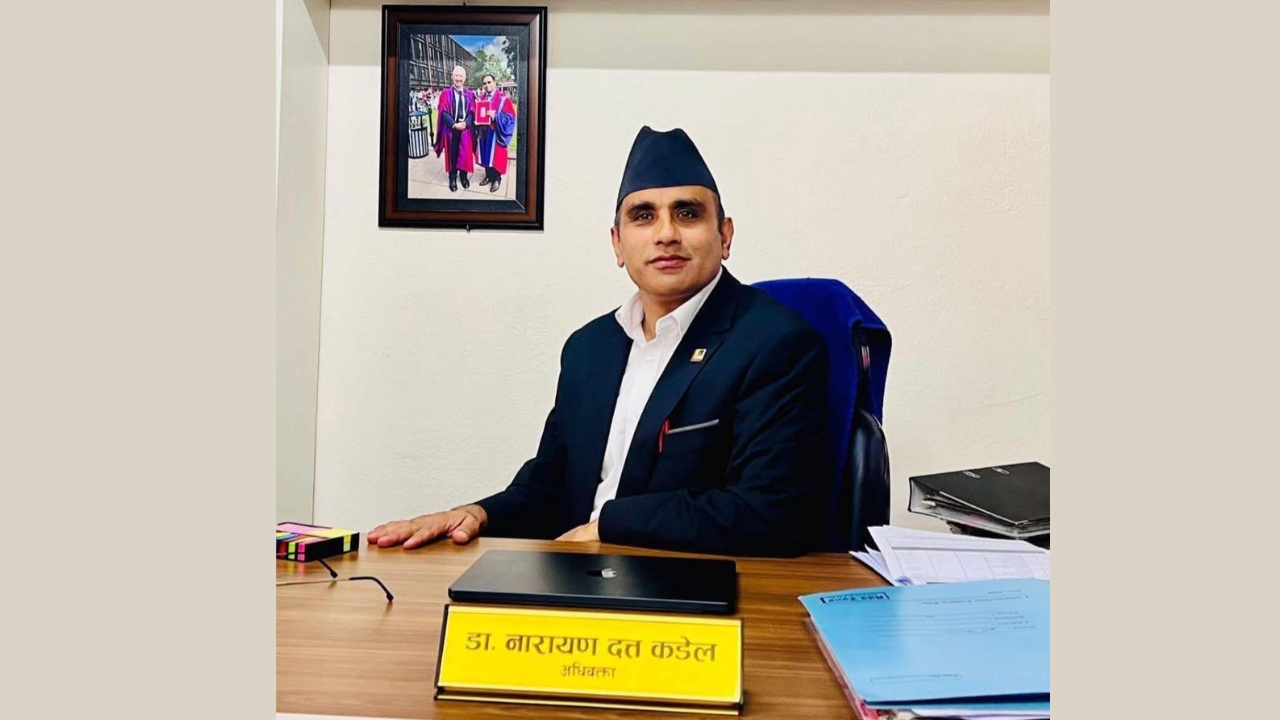
The Supreme Court has summoned both parties for a discussion regarding a writ petition filed questioning the eligibility of Attorney General Narayan Datta Kandel.
On Thursday, a bench of Justice Kumar Regmi ordered both the petitioners and defendants to appear for a discussion on whether or not an interim order should be issued, according to Supreme Court spokesperson and Joint Registrar Arjun Prasad Koirala.
Koirala said that the court has summoned both parties for April 30.
Three separate writ petitions were filed at the Supreme Court on Wednesday claiming that Kandel is not eligible to serve as the attorney general.
Conducting a preliminary hearing on those petitions, Justice Regmi also issued a show-cause order in the name of the defendants.
The petitioners claim that Kandel's appointment fails to meet the eligibility criteria prescribed by Articles 157 (3) and 129 (5) of the Constitution.
The petitions also seek to annul his appointment made by the president on April 5 as well as the oath of office administered by the chief justice.
Furthermore, the petitioners have requested an interim order to prevent Kandel from performing any duties in the capacity of attorney general until the case is resolved.
A writ petition questioning the attorney general's eligibility had been submitted previously too, but the court administer refused to register it.
Article 157 (3) of the Constitution stipulates that a person qualified to be a judge of the Supreme Court is eligible for appointment as the attorney general. Article 129 (5) outlines the qualifications for the chief justice and Supreme Court justices.
To be eligible for the post of attorney general, a person must have obtained a bachelor’s degree in law and either practiced law continuously for at least 15 years as a senior advocate or advocate, or worked continuously in the field of justice or law for at least 15 years and gained reputation as a distinguished jurist.
The petitioners claimed that Kandel does not meet these qualifications, specifically asserting that he has not practiced law continuously for 15 years.