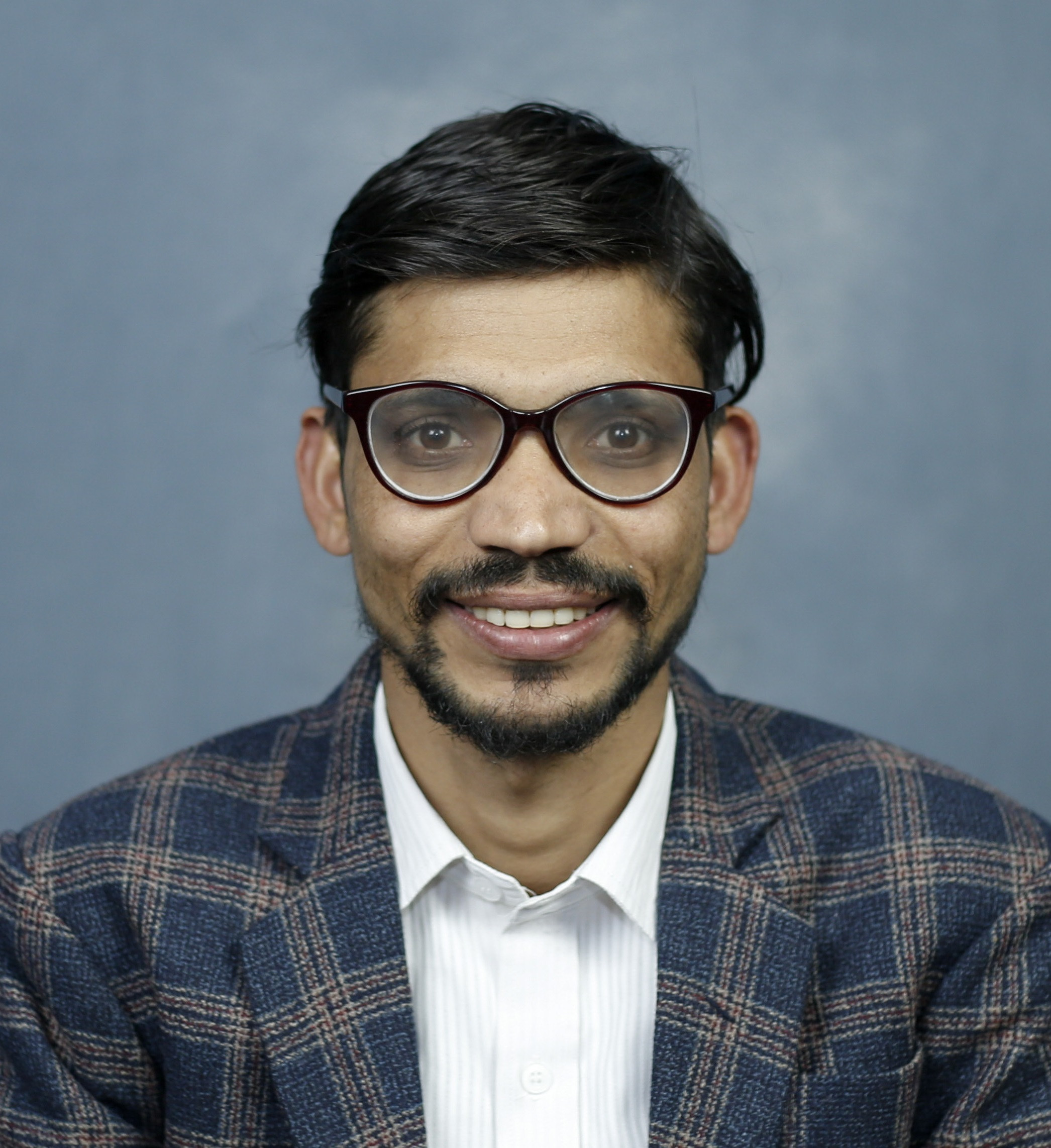
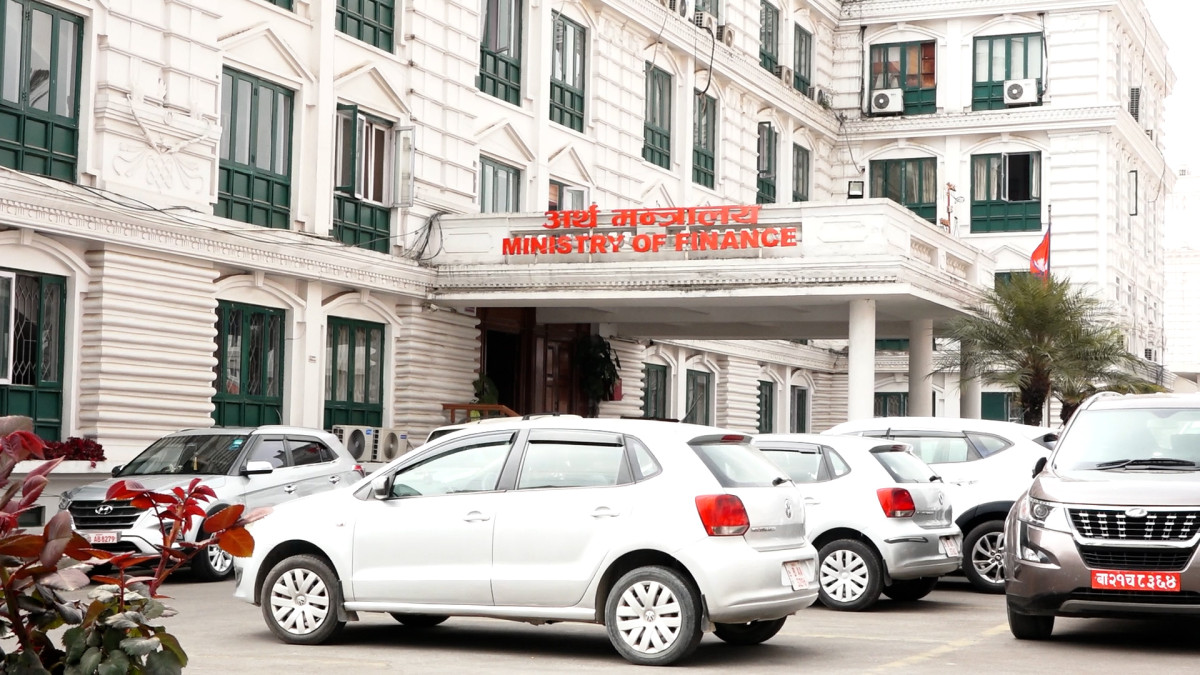
After Finance Minister Swarnim Wagle decided to provide salaries to government employees twice a month (every 15 days), questions have arisen as to why this decision was made and what benefits it will bring.
Finance Minister Wagle made the decision on April 17 and has already issued a circular to the Financial Comptroller General Office for its implementation.
Setopati spoke with some high-ranking officials at the Ministry of Finance about why this new arrangement of two installments was made, breaking the tradition of providing salary only after the month ends, and what its impact will be.
They said that this decision is not just an administrative change but a strategic move to improve the country’s overall economy and the management of employees' personal expenses and income.
Financial Comptroller General Shova Kanta Poudel said that this would significantly help in making the market more dynamic.
"This will make the market dynamic. When people receive money every 15 days, their spending increases. This is a universally accepted principle of economics!" he said.
At a time when business people are citing the lack of demand in the market as the major problem at present, Paudel believes this government decision will play a big role in increasing market demand.
"Our main problem right now is the lack of demand. We must find ways to increase demand," Anjan Shrestha, senior vice-president of the Federation of Nepalese Chambers of Commerce and Industry, said during a meeting with some journalists on Sunday.
According to him, when employees receive money in the middle of the month, their consumption capacity increases. This increases the demand for goods and services in the market, fueling production and trade.
He mentioned that when cash flow in the market is balanced and consumption increases, tax revenue received by the government is also expected to increase.
Ministry officials say this system will also help in state treasury management. Generally, when billions of rupees were paid as salary all at once at the end of the month, it used to create sudden pressure on the state treasury. Paying the employees every 15 days will divide that load into two parts, which will help keep the government's cash flow balanced, the officials say.
"This change will not add any extra financial burden or interest liability for the government. Employees will simply receive the money they are entitled to in two installments, a bit earlier," a high-ranking official of the Finance Ministry said. "This will not increase the government's financial liability, but it will accelerate the economy."
They also expect this decision to provide relief to employees.
Lower-level employees used to wait for their monthly salary for their household expenses, and sometimes had to resort to borrowing or face financial stress. With payment every 15 days, they will now be able to manage their daily needs, bill payments, and household expenses more easily and in a planned manner.
It is believed that as financial stress becomes less, it will boost the morale of employees, which will impact their performance and efficiency.
The government is planning to start this new system with civil servants for now.
According to Financial Comptroller General Poudel, there is no technical problem in implementing this systems, and preparations are being made to apply it this year itself. It is initially being implemented as a pilot program. After assessing its effectiveness in the civil service, the goal is to gradually expand it to teachers, army, police, and other public services as well.
Officials say that through this system, money from the government treasury will reach the employees faster in the economic cycle. This will increase market demand to some extent. When demand increases, the market becomes dynamic, and ultimately, government income will improve.