Gauri Bahadur Karki, chairman of the inquiry commission formed to probe the incidents that occurred during the Gen Z movement on September 8 and 9 last year, has said that the panel has recommended action against those who fired shots, those who ordered the firing, and those who did not stop it.
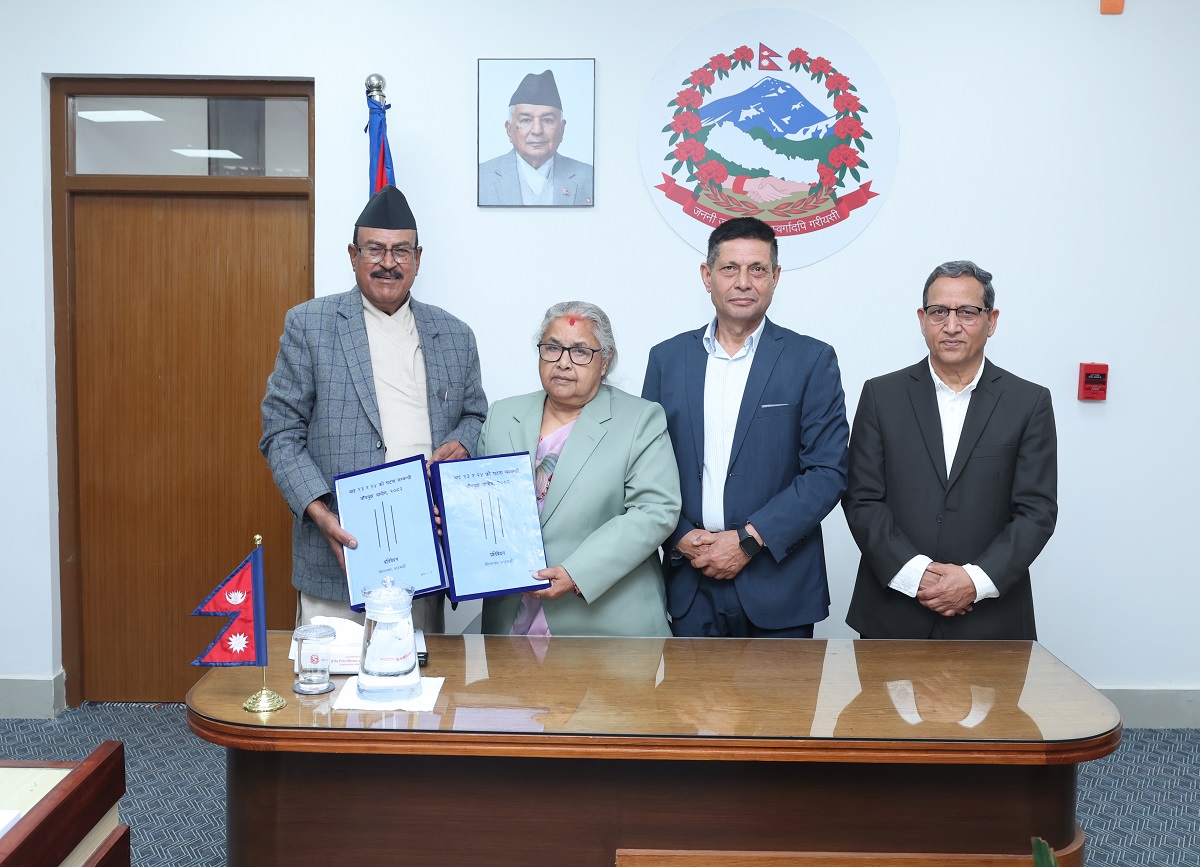
Karki submitted the commission’s report to Prime Minister Sushila Karki on Sunday.
The report, prepared after more than five months of investigation, contains various recommendations.
Speaking to journalists after handing over the report, Karki said that the commission has recommended action against those who ordered the firing, those who carried it out, and those who did not intervene to stop it on September 8.
“We have made recommendations in the report. The government had asked us to investigate the incidents of September 8 and 9 and recommend what kind of action should be taken against the guilty. Accordingly, we have recommended action against those responsible for the deaths of youths. The recommendations cover everyone involved – those who fired shots, those who ordered the firing, and those who did not stop it.”
When asked by a journalist whether the commission had recommended criminal action against the then prime minister or chief district officer, Karki paused briefly and replied: “We have recommended action against those responsible. The government will say who they are.”
According to a source, the report categorizes the recommended actions into three groups: political leadership, government officials, those involved in the September 9 incidents.
On September 8, protests intensified in front of the Federal Parliament building in New Baneshwar, Kathmandu. Police began using force after demonstrators attempted to break the compound wall of the Parliament complex.
As the crowd grew increasingly aggressive, the District Administration Office, Kathmandu, imposed a curfew order around 12:30 pm.
It has emerged that gunshots were fired within 10 minutes of the curfew being imposed.
During that time, then Inspector General of Police Chandra Kuber Khapung reportedly said over a walkie-talkie that officers did not need to seek further permission to use necessary force since the curfew order had already been issued.
“12:40: Curfew already in place, no need to seek permission, use necessary force,” Khapung reportedly said.
This exchange was later included in a video report by the BBC.
At the time, the Kathmandu District Security Committee was chaired by Chhabilal Rijal. Gunfire began after he issued the curfew order. The committee includes the chiefs of the District Police Range, Kathmandu, and the Armed Police Force, among others.
“The report has recommended action against employees under the civil service and police acts. Those laws don’t apply to political leadership. Therefore, criminal action has been recommended for political leadership,” the source said.
At the time of the September 8 shooting in front of the Parliament building, then home minister Ramesh Lekhak and IGP Khapung were attending a parliamentary committee meeting along with then home secretary Gokarna Mani Duwadi.
The September 8 protest left 19 people dead, most of them youths. Following those deaths, protests intensified further on September 9.
According to the source, separate recommendations have also been made regarding criminal acts that were carried out during the September 9 unrest.
Altogether, 76 people died during the two days of the Gen Z protests.
Commission spokesperson and former AIG Bigyan Raj Sharma said that the report runs approximately 8,000 to 10,000 pages.
“We have made a fact-finding effort regarding what occurred on the 8th and 9th, and have provided opinions and recommendations based on evidence. The government has 'owned' the report and will take the necessary action," he said. "Those who committed mistakes will face action; those who did not, will not."
Asked whether the report will be made public, Sharma said that the decision rests with the government.
“The prime minister thanked us and. She said that the report is now the government’s property and that they will do what’s necessary,” he said.
According to Ram Rawal, the prime minister’s press advisor, Prime Minister Karki and Home Minister Om Prakash Aryal will study the report.
“The prime minister has received the report. She said that she and the home minister will study it and then present it to the Cabinet. She said that they will see what parts can be made public. Even if only the conclusions can be released, they will be made public,” Rawal said.
He added that since the report could contain matters related to security agencies, matters that require further investigation, or matters that could benefit the guilty, details would be published to the extent possible.
Rawal said that the report will be presented at the next Cabinet meeting.
Regular Cabinet meetings are typically held on Mondays and Thursdays.