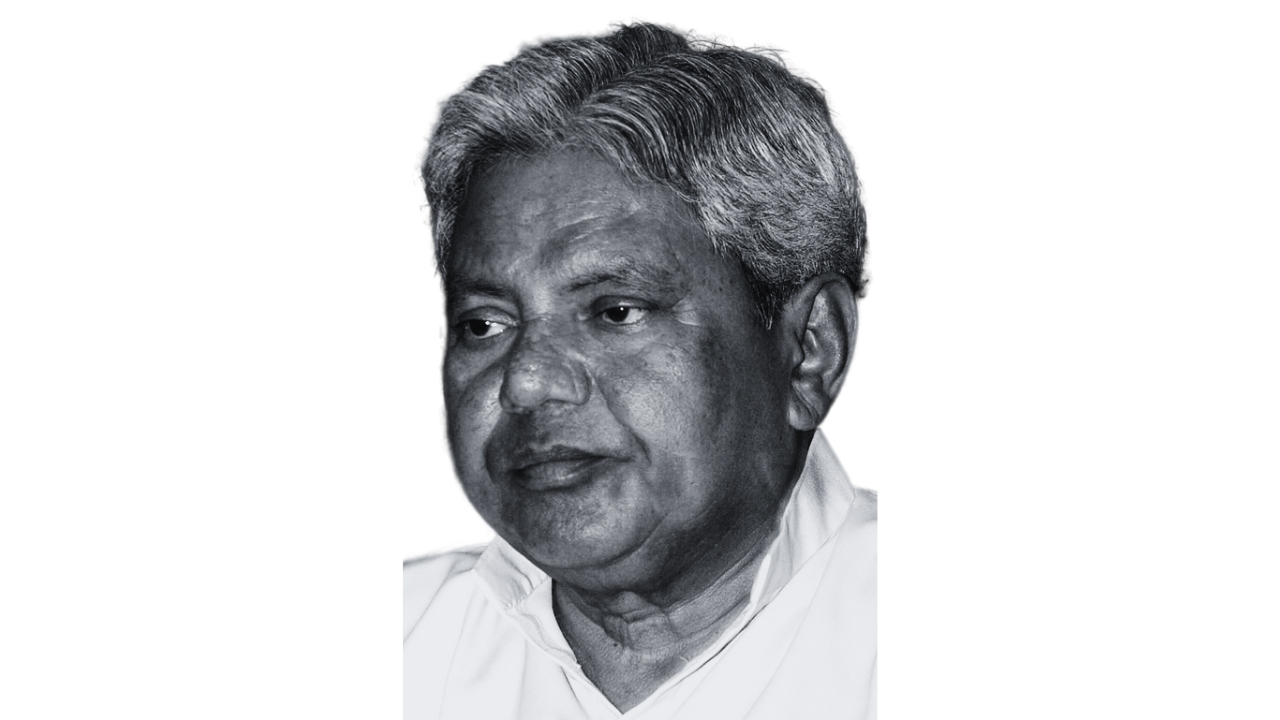
Former minister Badri Prasad Mandal passed away on Tuesday in Biratnagar at the age of 88.
His family confirmed that he died at his residence in Ghoghapul Chowk, Biratnagar-9.
According to his niece, Jasmin Mandal, his health was normal until Monday night. "In the morning, he went to the restroom and returned to his bed on his own. He passed away in his sleep," she said.
Mandal saw many ups and downs during his long political career.
He remained at the center of Nepal’s power politics throughout the Panchayat era, the multiparty democracy period, and the direct rule of former king Gyanendra Shah.
Mandal occupied central roles in governance until the 2006 People's Movement paved the way for a republic. However, he virtually disappeared from the political arena thereafter.
Mandal, who hailed from Majhare in Jahada Rural Municipality-2 in southeastern Morang, entered Panchayat politics in 1979.
Those who knew him closely say he possessed an immense ability to fit into any political system.
"That is why he remained in power during the Panchayat, during the multiparty era, and even during the king's direct rule," said a Madheshi leader from Biratnagar who was once with Mandal in the Nepal Sadbhawana Party. "However, he could not fit in during the republic era."
True to that observation, Mandal climbed the ladders of power starting as a member of the National Panchayat. In 1985, he served briefly as the minister of state for finance and later as the minister for forests.
Even after the political change of 1990, he continued to find similar opportunities.
Mandal lost to Nepali Congress leader Shailaja Acharya in the 1994 mid-term elections in Morang, but defeated her in the 1999 elections.
Following the 1990 transition, Mandal became active in the Nepal Sadbhawana Party. He served as the party’s acting chairman for some time after the death of its founding chairman, Gajendra Narayan Singh.
During then-king Gyanendra Shah's direct rule, Mandal again returned to power, serving as deputy prime minister in the government formed by Shah.
Mandal is survived by two wives, three sons, and three daughters. Of his four sons, one has already passed away.