Chief Minister of Madhesh province Saroj Kumar Yadav has resigned from his position.
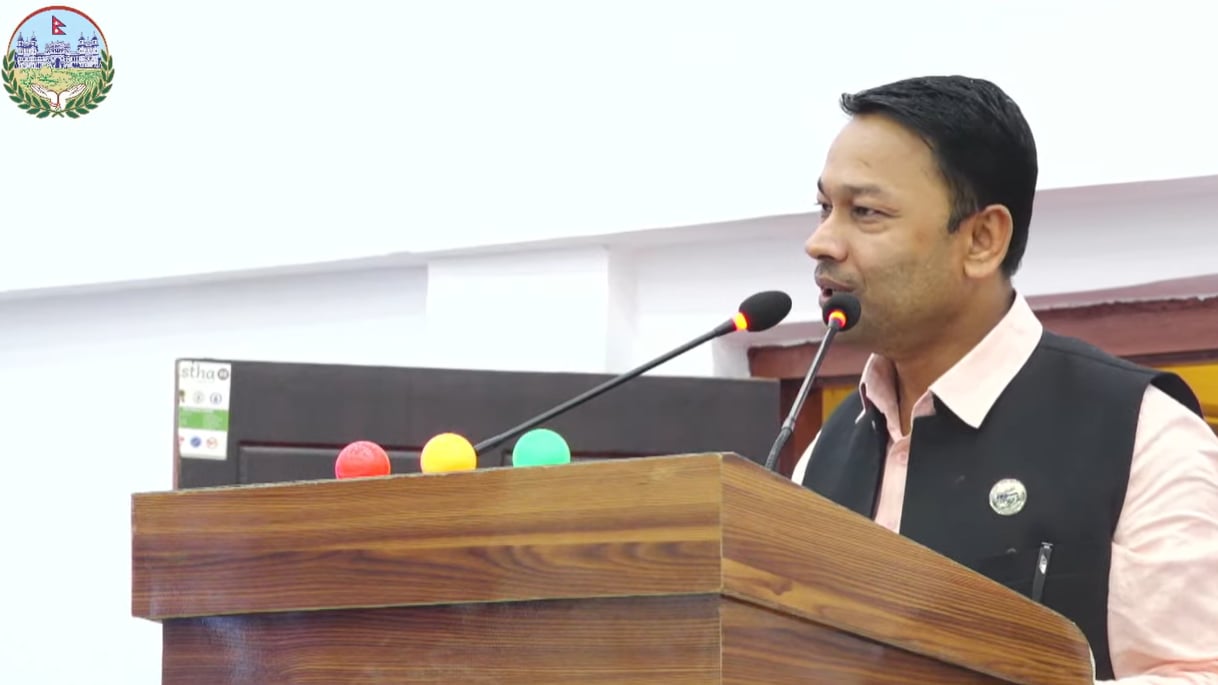
He submitted his resignation while presenting his views during the provincial assembly meeting on Wednesday at 2 p.m.
After the Supreme Court's mandamus order to take a vote of confidence within 24 hours, the chief minister had said that he would seek a vote of confidence on on Wednesday. However, realizing he would not secure the confidence vote, he expressed anger toward the opposition parties and resigned.
Yadav, the parliamentary party leader of the UML in Madhesh province, was appointed chief minister on November 9 and took the oath of office the next morning at a hotel in Bardibas, Mahottari.
He had taken the oath after receiving the appointment letter from then-province chief Sumitra Subedi Bhandari. After Bhandari appointed him as chief minister under Article 168 (3) of the Constitution, lawmakers from seven parties approached the Supreme Court.
On Monday, the Supreme Court issued a mandamus order directing Yadav to take a vote of confidence within 24 hours.
Accordingly, a provincial assembly meeting was called for Wednesday morning.
However, the meeting was adjourned until 2 p.m. since no representatives from the government were present at the meeting.
The meeting resumed at 2:30 p.m. but members from opposition parties were absent. Chief Minister Yadav said that the opposition parties were absent since they did not have the courage to face him directly.
Deputy Speaker Babita Kumari Raut Ishar had allotted time to Chief Minister Yadav to address the house and present the motion for vote of confidence.
During his address, Chief Minister Yadav said that parties' conduct in federalism must be digestible to the people and expressed anger toward the opposition parties, including the Nepali Congress.
He mentioned that he had to take the oath at the hotel because the parties had surrounded the Office of the Province Chief.
In the 107-member provincial assembly, the government needs 54 votes to maintain a majority.
The largest party, UML, has a total of 25 lawmakers including the speaker. One of the lawmakers is suspended.
Even with the support of the Nepal Federal Socialist Party and Rastriya Prajatantra Party, each with one seat, it would not be sufficient to sustain the UML government.
While the UML is mathematically weak in the provincial assembly, the seven-party alliance is in a strong position with the support of 73 lawmakers. The alliance includes 22 members from the Nepali Congress, 19 from the Janata Samajwadi Party Nepal, 13 from the Janamat Party, 16 from the Nepali Communist Party (9 from the Maoist Center and 7 from the Unified Socialist), 8 from the Loktantrik Samajwadi Party (LSP), and 1 from the Nagarik Unmukti Party.
Earlier, the first meeting of the day, which began at 10:30 a.m., was adjourned since government representatives were absent.