The government has decided to implement the report of the High-level Commission on the Investigation and Protection of Government and Public Land (Rawal Commission), which was submitted in 1995 but has remained unimplemented for the past 31 years.
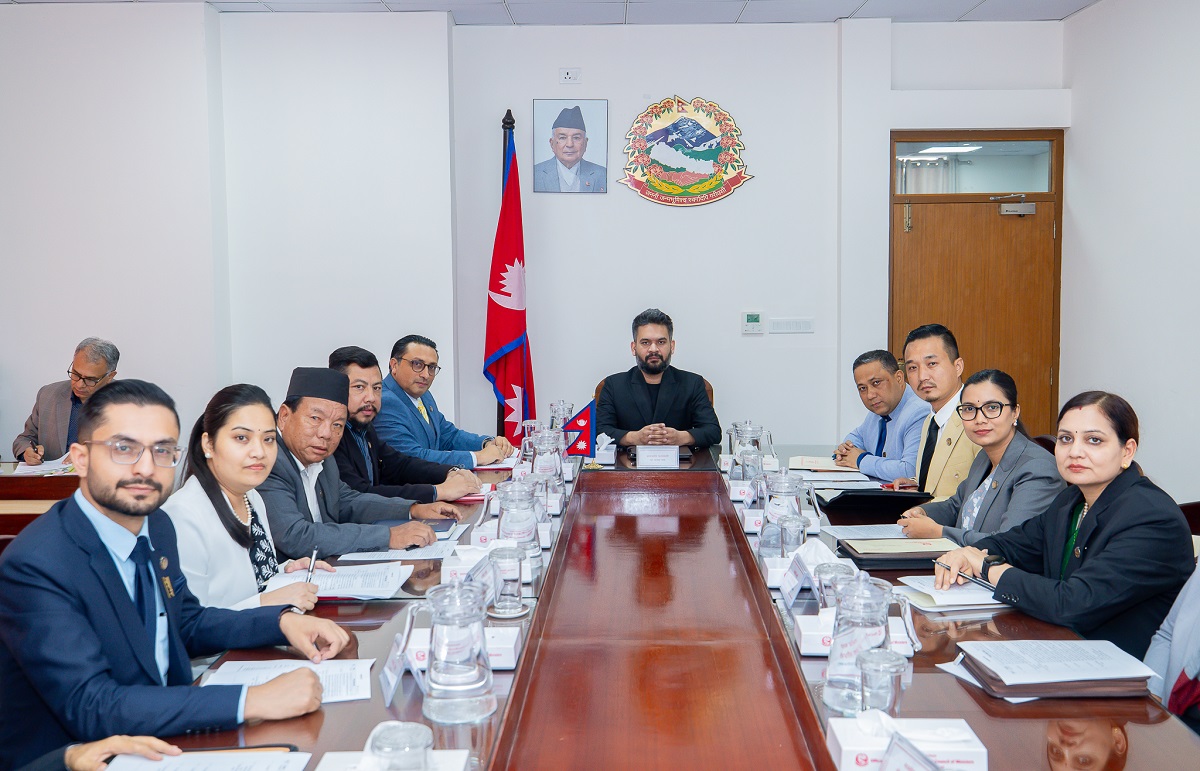
The decision was made during a Cabinet meeting held on Friday.
Basing its move on the Supreme Court’s order directing the government to implement the report, the Cabinet has decided to systematically document and protect government and public land across the country.
According to Dipa Dahal, the prime minister’s press advisor, the Cabinet has instructed the Ministry of Land Management, Cooperatives, Federal Affairs, and General Administration to carry out the decision.
The Cabinet decision has cleared the way for the government to reclaim all encroached government and public land identified by the Rawal Commission within all 35 wards of the then Kathmandu Municipality, Dahal said. Based on a survey carried out in 1964, the report had identified 1,859 ropani 14 aana 3 paisa and 3 daam of encroached public and government land in Kathmandu.
“The Rawal Commission report should have been implemented back then, but it could not be. Today's Cabinet decision has opened the way for its implementation. The Ministry of Land Management, Cooperatives, Federal Affairs, and General Administration will carry out this work in coordination with all relevant agencies by completing the necessary legal procedures,” Dahal said.
She added that legal action would also be initiated under prevailing laws against those found to have encroached on the government and public land identified by the commission.
At the time of the commission's study, Kathmandu had over 18,941 ropani of public and government land, of which over 1,859 ropani (around 10 percent) had already been encroached upon, Dahal said.
According to her, the report found that 1,187 encroachers had been occupying 308 plots of government and public land for private use. Another 6,906 individuals had merged 1,762 plots of government and public land into their private properties. Altogether, 8,093 encroachers were found to have occupied 2,070 plots of public and government land.
A high-level commission was formed by the then government on October 7, 1993, under the chairmanship of former government secretary Ram Bahadur Rawal. The commission was tasked with addressing widespread encroachment and illegal registration of public and government land, and serious issues concerning protection of public property.
After conducting a detailed study of government and public land within Kathmandu, the commission submitted its report along with recommendations to the government in 1995.
However, the commission’s report remained unimplemented due to political and administrative apathy.
Eight years later, in 2003, advocate Prakash Mani Sharma and others filed a writ petition at the Supreme Court seeking a mandamus order to implement the Rawal Commission’s report. The petition named the Office of the Prime Minister and Council of Ministers, among others, as defendants.
During hearings on the petition, it was deemed appropriate to form a committee involving experts to conduct a study on the implementation of the Rawal Commission’s report. On May 31, 2009, the Supreme Court ordered the formation of an expert committee under the coordination of the secretary at the Office of the Prime Minister and Council of Ministers to study the report and submit a report along with recommendations.
The expert committee submitted its report on March 14, 2010, recommending that investigations be expanded beyond Kathmandu to include government land encroachment elsewhere in the country.
After reviewing both reports, the Supreme Court held a final hearing on May 26, 2010, and issued an order directing the government to swiftly implement the Rawal Commission’s report, investigate encroachment of government and public land nationwide, and take action in accordance with the law on a high-priority basis.
Previous governments, however, did not implement the court's directive.