KP Sharma Oli's sense of humor is marvelous. There is perhaps no other leader with his ability to be quick-witted, humorous, and to present every topic in a juicy and funny manner decorated with proverbs and idioms! It turns out this characteristic isn't just Oli’s personal trait. The very climate of Jhapa is like
Between February 12 and March 2, Setopati reached the homes and neighborhoods of more than 10,000 voters living in 11 different constituencies across the country and spoke with them.
We have already published detailed election analyses of all these 11 constituencies. We also attempted to understand the leanings of hundreds of voters in an additional three constituencies. However, because we could not speak with the required number of voters, we did not write analyses for those areas. Beyond that, we have also heard what voters in their respective working areas told our colleagues.
Based on these conversations, we are analyzing what kind of results might emerge nationwide in the general election concluded today.
These few constituencies do not fully represent the voters across the entire country. However, we feel that the way voters in these districts are voting, and what they have told us, represents a significant portion of the country's 'mood.' Furthermore, while talking to voters, we discovered that they are in favor of a 'vote change' this time. We believe the only matter for analysis is how deep and widespread this wave of change is across different parts of the country.
To find the answer to the question of how voters across the country might vote and what kind of 'mandate' they might give this time, we have examined the conversations we had with them alongside past election result trends. Additionally, we have prepared this analysis of national results based on the experience of analyses we conducted in the past.
First, let’s talk about the results of the 11 constituencies we wrote about this time. In the analyses we published, we wrote about the voters' opinions and which candidate is ahead or behind. Today, we are writing about who among those 11 constituencies is sure to win and by what margin. After that, we will discuss the national election results.
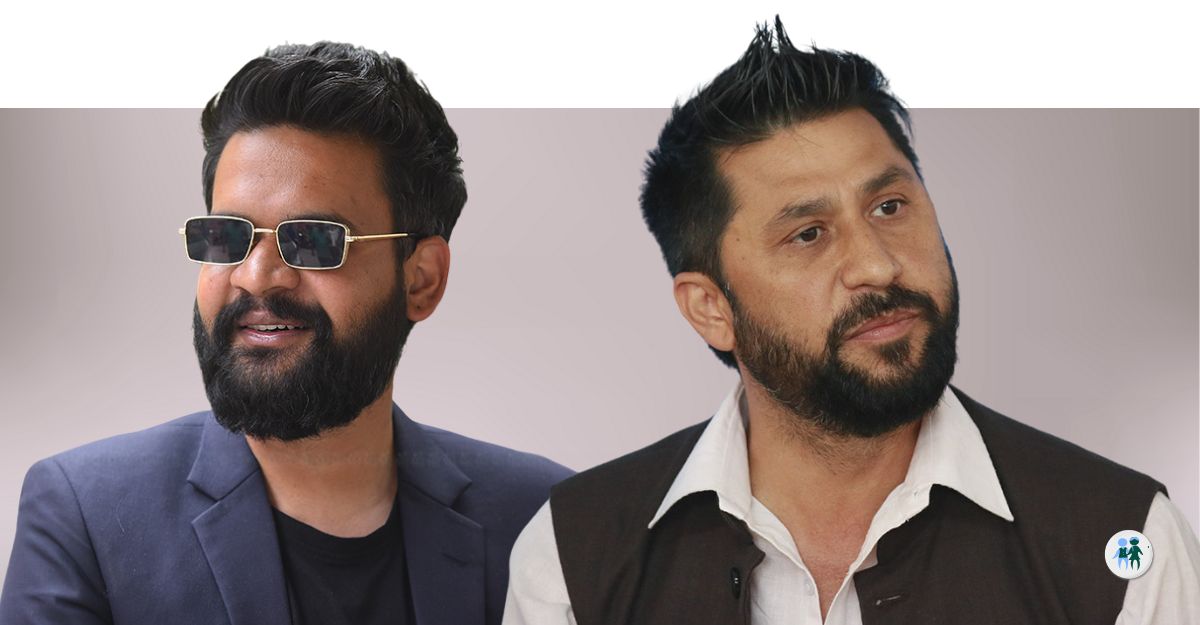
One of the 11 we analyzed is Jhapa-5. Here, the senior leader of Rastriya Swatantra Party (RSP) and its prime ministerial candidate Balen Shah will defeat CPN-UML Chairman KP Sharma Oli by a large margin. Shah could even receive double the votes secured by Oli.
Among the 11 constituencies we analyzed—Jhapa-5, Sarlahi-4, Chitwan-3, Kathmandu-3, Saptari-2, Saptari-3, Dhanusha-3, Bhaktapur-2, Kathmandu-6, Rupandehi-2, and Dang-2—we believe RSP candidates will win with a large margin in nine of them, including Jhapa-5.
In two constituencies; there is a tough competition between RSP and Ujyaalo Party Nepal in Kathmandu-3, and between RSP and Nepali Congress (NC) in Sarlahi-4. We believe that whoever creates a momentum in their favor in the final days may win.
Now let's talk about the election results at the national level.
While talking to voters in various constituencies of the country, we saw a clear wave in favor of RSP this time. Now the question arises—how big is that wave? Will RSP become the largest party in parliament? Will RSP bring a clear majority in parliament? Or, will it secure a two-thirds majority this time?
If we look back once at the election results of 2008, it will be easier for us to analyze and understand the potential results this time.
In 2008, the then CPN-Maoist brought a total of 29.28 percent of the votes in the proportional representation (PR) category. Even while bringing this many votes in the PR category, the Maoists won 120 out of 240 seats (50 percent) in the first-past-the-post (FPTP) category
In that election, NC got 21.1 percent of the votes in the PR category, while UML received 20.33 percent. In the FPTP category, however, NC won only 37 seats (15.4 percent) and UML 33 seats (13.7 percent).
The Maoists won 50 percent of the seats in the FPTP category while securing nearly 30 percent proportional votes. Why did NC and UML win only about 15 and 13 percent seats in the direct category when they won 21 and 20 percent votes in the proportional category?
This 'dynamics' of electoral arithmetic is important. If we understand this, it will be easier to understand the potential results of this year's election.
We have looked at the combined votes received by each candidate of the Maoists, NC, and UML in the FPTP system in 2008. In doing so, we found that there is a difference of only a few thousand between the votes they received in the PR category and the total votes received in the FPTP category. That is, they received similar votes in both PR and FPTP systems.
Now let's see how the Maoists managed to win 50 percent of the seats even when receiving just 30 percent of the PR votes.
The straight and simple answer to this is that a large portion of the remaining votes was divided between its closest competitors, NC and UML. Over 41 percent of the votes were divided almost equally (21.1 percent and 20.33 percent) between NC and UML. The remaining votes were divided among other small parties.
Because of this, in the average constituency, the Maoists received about 7-8 percent more votes than Congress and UML. On that strength, it defeated NC, UML, and other small parties in half of the constituencies and secured 120 seats in the Constituent Assembly that also served as the House of Representatives.
In 2008, NC and UML won only at those places where the votes of NC alone or UML alone were more than the Maoist votes.
In this way, when the votes were divided almost equally between its two main rival parties, it greatly benefited the Maoists in 2008.
In our analysis, an even more favorable situation may have been created for RSP this time than for the Maoists in 2008.
How?
When we reached various constituencies for about three weeks and talked, we found that a large section of voters is voting for RSP this time. In these 14 constituencies we talked about, an average of 45 percent of voters said they would vote for RSP. This portion of voters saying they will vote for a single party is not small!
What is even more noteworthy here is that out of the 14 constituencies we reached, RSP had won in the direct category only in two last time. In some of these constituencies, RSP had brought less than a thousand votes in both PR and FPTP systems.
In these areas, we found that voters saying they will vote for NC-UML are around an average of 15 percent. Among these, those saying they will vote for NC are slightly more than those for UML.
But while taking time to talk minutely with some voters, we also found that because a wave has started in favor of RSP this time, voters who vote for NC, UML, and other parties do not open up easily. They either do not want to talk, or even if they talk, they do not want to say who they will vote for.
In political science 'literature,' such voters are called 'shy voters.' If there is a lot of talk or a wave for one candidate or party in society, some voters cannot open up about who they will vote for due to psychological or social pressure. Or, even if they have made up their mind to vote for another candidate, they say they will vote for the one who is in the discussion. On election day, however, they may vote for the candidate they actually like.
Because of some such 'shy voters,' the votes for NC and UML might increase slightly at the end. But that will not make a significant difference. Therefore, we think the number of voters saying they will vote for RSP in these 14 constituencies might be slightly less than the average of 45 percent.
Suppose for a moment that this number remains at 40 percent. For RSP, which received only 10.7 percent of the votes in the PR category in the previous election in 2022, where will 40 percent of the votes come from this time? Which parties have lost their votes to RSP this time?
A large portion of voters who voted for NC and UML last time have said they will vote for RSP this time. The largest portion of the votes RSP receives this time will be the votes NC and UML received last time.
But one feature of this year's election is that a large portion of voters who voted for the then Maoists, Rastriya Prajatantra Party (RPP), and Madhes-based parties last time will also vote for RSP.
In this way, on one hand, RSP will protect the votes it received last time, and on the other hand, it will pull a significant portion of the votes that went to almost all other parties last time toward itself. Among other parties, we found that votes will be exchanged in only negligible numbers this time.
This will be a huge benefit to RSP.
Now let’s talk about a 'hypothesis'—what happens if about one-third of the votes they received last time from all national parties shifts to RSP this time?
There is a basis for this hypothesis. Analyzing based on conversations we had with thousands of voters, we think that on average, one-third of the parties' votes will shift to RSP this time.
If RSP maintains the 10.7 percent of votes it received in the last election and adds an average of one-third of the votes received by all other parties, what will its average vote percentage be?
Simple calculation shows—in that case, RSP's average vote reaches 40.4 percent.
Is this possible?
In the 14 constituencies where we talked to voters, that seemed entirely possible.
Now let's talk about another hypothesis—suppose for a moment, RSP got an average of 40.4 percent votes (in both FPTP and PR systems) in 165 constituencies. In that situation, what will the composition of parliament be? How many seats will RSP get? How many seats will the remaining parties get?
We think there is a high possibility that small national parties RPP, Janata Samajbadi Party (JSP), and Janamat Party will lose their status as national parties this time. To become a national party, one must get at least three percent of the total valid votes from across the country. But it may be very difficult for these parties to get this many votes.
If they do not become national parties, their proportional votes will also be divided among the four large parties RSP, NC, UML, and Nepali Communist Party (NCP), and the PR votes these will get will be even higher. In that situation, RSP's adjusted proportional vote will reach more than 45 percent. And, it will receive 50-55 seats in PR category alone.
Now let's see what the direct category scene will be like.
If RSP secures 40.4 percent of the votes in average constituencies and Congress-UML are limited below 20 percent, RSP will benefit hugely from that.
Let's remember the situation of 2008 here again—the Maoists' average vote was 30 percent and UML-Congress's was 20-21 percent. With a difference of only about 9 percent, the Maoists won half the seats in the FPTP category.
This time, if RSP has a 'lead' of 20 percent or more against NC-UML, it will be difficult for these two parties or any other party to win a seat in almost every constituency.
But in reality, this does not happen in every constituency.
For example, RSP has a huge lead in 11 out of the 14 constituencies where we talked to voters.
But in two constituencies, Kathmandu-3 and Sarlahi-4, there is intense competition for RSP candidates with Ujyaalo Nepal's President Kulman Ghising and NC President Gagan Thapa, respectively. The election result here could go anywhere in the end.
Across the country, there are many constituencies like these two where RSP might not have much influence or might be weaker than some party or another.
This is one main question—how many such constituencies would there be and where are they?
Because we have not reached every constituency, we do not know. Some assess that RSP is a bit weak in the hills of Far West and in Karnali. There might be some such constituencies in other provinces as well.
But one fact is—RSP is extremely strong in 20 districts of the Tarai and major cities like Kathmandu Valley, Pokhara, Hetauda, etc., and in a hundred constituencies located in major cities of hilly districts. And, it will win the vast majority of seats in these constituencies.
Similarly, there are constituencies in many other districts of the mid-hills where RSP has a strong possibility of winning. In fact, there are very few districts or constituencies where RSP has no presence or strong competition this year.
Therefore, based on the wave in favor of change and in favor of RSP across the country, and what we saw when talking directly to voters in 14 constituencies on the 'ground,' we think RSP will secure a majority this time.
Is it possible for RSP's win to be even larger than a majority this time? Is it possible for RSP to secure a two-thirds majority?
To assess whether this is possible or not, one must look back at the 2017 election results once.
In that election, two large leftist parties UML and CPN (Maoist Center) fought the election together. They had not only formed an electoral alliance but had gone into the election with the announcement of party unification after the election. 'Stability and Development' was their main slogan.
The people accepted that slogan.
In the 2017 election, the UML-Maoist alliance won 174 seats (UML 121 and Maoist 53 seats)—10 seats less than two-thirds.
In the election analysis published by Setopati on the evening that election concluded, we wrote—it is difficult for the UML-Maoist alliance to achieve two-thirds, but not impossible.
Is it possible for RSP to bring two-thirds this time?
First, let's look at the PR vote percentage received by UML and the Maoists at that time.
UML had received 33.2 percent votes in the proportional at that time, while the Maoists received 13.6 percent. In this way, the two parties had received about 47 percent proportional votes. On the basis of that 47 percent vote, this two-party alliance won nearly two-thirds of the seats in parliament.
At that time, UML and the Maoists fought with their own election symbols. Perhaps if both parties had fought with a single election symbol the Sun, they would have won more seats than that. At that time, UML won in 77 percent of the places where it fielded its candidates, while Maoist candidates won in only 66 percent of the places. Since the two parties had not yet unified and had two different symbols, they suffered some loss.
Besides this, there were some other important 'factors' because of which the UML-Maoist alliance could not secure two-thirds majority.
In 2017, NC also secured PR votes in similar proportion to UML. The grand old party received 32.78 percent of the votes in the PR category. After protecting this much of its traditional vote, NC won 23 seats in the direct category and also obtained 40 seats in PR category by competing with the UML-Maoist alliance.
On the other hand, the two large parties of Madhes—Rastriya Janata Party (RJP) led by Mahantha Thakur and Federal Socialist Forum led by Upendra Yadav—had fought the election by forming an alliance in Madhes and won 21 seats. These two parties also won 12 seats in the PR category.
Other small parties won five seats in the direct category.
In 2017, both UML and Maoist parties had a strong organization and presence in all 77 districts. Voters were attracted by the slogan of making a single party after the election and taking the country forward on the path of 'development and stability.' Therefore, they gave these two parties 47 percent 'popular votes.'
Currently, RSP does not have a strong organization in all 77 districts. But because of President Rabi Lamichhane and senior leader Balen Shah, the wave of attraction toward RSP has reached all 77 districts. And, there is a wave among voters across the country this time to vote for new candidates/parties in favor of change.
Even if this wave deepens and widens until election day today, we think it will be difficult for RSP to reach an average of 47 percent votes in every constituency in both PR and direct categories.
But we do not think RSP needs to bring an average of 47 percent votes in every constituency to secure two-thirds majority or get close to it. If RSP gets the average 40 percent vote we discussed earlier in every constituency, this party will be in 'striking distance' of two-thirds.
Because, in that situation, candidates of NC-UML bringing 'popular' votes around 15 to 20 percent, or other parties seen as strong in some specific constituencies, will win only in limited constituencies.
On the other hand, the presence of Madhesi parties, which won 33 seats in direct and proportional categories in 2017, looks set to be nearly zero in this year's parliament. RSP will reap all the benefits of that. One main reason the UML-Maoist alliance did not secure two-thirds majority in 2017 was also because the two Madhes-based parties won many seats in Madhes.
Therefore, we think—RSP's 'best case scenario' this time is like that of UML-Maoist in 2017. It is difficult for RSP to secure two-thirds majority, but not impossible.
On the evening of the 2022 (election, we wrote—The rise of Rastriya Swatantra Party ringing the bell of the old parties.
Our analysis was—RSP will win around five seats in the direct category and 10-12 percent votes in the PR category.
In the final result of the election, RSP won seven seats in the direct category and 10.7 percent of the votes in the proportional category.
How did RSP, which opened only about six months before the 2022 election, become so powerful in just the last three years? Why are voters so attracted to this party? What are the reasons due to which voters are voting for RSP in such large numbers this time?
After talking to about 10,000 voters and hearing what they said, we think there are six main reasons behind the increase in voter attraction toward RSP this time.
First, an intense desire for change.
Many voters feel that nothing changed in their area, no development happened. They say that even after voting for NC, UML, and the Maoists and putting them in power in the past, the state of the country remains the same.
Some voters do acknowledge that economic development occurred in the country after the political change of 1990, but they are not satisfied with it. We found that their expectations were much larger than the development that occurred in the last 36 years.
Specifically, we felt an intense desire among those who have seen and traveled to various countries due to foreign employment for their own country to also become 'like foreign countries.'
In such a situation, two things have made a deep impression on the common voters—one, the slogan of change, and second, the belief that only RSP and Balen Shah can bring that change.
Most voters we talked to who said they would vote for RSP consider Balen a 'messenger of change.' Their understanding is that Balen has done 'unprecedented' work in just three years as the mayor of Kathmandu Metropolitan City. Many works they assume Balen did have either not happened in Kathmandu, or even if they happened, those works were not done by Balen.
We heard a list of works—including the capital city being transformed under Balen's leadership, footpaths being organized, ambulance service being operated in every ward, waste management being handled, free education arrangements being made for poor students—even from the mouths of elderly voters in villages who haven't visited Kathmandu.
Some even said, "You came from Kathmandu itself, you must have seen all this. We found out by watching Facebook. Balen showed by performing in three years that leaders of old parties couldn't do for years. If he did this much while being mayor, what would he do if he gets to be prime minister!"
Manoj Das, 29, of Rajbiraj Municipality-29, Swarna Tol, Saptari, said he hopes that just as Balen transformed Kathmandu city, he will bring change across the country including Rajbiraj.
"Look at Rajbiraj," pointing toward the open drain beside the main road and the dusty air, he told us, "The state of this city, which was built as a planned city back then, is like this today! We helped leaders of all parties win repeatedly, no one could save this city from becoming like this. We have heard Balen did well in Kathmandu. Therefore, we will elect him this time."
We heard similar statements from Dhanusha to Sarlahi, all the way to Rupandehi, Dang, and Jhapa.
In Tulsipur Municipality of Dang, we talked to an elderly mother in a village slightly above the ancestral home of UML candidate Shankar Pokhrel. She said she had voted only for UML her whole life.
"What will you do this time then?" we asked.
Before the question could even hit the ground, the mother silently gestured with her hand as if ringing a bell.
We asked "Why."
She replied in a soft voice, "For change."
"What change?"
She said, "All the votes we have cast so far, they made the party leaders and workers flourish, while the people went mad. But just because they say 'mad' doesn't mean we have actually become crazy; we have become even more aware. New parties have nudged the aware people. Therefore, to teach these old parties a lesson this time, we will vote for a new party."
Second, we have felt a 'passion' riding on the voters to give RSP a majority and make Balen Shah the prime minister.
During the field reporting in 11 constituencies, we met many such voters who have returned to Nepal from foreign employment just to vote in the election. Many among them had arranged their leave to come to Nepal specifically timing it with the election. Some who had already arrived have extended their leave to stay here until the election.
The only reason they came to vote, even if it meant taking leave from work, was—to make Balen Shah the prime minister!
In Ganguli Bazar of Nagrain Municipality-5, bordering Janakpur in Dhanusha, we met one such voter.
Awadhesh Mandal, 41, who was sleeping on the porch of his house in the morning, has been back from Saudi Arabia for only 10 days. Returning to Nepal after four years, he said he came specifically to vote this time.
Awadhesh also told us another interesting thing.
According to him, among groups of Nepalis working in Saudi, many whose time to take leave had come took leave after discussing that they would return home specifically during the election. According to that discussion, he says he came to Nepal for four months, timing it with the election.
"The advice among us Nepali brothers was that whoever can get leave, let's go to Nepal and vote for the bell (RSP)," he said, "Many others who got leave have also returned."
The conversation we had with Awadhesh's family signals the extent to which the RSP wave has spread in Dhanusha-3 and how and when that wave started.
Awadhesh had heard about Balen while still in Saudi. But he says the 'craze' increased from the day Balen made a public declaration in his first political speech in Janakpurdham that he is a 'son of Madhes.'
"I only found out that day that he is indeed a Madhesi brother," Awadhesh said, "Then I became a fan immediately. An opportunity is coming for a son of Madhes to become prime minister for the first time. I felt we should also help in that."
Awadhesh's family is a generational Congress voter. His father, Singheshwar Mandal, has never cast a vote anywhere other than
‘tree' in his life. But this time he is in a dilemma.
He said that although his son suggested voting for bell, it is becoming difficult for him to leave the tree.
"Let the son vote wherever he wants, I will probably vote for the tree," Singheshwar said.
Awadhesh's wife Shakuntala Kumari, 38, added to this, "Even if father votes for the tree, the votes of us two will go in favor of change."
"How will the country run like this?" she continued, "The 76 people killed in the Gen Z Movement must get justice, the future of our children must improve. There is no hope from the old ones now."
Bishnu Kumari Shrestha, 57, of Butwal Sub-Metropolitan City-11 Buddhanagar in Rupandehi, also feels that if a person who can transform the capital city as a mayor gets to be prime minister, he would do so much work.
"If the seats are not enough, it will be difficult for Balen to run the government. He will have to compromise with the old parties. Therefore, this time both direct and proportional votes will be given to RSP," she said.
Third reason, the pain given by foreign employment.
While touring every ward of the constituencies, we rarely found a house where a daughter or son has not gone abroad for studies or employment.
While entering a house in Pachkaluwa, Tulsipur Sub-Metropolitan City-18 of Dang, we found a middle-aged husband and wife talking to their son on a mobile phone. After we introduced ourselves, the husband came out to talk to us. The wife kept talking to the son.
Their son had apparently gone to Kathmandu only the previous day. His flight for Kuwait for foreign employment was scheduled for two days later.
The father, with eyes full of tears after looking at the face of the son leaving home for abroad, told us in a sad voice, "We were hard core UML before. We never voted for anything other than the Sun in our lives. But this party gave us nothing. Eventually, there wasn't even an environment for a young son to stay in his own country. I hope that if we vote for the new one, my son who is leaving for abroad will return home in a few years and I will be able to live happily with my son in old age."
We found a large number of such voters who compare the vote they give in the election with the fate of their children having to go for foreign employment. They have linked the personal pain of young children leaving for foreign employment or education with the failure of the state and the incompetence of political parties.
And, based on this, they have made up their mind not to vote for NC, UML, or the Maoists (Nepail Communist Party - NCP).
They hope that if they vote for RSP, at least employment opportunities will be created within the country.
Fourth, pressure from children.
Pressure from children who have gone abroad for foreign employment or studies has also become a main reason for the loss of votes for UML, Congress, and NCP.
Even if they themselves are not coming to vote, they are advising parents, elder siblings, and other family members in Nepal to vote for the bell. Some are even insisting.
Not only those abroad, but youth within the country also say that their vote and their family's vote will go toward RSP.
Among those we met, the vast majority of young voters who were going to vote for the first time were open in favor of RSP. They revealed that they are trying to pull the votes of their parents, which might go toward UML or Congress, toward the 'bell.'
We found that UML and Congress, who were in the government during the Gen Z Movement, could not attract the younger generation in any way. RSP seems to be taking direct advantage of this.
During this tour, we found a house in Phachakaluwa of Tulsipur where two sons sitting on the porch were discussing the upcoming election with their parents. We also joined their discussion. 21-year-old Gen Z' youth Narayan Oli said, "Dad sometimes says he will vote for NC, he sometimes says he will vote for bell. He is in a dilemma. I have made up my mind. The first vote of my life is for bell."
During the conversation, the mother said, "I don't know, these sons are constantly shouting. But we two old people have never voted for anyone except NC in our lives. That's why we told them we won't leave NC, you do whatever you like."
The father added, "Nepali Congress has done a lot for the country and people. But now everything is ruined. I was not happy about the alliance with the Maoists last time. That's why I didn't even vote in the direct election then. My hand couldn’t vote for the hammer and sickle to ensure victory for Rekha Sharma of the Maoists. I gave the PR vote to tree. This time Congress has its own candidate. We get to vote for our own tree. The sons are saying bell, bell. I am in a real dilemma."
Fifth, past electoral alliances.
We found that past electoral alliances have specifically caused a huge loss to Nepali Congress. Congress voters are not satisfied with being pressured to drop votes on symbols other than the 'tree' by forming alliances in the past.
Because of this, some old NC voters here did not follow the party's instruction in the previous election itself. They either did not cast a vote in the direct category at all, or they voted for RSP. That is why, even when the organization was zero, the newly opened RSP had brought more than 13,000 votes in Dang-2.
In this way, Congress voters alienated from the party in the previous election look to be in a mood to teach the party a lesson by voting for RSP again this time.
Shiv Prasad Khanal, 45, of Tilottama Municipality-3 in Rupandehi, is an old Congress voter. He says he has been voting for Congress since his ancestors. But after Congress started the politics of alliance due to the greed for power, he says he voted for bell in the previous election.
"Congress got spoiled after 2015. Now I haven't seen any sign of it improving," he said, "After the special general convention, the party has taken a positive line, but it cannot be said whether that will continue or not."
"If NC leadership had been handed over by conducting a regular general convention in time after the Gen Z Movement, the situation would have been different. There wouldn't have been damage to Congress's mass base like now. I myself would have voted for the tree," said Khanal who had made up his mind to vote for RSP for the second time.
Sixth, the impact of the Gen Z Movement and leadership change.
We found that the shooting incident during the Gen Z Movement on September 8 and 9 also made many voters of UML and Congress disappointed and dissatisfied.
Specifically, old UML voters are seeking accountability from the party leadership for the suppression that occurred in the Gen Z Movement. Saying that the leadership is still silent about it and the party has not been transformed according to the spirit of the Gen Z Movement, they stressed that they would change their vote in response.
In the case of NC, Gagan Thapa's leadership after the special general convention has indeed sent some positive messages, but it has not been able to erase the people's dissatisfaction. Congress voters have termed the leadership emerging from the special general convention as a 'temporary measure' and say that it cannot be believed that the party has changed based on this.
When talking to old UML voters of Jhapa-5, they said they were forced to change their vote due to the party's 'feudal' tendency.
Some voters even asserted that if UML had fielded any influential youth other than Oli as a candidate, voters who always sent Oli as a winner in the past would have voted for the 'Sun' this time too.
"If UML had raised a young candidate, we wouldn't have had to change the party. Our vote could have gone to the Sun," said Reshma Gartaula of Damak-6, "This time, I am going to give it to the new one."