Bandana KC is voting for the first time this year. We met the 23-year-old Gen Z at KC Bookstore in Bijauri Bazaar, Tulsipur Municipality-18.
KC, who studied nursing in Kathmandu, is currently working in Salyan. As soon as we started a conversation about the election, she shared her thoughts in one breath—my parents always voted for CPN-UML. Since childhood, I followed them and campaigned for UML, but it didn't feel like there was any significant achievement.
"I don't know about my parents, but I am tired of asking for votes for UML," she continued, "That's why this time my vote goes to bell (RSP). I will give both my direct and proportional votes to bell." In response to our question about why she liked bell, she said, "The work Balen Shah did as the mayor of Kathmandu Metropolitan City, he can do the same across the country if he becomes prime minister. To make Balen Shah the prime minister, RSP needs a majority. I hope that if RSP can form a majority government, it will bring changes to the country."
It's not just first-time Gen Z voters like KC. While traveling through the constituency of Dang-2, we found a large number of old voters also attracted toward Rastriya Swatantra Party (RSP).
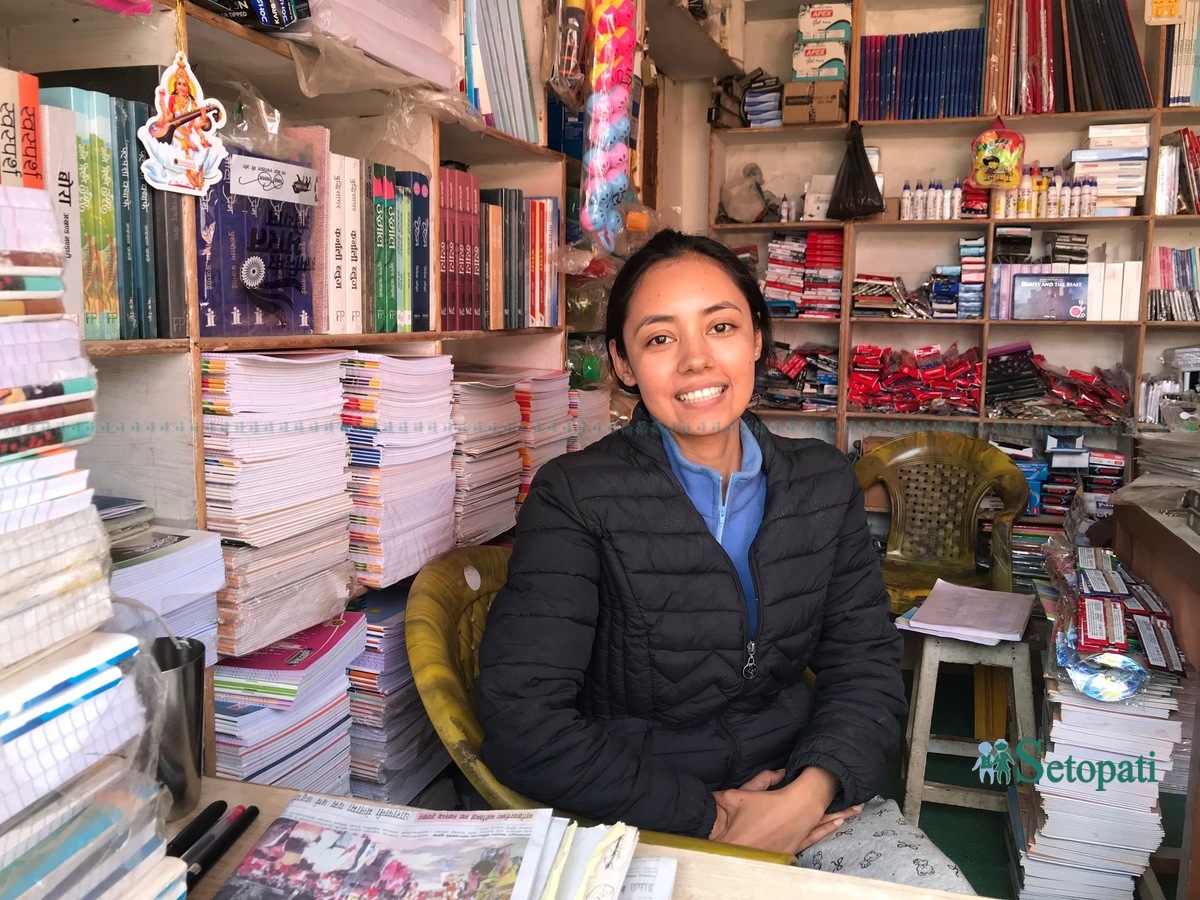
Bandana KC
37-year-old Ganesh Khadka of Phachakaluwa, Tulsipur Sub-metropolitan City-16, is one of them. Having voted for UML in the 2022 election, he is in favor of voting for RSP this time. "How long should we keep voting only for UML and Congress? This time my vote is for change," he said, "I am voting for a new party for transformation of the country."
Dang-2 includes wards 4, 6, 7, 8, 9, 10, 11, 12, 13, 14, 15, 16, 17, 18, and 19 of Ghorahi Sub-metropolitan City; wards 16, 17, 18, and 19 of Tulsipur Sub-metropolitan; and wards 1 to 8 of Banglachuli Rural Municipality.
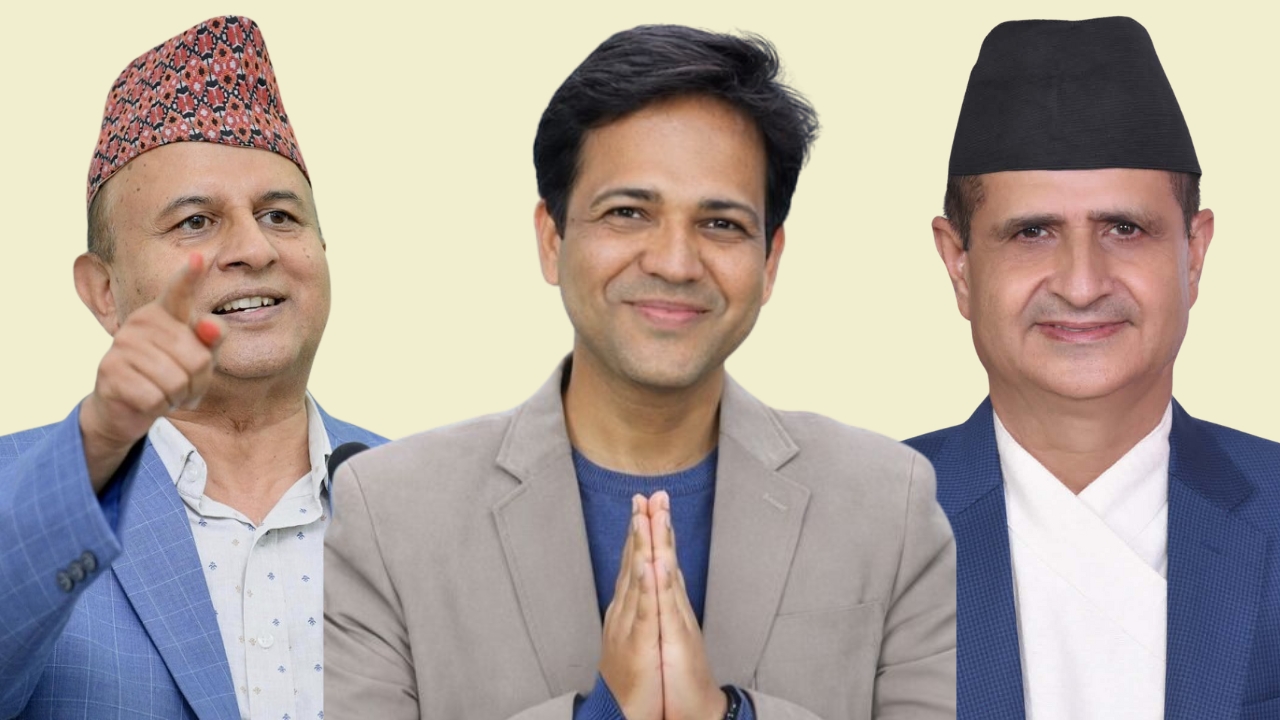
A total of 23 candidates including Shankar Pokhrel of UML, Kiran Kishore Ghimire of Nepali Congress (NC), Nirmal Acharya of Nepali Communist Party (NCP), Bipin Acharya of RSP, and Rishikesh Pokhrel of Rastriya Prajatantra Party (RPP) are competing in the constituency in the election scheduled for March 5.
The Setopati team has spent the last three days visiting all the wards of this constituency and talking to as many voters as possible. We talked to voters about the parties and their candidates. We asked what their main concerns were and why they wanted to vote for the candidate of their choice.
When analyzing the conversations we had with voters, we found that Bipin Acharya of RSP is far ahead of other competitors in this constituency. His two competitors, UML General Secretary Shankar Pokhrel and NC candidate Ghimire are far behind him. The wide gap we found between Bipin and UML and NC candidates will be very difficult for the latter candidates to overcome by election day.
UML candidate Shankar is slightly ahead of NC candidate. His gap with Kiran Kishore is very small. In that sense, Shankar's real competition is with Kiran Kishore for the second place. No candidates from other parties are in the race besides these three. NCP’s Nirmal appears in the fourth place, but he is so far behind UML and NC candidates that he doesn't seem to be in the race even for the third place.
In this constituency with a total of 140,946 voters, there are many who have not yet decided who to vote for. Nearly 20 percent of the voters we spoke to said they had yet to decide. Most of these undecided voters are those who previously voted for UML, NC, or Maoists. Those who voted for RSP in the last election are almost all in favor of voting for bell again. The highest number of undecided voters are those who voted for UML in the last election, followed by those who voted for the Maoists and NC.
By the election day, their minds will surely be clear. Only if all of them vote for UML or NC in unison will those party give a tough fight to RSP. But that is not possible in practice. These undecided votes will also be divided. Some of these undecided voters might vote for RSP, while others might return to UML, NC, and NCP (formed following unification of Maoists with other left parties) they previously supported.
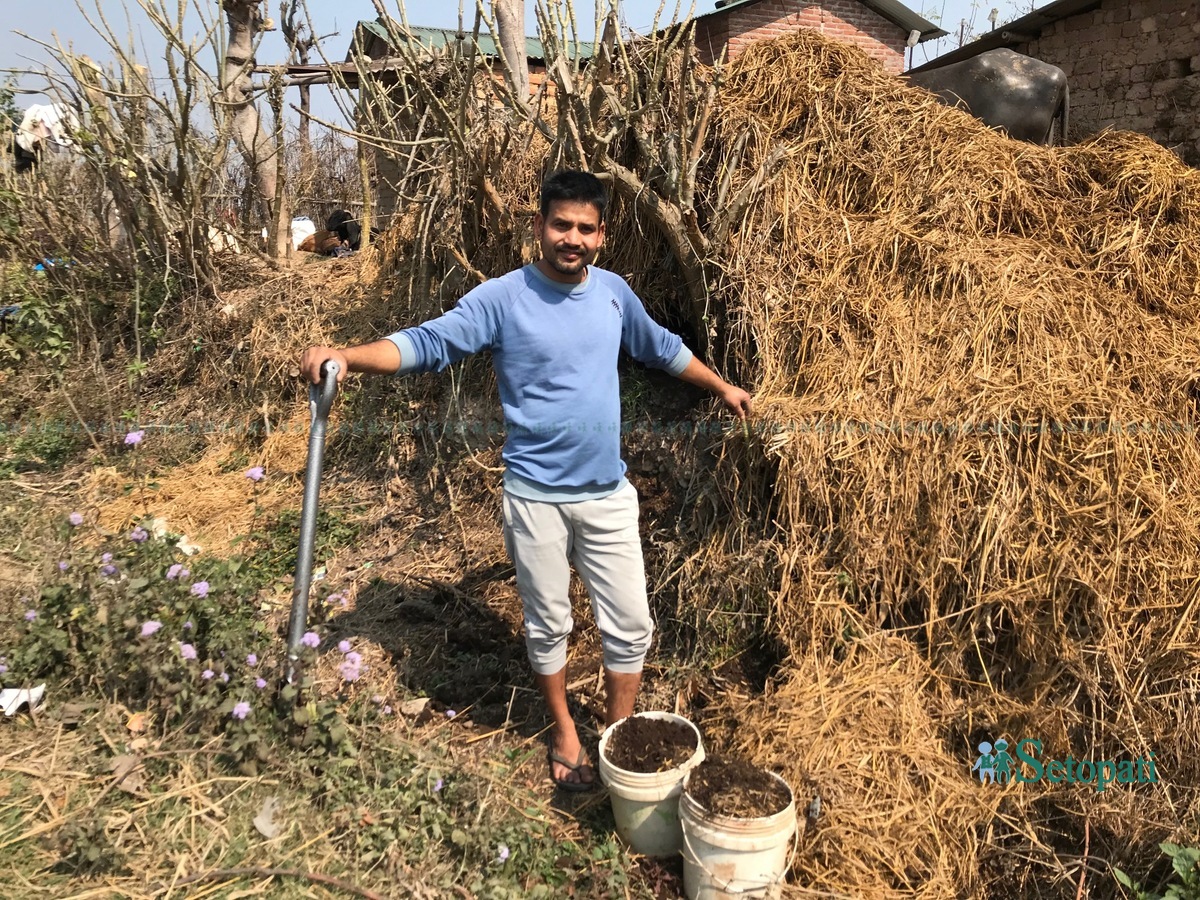
Ganesh Khadka
How has RSP appeared so strong in Dang-2 this time? How are the votes that went to other parties yesterday shifting to RSP to make it this strong?
In the 2022 election, NC and the then-Maoists were allied here. Rekha Sharma of CPN (Maoist Center) won from that alliance in Dang-2 defeating UML General Secretary Shankar securing 26,877 votes. Shankar was defeated by a slim margin of just 196 votes. Bishal Adhikari of RSP got nearly 15,000 votes. In the proportional representation (PR) system, UML became the largest party with 23,568 votes, followed by NC with 19,591 votes. RSP, formed just four months before the election, came third with 13,033 votes. The Maoists came fourth with 10,000 PR votes, followed by RPP at 3,095.
RSP has preserved almost all the votes it received in the previous election. We didn't find any voter who said they voted for RSP in the last election and are changing their vote this time. However, we found that some voters who voted for all other major parties last time are shifting to RSP this time. The largest number of voters shifting to RSP are those who voted for UML the last time. Nearly one-third of the voters who say they will vote for RSP this time had voted for UML in the last election.
Last time, there was an electoral alliance between NC and the Maoists in Dang-2. Therefore, some voters who voted for NC the last time were Maoists, while some were Congress. Forty percent of the voters who said they would vote for RSP this time are those who voted for the NC-Maoist alliance in the last election. Some voters who voted for RPP the last time also said they would vote for RSP this time. We found that those who voted for RPP in the last election will be divided almost equally between RPP and RSP this time.
Nearly 85 percent of the first-time voters we met also said they would vote for RSP. This party will benefit immensely because a large portion of those who voted for other parties yesterday and new voters are going to RSP. In Dang-2, there seems to be less exchange of votes between other parties. For this reason, the size of the votes received by all other parties will decrease, while that of RSP will increase sharply.
RSP's vote is likely to increase even more in the PR system than in the first-past-the-post (FPTP) system. Even some voters who say they will vote for old parties in the FPTP system say they will vote for RSP in the PR system. Meanwhile, we found that among the voters who say they will vote for RSP, very few say they will give their PR vote to NC or UML. This seems to further benefit RSP in the PR system.
Why are voters so attracted toward RSP in Dang-2?
Many voters who say they will vote for RSP did not even know the candidate Bipin Acharya. They also didn't know what Bipin's agenda was or what he promised to do for the constituency after winning. Some voters who said they would vote for RSP even thought social media influencers were the candidates. They only know RSP. They know bell. They know RSP President Rabi Lamichhane and Senior Leader Balen Shah. Shah's craze is very high among them. Many of those who have decided to vote for RSP hope that if Shah becomes prime minister, the country will change. That hope has attracted them toward bell. Based on our conversations, there are six main reasons why a large number of voters are attracted toward RSP.
First, an intense desire for change. Many voters feel that no change or development has happened in their area. They say that despite voting for NC and UML repeatedly and bringing them to power in the past, the country's condition remains the same. We found that two things have left a deep impression on general voters—one is the slogan of change, and the other is the belief that only RSP can bring that change.
In Tulsipur, we talked to an elderly woman in a village slightly above UML candidate Shankar's ancestral home. As we talked about the election, she said she had voted only for UML her whole life.
"What will you do this time then?" we asked. Before the question could even land, the mother quietly signaled with her hand as if ringing a bell.
We asked why. She answered in a soft voice, "For change."
"What change?" She said, "All the votes we have cast so far have allowed the party leaders and workers to flourish, while the people have gone mad. But just because we are 'mad' doesn't mean we are crazy, we have become more aware. New parties have shaken up the aware public. Therefore, we are voting for a new party to teach these old parties a lesson this time."
Second, the feeling that development happened but it wasn't enough. Although some voters said no economic development occurred in the country after the political change of 1990, some also held the view that there has been development. But we found that their expectations were much higher than the development that happened in the last 36 years. Especially among those who returned from abroad after seeing and traveling to different countries, there was an intense desire for their country to become developed like a foreign country.
43-year-old Krishna Roka of Hikmatpur, Ghorahi Municipality-11, recently returned from foreign employment. He was abroad during the 2022 election. He said he was excited to vote this time after a long interval. Roka, who has decided to vote for RSP said, "I came from living in a country where there is a system, rules, and laws. I saw the processes there. After seeing others doing well, one hopes their own country could be like that too. Compared to the development there, one feels despair about the situation here."
"People did trust the old parties. They did go into government. But even after going into government repeatedly, they couldn't do anything," he continued, "There are many educated people in the new party (RSP). I feel they can build the country if they get a chance."
Third, the pain caused by foreign employment. While visiting every ward of the constituency, we rarely found a house where a daughter or son had not gone abroad for study or employment. Entering a house in Phachakaluwa, Tulsipur Sub-metropolitan City-18, we found a middle-aged couple talking to the son on mobile phone. After we introduced ourselves, the husband came out to talk to us. The wife continued talking to the son. Their son had gone to Kathmandu only the previous day. His flight to Kuwait for foreign employment was two days later. The father, with misty eyes looking at the face of his son who was about to leave home for abroad, said in a sad voice, "We were hardcore UML supporters before. We never voted anywhere else besides Sun in our lives. But this party gave us nothing. Eventually, there was no environment for my young son to stay in his own country. If we vote for the new one, I hope my son who is going abroad will return home in a few years and I can live happily with him in my old age."
We have found a large number of such voters who compare their vote to the fate of their children who have to go for foreign employment. They have linked the personal pain of young children migrating for foreign employment or education with the failure of the state and the incompetence of political parties. And based on this, they have made up their minds not to vote for NC, UML, or Maoists. They hope that if they vote for RSP, at least employment opportunities will be created within the country.
We met a voter with similar hopes on the Main Road of Ghorahi Municipality-15. That woman, around 55 years old, has two sons. One is an engineer, the other a doctor. The engineer has already flown abroad, and the doctor is preparing to do so. Only the husband and wife live in the house. She said her husband's family supports NC and her maternal family UML. But this time she wants to vote for neither NC nor UML.
"Then who will you vote for?"
In response, she was silent for a moment. She looked left and right and then whispered, "Bell!"
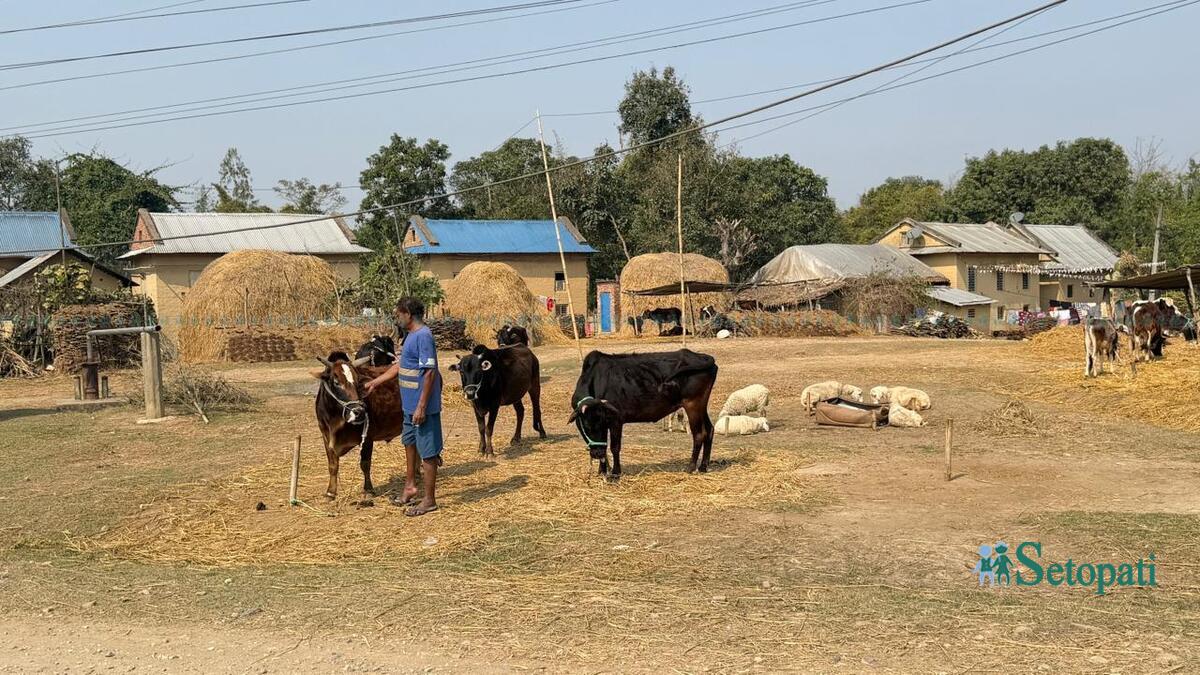
Fourth, pressure from children. The pressure from children who have gone abroad for foreign employment or study has also become a major reason for the loss of UML, NC, and Maoist votes. Even if they don't come to vote themselves, they are advising their parents, elder siblings, and other family members in Nepal to vote for bell. Some are even insistent.
54-year-old Mansara Budhathoki of Bansgadhi, Tulsipur-19, has a daughter in Japan. Her son and daughter-in-law live in Kathmandu. Her husband passed away during the COVID-19 pandemic. The mother, who lives alone at home, is being advised by her son, daughter-in-law, and daughter from Kathmandu and Japan to vote for bell. "I have to listen to what the children say in old age," said Budhathoki, a traditional UML voter, "Maybe if I vote for bell, an environment would be created to allow me to live with my children!"
Not only those abroad, but youths in the country also say their and their family's votes will go toward bell. Majority of the young voters we met who are voting for the first time were open in favor of RSP. They revealed they are trying to pull the votes of their parents, who might go toward UML or NC toward bell. We found that UML and NC, who were leading the government during the Gen Z Movement, could not attract the younger generation in any way. RSP seems to be directly benefiting from this.
We found a house in Phachakaluwa of Tulsipur where two sons sitting on the porch were discussing the upcoming election with their parents. We also joined their discussion. 21-year-old Gen Z' youth Narayan Oli said, "Dad sometimes says he will vote for NC, he sometimes says he will vote for bell. He is in a dilemma. I have made up my mind. The first vote of my life is for bell."
During the conversation, the mother said, "I don't know, these sons are constantly shouting. But we two old people have never voted for anyone except NC in our lives. That's why we told them we won't leave NC, you do whatever you like."
The father added, "Nepali Congress has done a lot for the country and people. But now everything is ruined. I was not happy about the alliance with the Maoists last time. That's why I didn't even vote in the direct election then. My hand couldn’t vote for the hammer and sickle to ensure victory for Rekha Sharma of the Maoists. I gave the PR vote to tree. This time Congress has its own candidate. We get to vote for our own tree. The sons are saying bell, bell. I am in a real dilemma."
Fifth, past electoral alliance. We found that the past electoral alliance has caused a huge loss, especially to NC. Congress voters are not happy with being pressured to vote for symbols other than tree by aligning with the Maoists. For this reason, some old NC voters here had not followed the party's instructions in the last election itself. They either didn't vote at all in the direct election or voted for RSP. That is why the newly formed RSP got more than 13,000 votes here even when its organization was zero. NC voters who were alienated from the party in the last election seem to be in a mood to teach the party a lesson by voting again for RSP.
Sixth, the impact of the Gen Z Movement and leadership change. We found that the shooting during the Gen Z Movement on September 8 and 9, 2025 also made many UML and NC voters disappointed and dissatisfied. Especially old UML voters are seeking accountability from the party leadership regarding the suppression during the Gen Z Movement. Saying the leadership is still silent about it and the party has not transformed according to the spirit of the Gen Z Movement, they have decided to change their vote in response. On the other hand, we also met voters who, remembering the incident of September 9, decided to vote for UML saying 'those who burn things don't build the country.'
In the case of NC, Gagan Thapa's ascent to leadership after the Special General Convention has given some positive messages, but it has not been able to erase public dissatisfaction. NC voters have termed the leadership coming from the Special General Convention as temporary and say it cannot be believed that the party has changed based on this. "It cannot be said that the old leaders won't return to leadership during the regular General Convention later. We have yet to be convinced," said an old NC voter who has decided to vote for RSP this time.
Based on these six reasons, our analysis is that RSP will benefit from the dissatisfaction among old voters of NC, UML, and Maoists this time. The biggest blow could fall on UML candidate Shankar Pokhrel. RSP seems likely to obstruct his journey to become a member of the House of Representatives for the second time in succession. In the last election, NC voters dissatisfied with the alliance with Maoists could have voted for him had RSP not been there. He could have won by a few votes instead of losing by a wafer thin margin. This time, we see a situation where it will be most difficult for Shankar Pokhrel, as the votes leaking from UML as well as NC and Maoists are all converging solely toward RSP.
But there will be political damage to NC and Maoists as well. Many Maoist voters who migrated from Rukum and Rolpa live in Dang-2. Those voters were a strong base for Rekha Sharma’s victory the last time. These voters, who traditionally voted for the Maoists, are also not in a mood to vote for NCP this time.
76-year-old Megh Raj Khatri of Jheluneta Bazaar, Banglachuli Rural Municipality-5, the most remote area in this region, has never voted elsewhere besides the Maoists until now. But this time he is in confusion. His son Dil Bahadur has joined RSP and opened a contact office at the main square of the market to campaign for the party. On the other hand, his daughter Shanti Gharti has opened a NCP contact office in the same market.
Pointing to the contact offices of the two competing parties facing each other opened by his son and daughter, Megh Raj said, "From the same house, one son is walking around saying bell, and a daughter is walking around saying star. It's trouble for me, an old man!"
In this way, RSP has pulled plenty of votes from the Maoists and other old parties while other parties have not been able to even preserve their own votes, forget about pulling from other parties! Almost all of the voters who told us they would vote for Shankar Pokhrel said they had voted for UML in the past as well. Similarly, those who said they would vote for Kiran Kishore Ghimire of NC are mostly traditional NC voters. The situation of Nirmal Acharya of NCP is the same.
50-year-old Menaka Nepali of Bansgadhi, Tulsipur-19, says she voted for tUML before and will vote for UML even now. She is satisfied with UML's performance. She says, "Shankar Pokhrel has indeed brought development. He has brought irrigation. He has won the hearts of the people. My vote is for him." She also said, "I also want change. But change doesn't come overnight, it happens slowly. Many things have changed compared to before. What change people are looking for now, I haven't understood!"
25-year-old Keshar Bahadur Oli, who voted for Maoist candidate Rekha Sharma the last time and has decided to vote for Nirmal Acharya of the NCP now, also complains about this wave of handing over the country to the raw and immature in the name of change. "Everyone says they will bring change, they say they will go to new parties," he said, "Personally, I don't have much trust in these new ones."
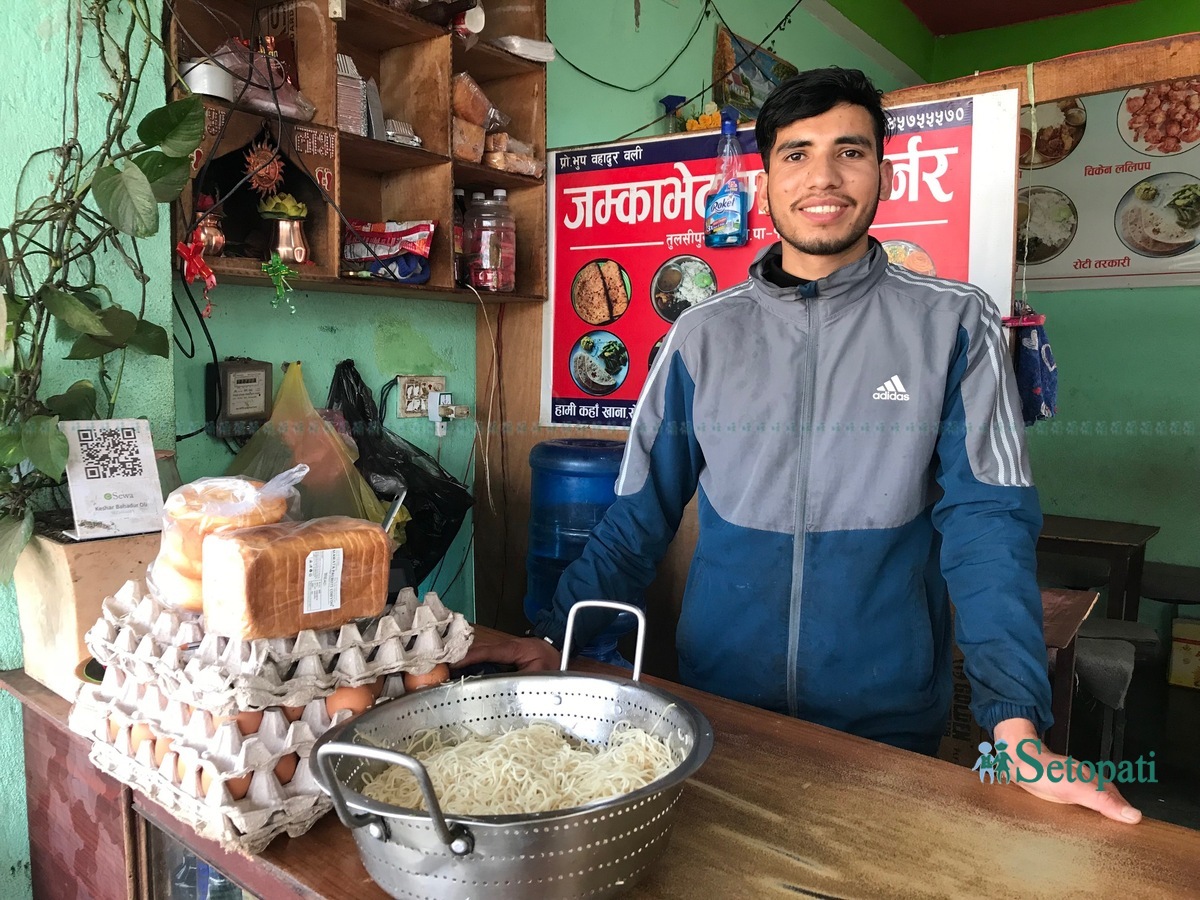
Keshar Bahadur Oli
Some voters who voted for the UML or NC in the past, but don't feel like voting for them this year and don't like to go toward the new ones either, plan to boycott the election. Rabindra Nath Acharya, who runs a stationery shop in Bijauri Chowk, Tulsipur-18, says he has no desire to vote for anyone this time. He has written some of his concerns and questions on a large paper and kept it. If candidates of any party come to ask for votes, he makes them read that paper and seeks answers. His nine-point concern letter titled "Why should I vote for you?" has questions like:
Why so many identity cards for citizens of the same country?
What is the achievement of the 2022 election? And where is it?
Where did the smart city, train, ship, and Tarigaon airport go?
What is one example of the proper utilization of remittances earned and sent from the Gulf?
Which industries are you opening in your area?
How many workers or employees do you plan to keep?
How many new jobs will you create in a five-year period?
When or within how many days do you resolve to give employment to my son, brother, and other relatives who have gone abroad?
What is the justification for the provinces? Prove it.
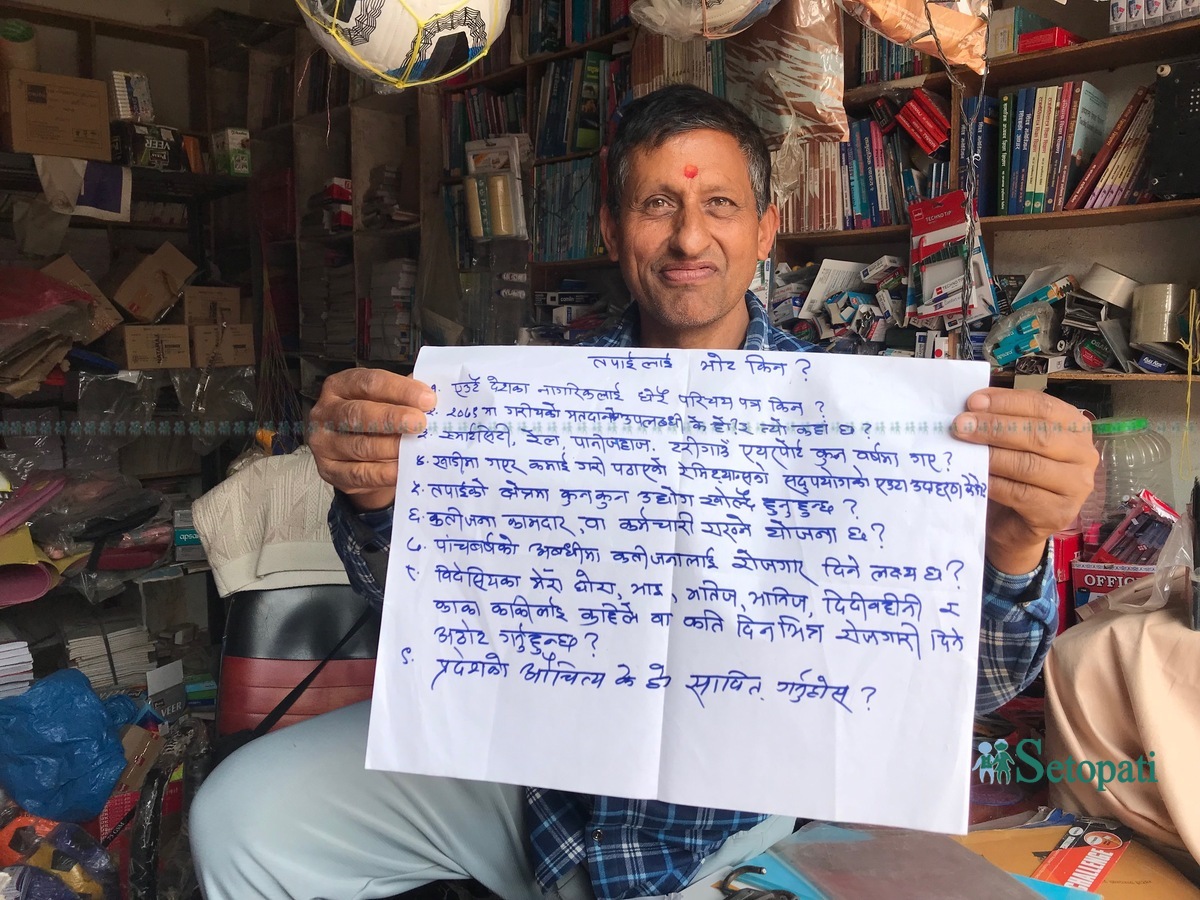
Rabindra Nath Acharya
Along with these nine-point concerns, Acharya also raised the question "how this election internalizes the spirit and essence of the Gen Z Movement" during the conversation with us. Then he said, "Whichever party can answer these concerns and questions of mine, I will vote for them. Otherwise, I won't vote."