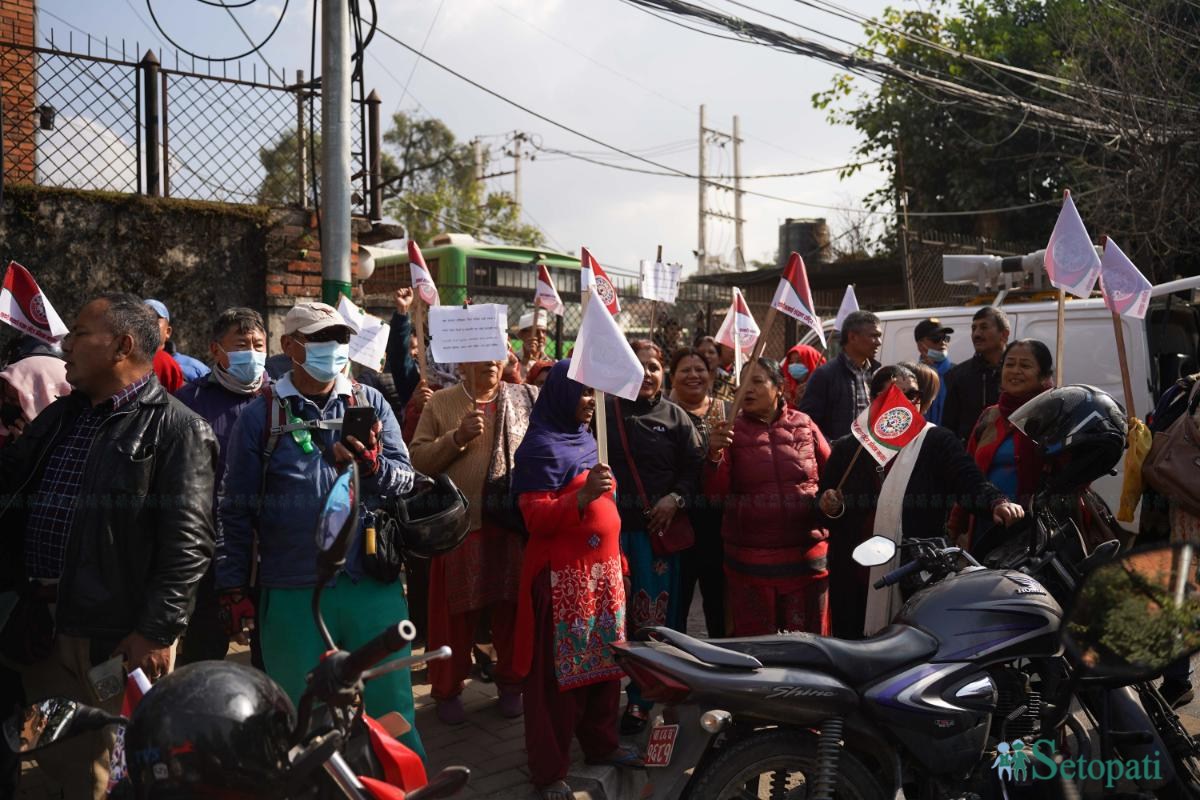
The Office of the Problematic Cooperative Management Committee is set to begin the process of returning savings from the first week of Jestha (mid-May).
According to the committee, around Rs 46 billion remains to be returned to approximately 76,000 depositors of such troubled cooperatives.
The committee will use a revolving fund to facilitate the refunds.
So far, Rs 260 million has been deposited by the government into this fund, while around Rs 600 million has been recovered from debtors.
"In some of these problematic cooperatives, depositors have yet to receive their savings since 1993," said Dilli Raj Acharya, chairman of the office. "We will begin the refund process for these depositors in the first week of Jestha."
According to the policy, all depositors will receive a maximum of Rs 50,000 each in the first phase, provided the amount does not exceed 50 percent of their total savings, said Acharya.
While the government had previously announced plans to refund depositors with savings of up to Rs 500,000 in the first phase, the current policy ensures that every depositor in a problematic cooperative will receive up to 50 percent of their savings, capped at Rs 50,000.
The committee is currently updating records of small depositors in such cooperatives.
Data shows that among those awaiting refunds, 36,522 depositors have savings of up to Rs 100,000, while 7,500 depositors have savings of up to Rs 10,000.
The office also plans to reopen claims for depositors who were previously missed.
Borrowers who commit in writing to repay loans in installments will be given time. However, the committee warned, those who refuse to comply will have their three-generation family details made public and their family members will also be blacklisted.
Earlier on Tuesday, the committee directed borrowers of problematic cooperatives to immediately repay their loans.
According to the committee, operators and borrowers who fail to make contact or repay their loans will have their names made public, blacklisted, assets auctioned, and also face fines and imprisonment.
The committee also warned that failure to repay loan principal, interest, and penalties on time could result in disruption of public services such as electricity and water recommendations.
A recently issued ordinance amending the Cooperatives Act, 2017, allows the government to freeze and auction assets belonging to family members of those responsible for embezzlement at troubled cooperatives even if they have legally separated, divided property, or divorced.
This policy ensures that if funds recovered from cooperative directors, accounts committee, managers, and loan committee members are insufficient, the remaining amount can be recovered from these affiliated members by selling their assets.
A new procedure was also introduced recently to allow setting up a revolving fund for returning the savings of depositors of troubled cooperatives.
The procedure enables recovery of funds from cooperative members who assisted in misappropriation of funds, including their separated family members.
The revolving fund will also include government contributions. Accordingly, the government has deposited Rs 260 million into the fund. The government will eventually be reimbursed as loan recoveries continue.