The hurdles created by India regarding Nepal's tea exports have been cleared for the time being.
The Tea Board of India has amended its Standard Operating Procedures (SOP) concerning the mandatory testing of imported tea, which had come into effect on May 1.
Issuing a notice on Tuesday, the Tea Board of India temporarily exempted tea imported for domestic sale within India from its mandatory testing.
Following the notice issued by the Tea Board under the instructions of the Indian Ministry of Commerce, tea from Nepal can now enter India without obstruction.
“With the Indian Tea Board amending the SOP, tea from Nepal will now enter India as before,” said Shiva Kumar Gupta, senior vice-president of the Nepal Tea Producers Association. “This notice from the board has removed the obstruction.”
The new rules implemented by India since May 1 had completely halted Nepali tea exports. Nepali tea industrialists, exporters, and farmers faced severe hardships due to the mandatory lab testing of every consignment, high fees, and prolonged delays.
According to the letter issued by the Tea Board, tea imported for re-export will still undergo mandatory testing. However, tea consignments brought solely for domestic sale within India will not require mandatory testing, though random testing may still occur.
The Tea Board’s notice also directs that laboratory reports must be uploaded within five days of receiving the sample.
Nepali industrialists expect this amendment to bring major relief, particularly to Nepali tea. According to them, a large volume of tea exported from Nepal to India is meant for domestic sale. Traders say this will reduce delays at the border, lower costs, and help resume smooth trade.
India had enforced strict regulations from May 1 citing quality control and measures to prevent adulteration, which completely affected Nepali tea exports.
Tea Board employees in West Bengal, India, had even warned Indian tea traders not to import tea from Nepal, threatening to collect samples straight from warehouses if they were found doing so.
While Tea Board employees at border checkpoints were signaling even harsher measures, the Indian Ministry of Commerce stepped in and instructed the revision of the SOP. This has provided immediate relief to Nepal’s tea industry.
Nepali traders had stopped sending tea shipments to India after the Indian Tea Board enforced a rule to collect tea samples from every vehicle carrying tea from Nepal to India.
Frustrated by the prospect of long delays under the pretext of laboratory testing, the Nepali side had sent a single vehicle toward the Indian border point of Panitanki to gauge the Indian side's response. Four days after the tea-loaded truck from Jhapa arrived in Panitanki, Indian Tea Board employees collected samples last Monday. It has been 10 days since the samples were collected for lab testing, and 14 days since the tea reached India.
Even after all this time, the test report from the laboratory in Kolkata has not yet arrived.
For the past few days, the Nepali Embassy in New Delhi had been lobbying India’s Ministry of Commerce to remove the obstruction. The embassy shared information regarding this development with the Nepali side two days ago.
Deepak Khanal, director of the National Tea and Coffee Development Board, also said that the embassy in Delhi had been "making continuous efforts to clear the obstruction."
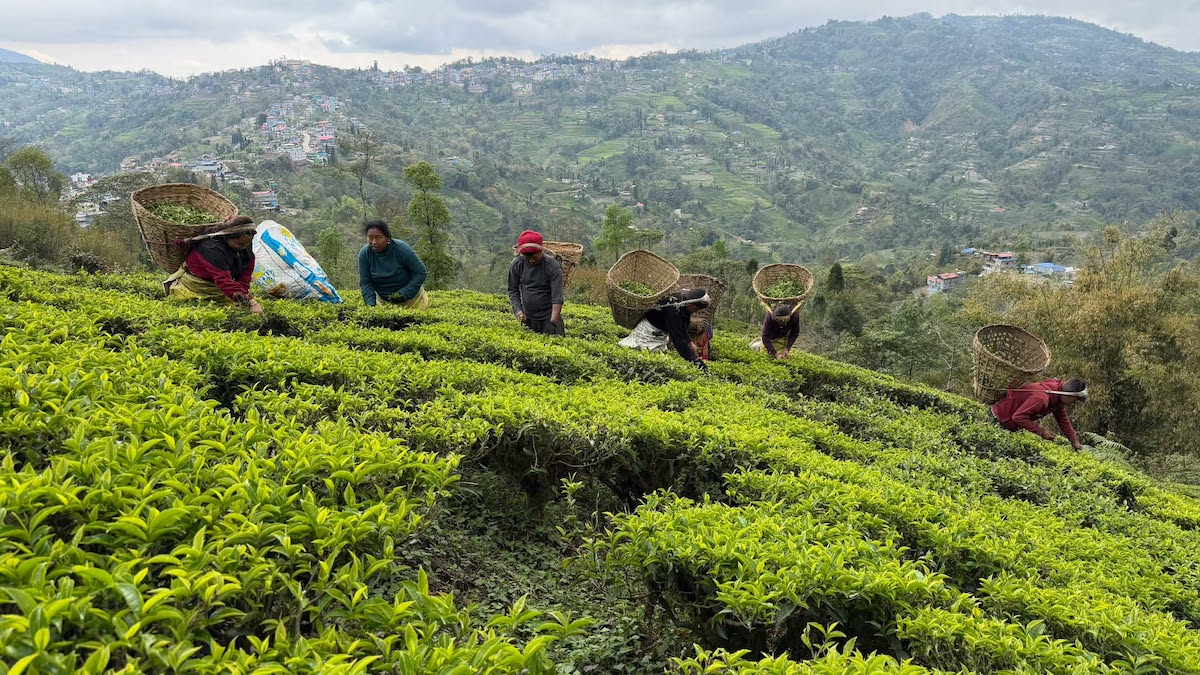
Currently, there are around 120 small and large tea industries in Nepal. Additionally, more than 100 small and medium entrepreneurs are active, directly or indirectly employing 50,000 to 60,000 people, including farmers and laborers.
Just last year, tea exports, including both CTC and Orthodox varieties, amounted to a total of Rs 4.75 billion.
Presently, tea cultivation is spread across 20,602 hectares of land throughout Nepal. India remains the primary market for Nepali tea, absorbing 90 percent of its Orthodox tea and nearly half of its CTC tea.