If there is one defining issue that can make or break Nepal’s journey toward equitable development and shared prosperity, it is caste discrimination.
If you never face it, the statement might look preposterous, but can a nation define itself as modern if millions of its citizens are systematically marginalized, no matter the laws in place?
It is inconvenient for many to talk about discrimination.
After all, it is easier to pretend that the issue does not exist at all.
It is far more comfortable to focus on corruption, clean government, and climate justice.
These are certainly important issues that must be discussed and dealt with.
Unfortunately, for millions of citizens in Nepal, there is another issue that cannot easily be swept aside because it is something that has marked them.
Their lives have been affected by this invisible but very real plague that pins down these members of society to the bottom of society.
It is only because of their strength, resilience, and hard work that some of them can rise and take leadership positions in the country.
But only some of them; actually very few of them, can make it.
It is a huge problem, part of a broader pattern of inequities that affects even more members of society, citizens from the gender minority community, Muslims, indigenous peoples, and many women, especially those not belonging to historically dominant groups.
But among those paying the consequences of this discriminatory system, there are citizens who do not accept the status quo.
Those who decide to put up a fight and challenge the system.
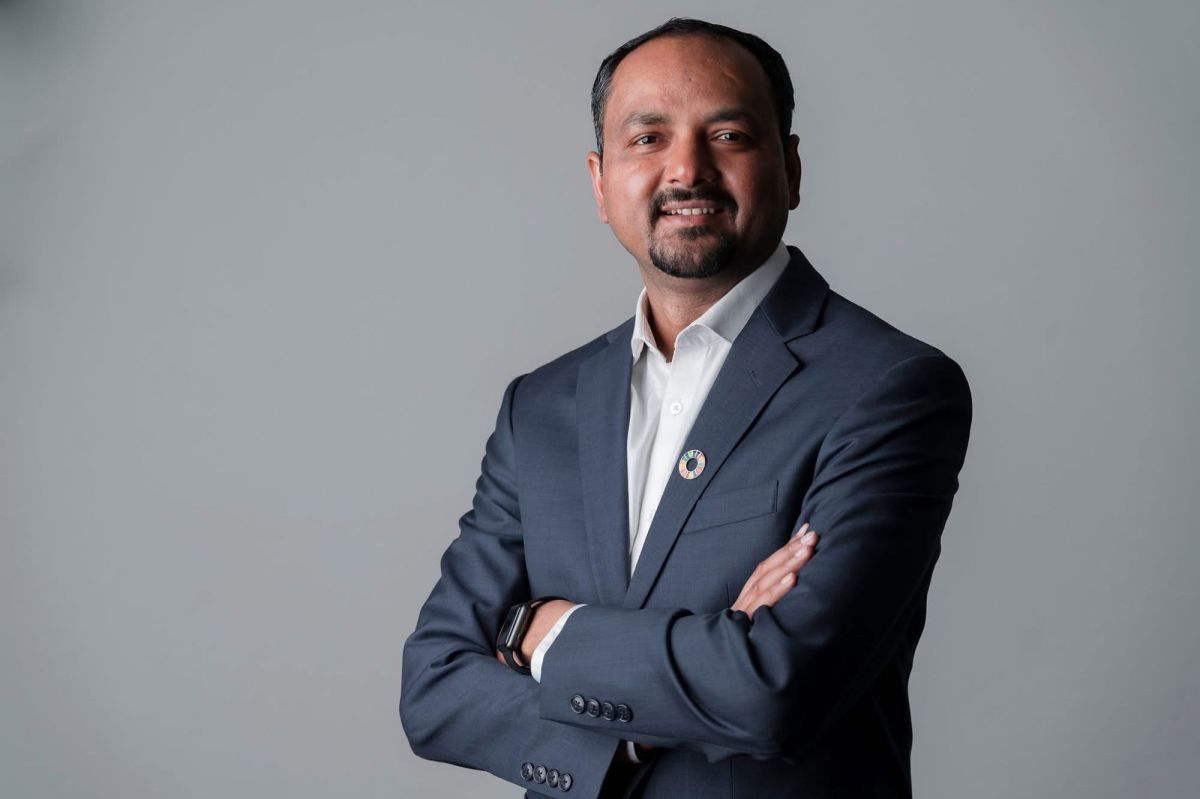
One of them is Pradip Pariyar, who, with his sheer grit and belief that a different Nepal is possible, is working undeterred to ensure that the rights of members of the Dalit community and those of many other disadvantaged groups cannot be ignored or discounted.
I have known Pradip for more than 15 years, even before I started following issues related to caste discrimination – a topic that is far from being visible in the opinion sections of national dailies.
I still remember when I met him for the first time.
It was a dinner at the home of a common friend who, at the time, used to work with Pradip in the field of peace and conflict prevention.
Over the years, even if there had been gaps in between, we stayed in touch, and for someone like me interested to know more about caste discrimination, it was essential to follow Pradip’s work to advocate for the rights of Dalit citizens and other vulnerable members of society.
As an activist, Pradip has relentlessly tried to advocate for broad measures, game-changing provisions that could ultimately end discrimination together with more tangible, concrete actions on the ground.
Pradip, together with other organizers and civil rights campaigners, has been trying to support Dalit families at the receiving end of behaviors and attitudes that are unlawful but still very much in practice.
For example, the case of Roshan BK, a 19-year-old Dalit youth from Dhangadhi, Kailali, who died in police custody in Dhangadhi in September 2020 after being arrested on theft allegations.
While the police claimed that he died by suicide, his family and human rights organizations alleged custodial torture and demanded an independent investigation and accountability.
Then, there was also the case of Bijay Ram Chamar, another 19-year-old Dalit youth. Originally from Rautahat, Bijay died in August 2020 after being held in police custody on a murder allegation.
His family alleged that he died due to torture in custody, while police denied the claims; the case sparked widespread protests and calls from the National Human Rights Commission for an impartial investigation
In both cases, Pradip, together with other activists, tried to ensure that justice was served.
After years of activism, Pradip recently released a book entitled Siyodhago, whose literal translation means “The Needle and Thread.”
I met Pradip to understand more about the book and its main messages.
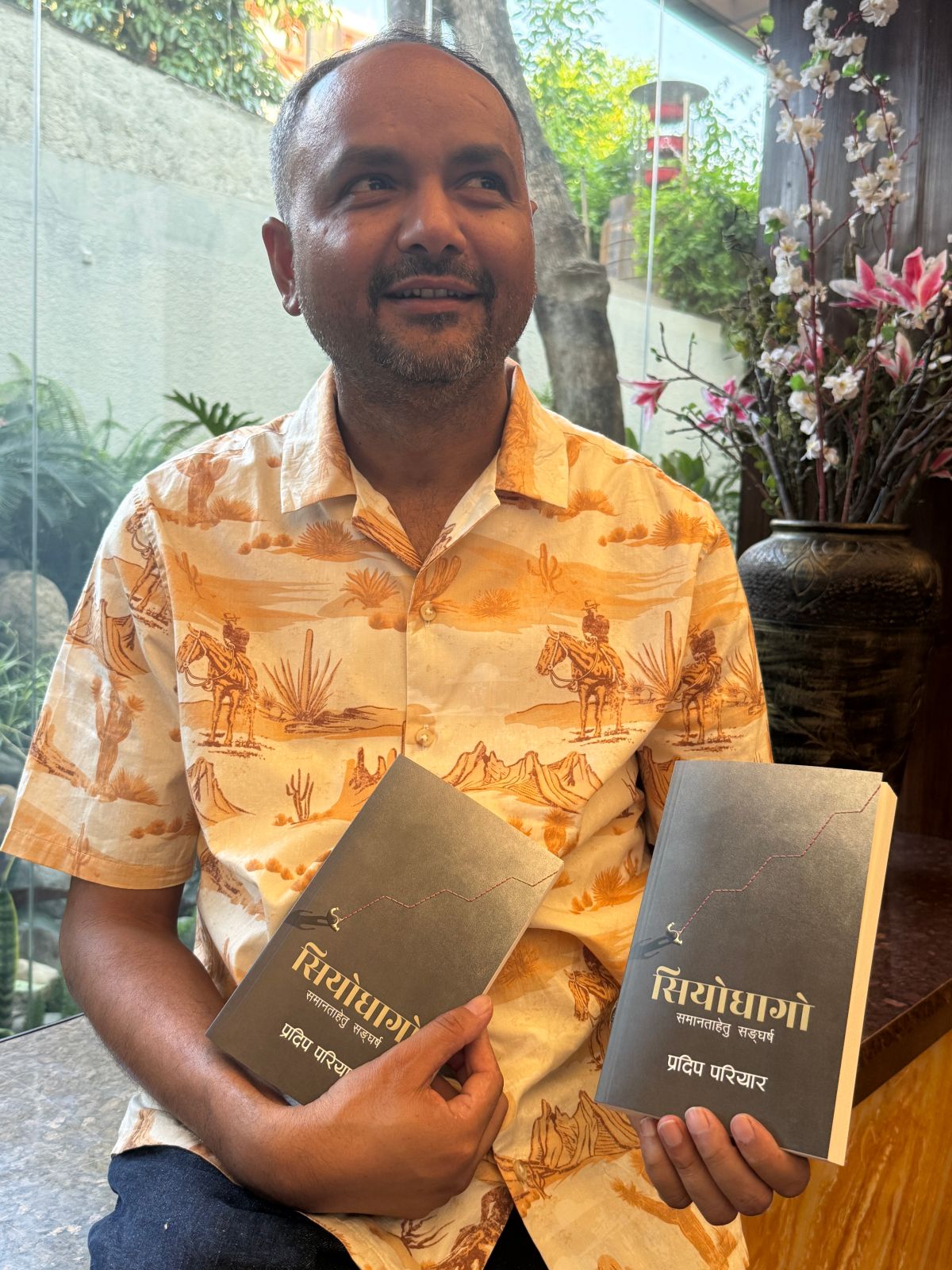
I found out after our conversation that his whole motivation and career is driven by a certain hope that, despite so much pain suffered by him personally and by peers from the Dalit community, Nepal can change for the better.
“This book is deeply personal. It is the story of my father, my mother, and my grandfather. Through their experiences, I want to reveal the reality that Dalit families continue to face. Alongside this, I want the book to capture my own journey, how I have been engaging in the youth and Dalit movements. These are the core pillars of the book, and I want to make sure the writing reflects that my raw, firsthand experience,” he told me over coffee.
With this book, Pradip weaves a collective story grounded in his own experiences where a combination of stories, anecdotes, and situations at the intersection of personal life and activism, makes a powerful case on why Nepal must pursue social justice, starting from eradicating caste discrimination.
“The title Siyodhago carries deep symbolic meaning. In Nepali society, it is not just a tool for sewing; it is an emblem of a community’s historical profession and identity. Ironically, society used this very identity to subject a community to humiliation and discrimination rather than respect.”
In this sense, Siyodhago may look like a personal story, but it is the shared history and struggle of the entire Dalit community,” he told me, explaining that he weaved his own life experiences, and those of his family and community, into the narrative.
In a way, the pages of this book try to answer a question that has been haunting Pradip for long.
“After 100 or 200 years, who will think of us?” Pradip told me.
He shared that, for many years, he did not know anything about his ancestors, their struggles, and what they had gone through in a system that, at the time, was designed by law to be discriminatory.
“Through the lens of my story,” Pradip told me, “we can see the mirror of millions of members of the Dalit community who, like me, faced and are still facing daunting discrimination.”
He initially had the idea of writing a book in 2012 when he had completed his terms as chair of the Association of Youth Organizations Nepal (AYON). At the time, the idea was to focus on the broader issue of youth activism.
But then the project, as it often happens, got interrupted and set aside.
Fast forward to 2022 and that’s when Pradip started again to work on it, but with a narrower focus based on the Dalit community.
“Although these experiences and memories may seem personal, they are in fact strands of a shared thread that connect history, pain, and resistance,” Pradip shared.
“This work is a document of countless untold stories from marginalized lives. It is a voice of hope and protest rising from tears, injustice, and humiliation.”
From remote villages of Nepal to international platforms, the realities witnessed and lived by the author and many other members of the Dalit community are brought to life through word.
“In the book,” Pradip explained to me, “you can find experiences of Dalit youth, the pain of the victims of the Rukum Soti massacre where a group of young Dalits were massacred, the suffering of girls subjected to violence and murder, and the endless struggles of mothers who have lost their sons to violence.”
One of the stories shared in the book is deeply shocking and troubling but, unfortunately, stories like this have been tragically “normalized.”
In 2022, in Rolpa district, Sundar Harijan, a young boy under 18, belonging to the Dalit community, was put in jail for a minor crime – stealing a smartphone.
Instead of doing his time based on his crime, somehow he was swapped for someone else in jail that happened to come from a traditionally dominant caste and had access to power.
This person had been charged with far more serious crimes – extortion and organized crime.
So, in short, someone powerful managed to fix his problem and get early release while Sundar Harijan was forced to remain in jail with serious convictions for crimes he never committed.
As a consequence, he was kept in jail for a few years.
So, what happened after that?
The prison authorities came to know that Sundar Harijan was not actually the person who should be in prison.
And because it was going to come out as big news, it is alleged that that he was killed in police custody, but the final report declared that he had committed suicide by hanging himself.
There have been some investigations and inquiries, even by the Human Rights Commission, but no justice has been delivered until now.
“These kinds of incidents are still happening here, in police custody or in jail. So, in such a context, justice is one of the important things. But families can't afford the justice system. They can't hire lawyers. So, how can this marginalized community get justice? There is no justice in terms of representation, in terms of access to education, in terms of access to government loans or anything. It's very difficult; Dalit life is very difficult. The fight against caste discrimination must occur in multidimensional ways because we are dealing with an intersectional issue. And we need to see it in such a way, otherwise we can't solve such complex issues,” Pradip says.
Pradip wants to share his own and his community’s story to enable the readers, especially those not familiar with the daily experiences faced by Dalit citizens, to connect with an issue – discrimination – that is alien to them.
But the book has a much broader and longer term aim.
“All of these experiences have found expression in these pages. This book is not merely a story of suffering and an outcry against injustice; above all, it is a call for change.”
"I believe another world is possible. A new and beautiful world, where every human being is equally significant. A world where there are no walls between people, only bridges," Pradip told me.
That’s why it is essential to understand that the book is not only centered on real stories of pain experienced by members of the Dalit community.
The pages also delve into an important issue, an issue not understood enough because of both its complexity and also because it is convenient to disregard its relevance: positive discrimination.
Pradip is of the view that reservations are a necessary measure even if they cannot remain in place indefinitely
“Nepal is a diverse country in terms of caste, religion, race, and culture. So, Nepal’s diversity should be reflected in the state mechanisms, including at the highest levels of policy-making.”
Quite often, I feel like this country is mine, but this state isn’t. If we succeed at making this state work for everyone, it would be a major step toward making Nepal a discrimination-free country,” Pradip says.
These are the reasons I believe this book is also important as a contribution to the overall debate to create a more equitable and inclusive society and it offers some ideas on how the transformations underpinning this systemic change can happen.
These days Pradip is marching on with his own mission.
He could have run for election but he chose to keep working to fight discrimination as a member of the civil society.
“Currently I am working on the agenda of inclusion of youths in the workforce and leadership, not only in Nepal but around the world, through the Dalit Lives Matter Movement. There are almost 26 million Dalits the world over and yet their issues have not been globally recognized. Racial discrimination is getting global attention; caste-based discrimination is not.”
While I am hoping to see, one day, an English translation of the book to gauge all the details, I personally hope that the general public, especially at school level, can embrace this book because understanding, in concrete terms, what discrimination really is, can transform people’s mindset.
While we might need new laws and provisions, the foundations of a more equal and just society can be laid down only when the majority of citizens in Nepal understand the pain and suffering caused by certain attitudes and behaviors.
In this case, reading this book can be truly transformative.
Hopefully, in not too many years from now, students across the whole nation, by reading it, will realize how different and unequal their country once was.
They will also understand that some citizens, part of a wider social justice movement, fought hard, with personal sacrifices, to turn Nepal into a better place to live in.