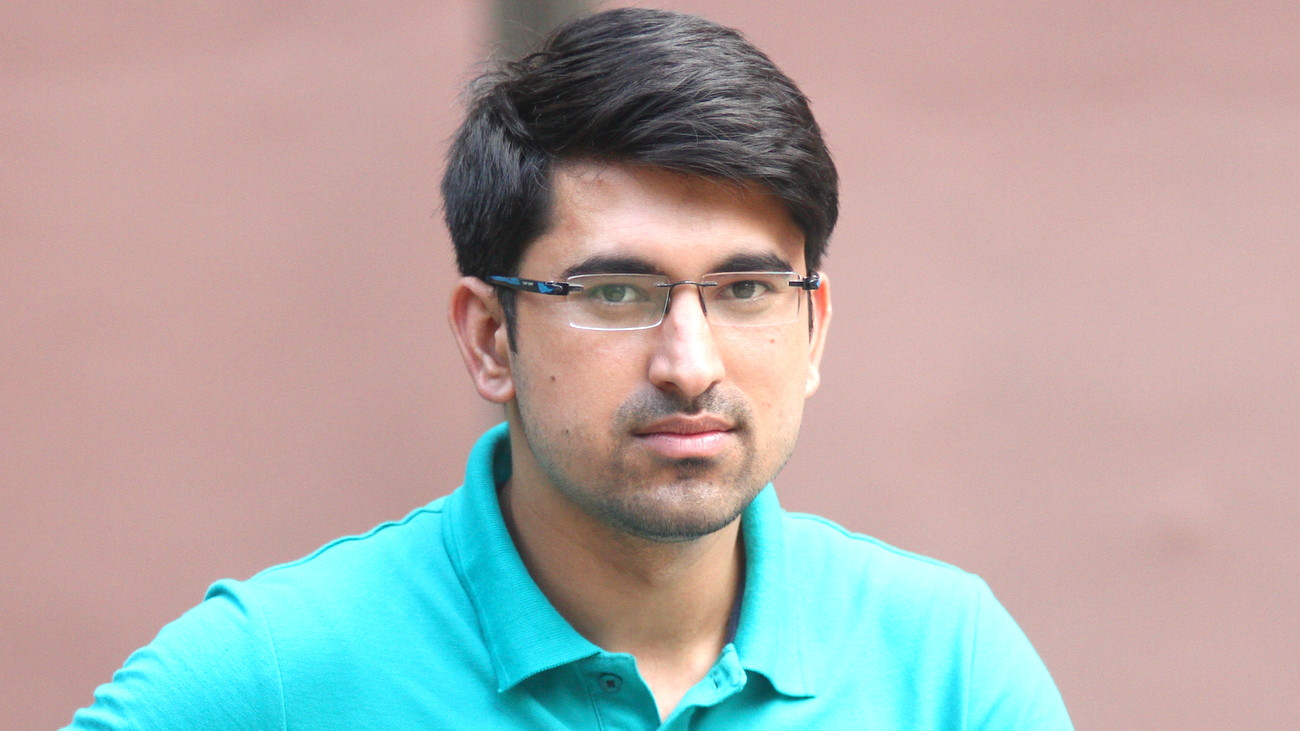
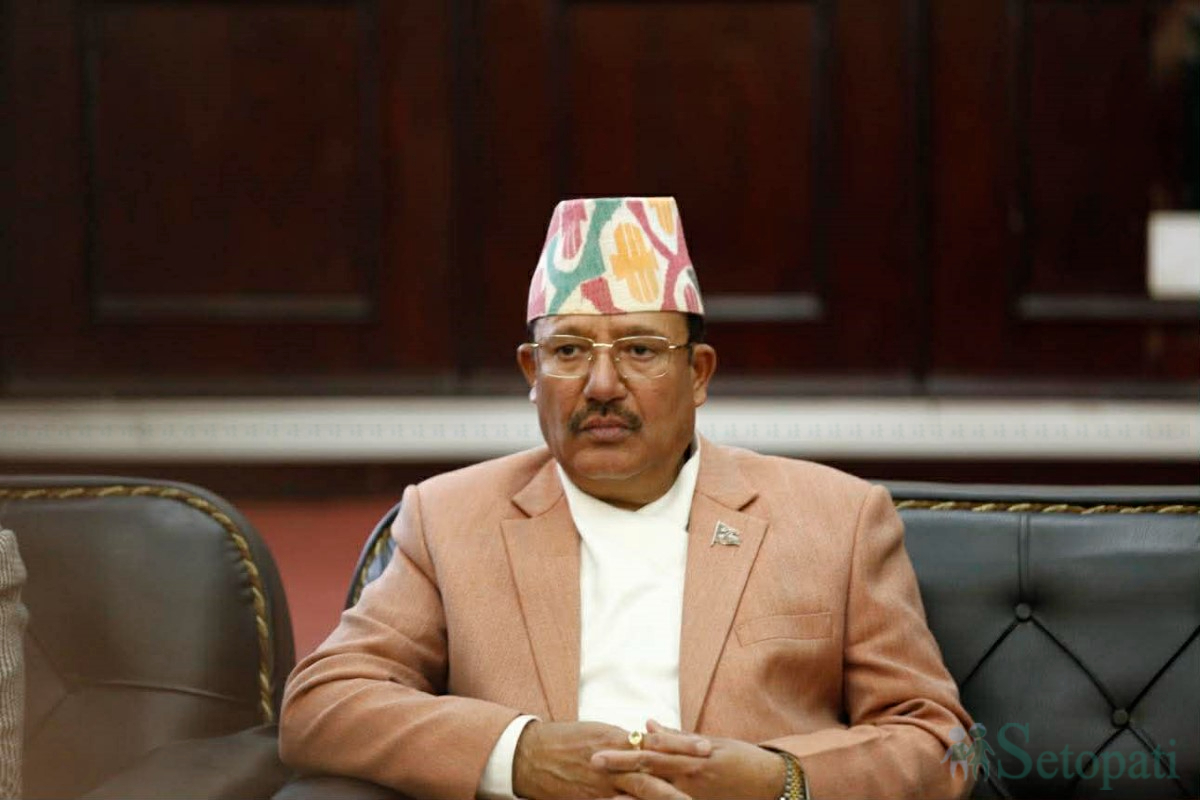
The Election Commission has decided to grant official recognition to the Nepali Congress central committee elected under the leadership of Gagan Thapa at the party’s second special general convention.
Acting Chief Election Commissioner Ram Prasad Bhandari and another commissioner studied the submissions presented by both factions of the Nepali Congress and concluded that the central committee elected by the special general convention is the legitimate one. The commission has decided to update its records accordingly.
The decision was taken on a majority basis, with two of the three office-bearers of the commission in favor of the Thapa-led committee and one against it. Acting Chief Election Commissioner Bhandari and Election Commissioner Janaki Tuladhar decided to grant recognition to Thapa’s committee, while Commissioner Sagun Shumsher Rana dissented.
NC President Thapa and other newly-elected office-bearers had approached the Election Commission on Thursday afternoon, demanding official recognition and record updates. Thapa had submitted facts, evidence, and documents supporting their claim to Acting Chief Election Commissioner Bhandari.
Meanwhile, acting party president Purna Bahadur Khadka and other leaders also went to the commission on Friday morning, claiming that the Nepali Congress led by Sher Bahadur Deuba remained the “official” party. Khadka submitted various reports, documents, and party decisions to the commission.
Following the Gen Z movement on September 8 and 9, demands for policy and leadership change within the Nepali Congress intensified. A dispute arose over whether to convene a special general convention or hold a regular convention before the elections. Amid this dispute, over 54 percent of general convention delegates submitted signatures demanding a special general convention. According to the party statute, if at least 40 percent of delegates submit their signatures demanding a special general convention, it must be convened within three months.
However, party President Sher Bahadur Deuba and leaders from the establishment faction were unwilling to convene a special general convention. Instead, they announced a schedule to hold a regular general convention on January 10, but made little effort to implement it. Later, the central committee passed another schedule to hold the regular convention in May after the general election scheduled for March 5.
General secretaries Gagan Thapa and Bishwa Prakash Sharma registered a note of dissent against that decision and stood in favor of a special general convention. Supporters of the special general convention then proceeded with the second special general convention at Bhrikuti Mandap.
In the meantime, several rounds of talks were held between the two sides to reach a consensus. However, after the final meeting at Deuba’s residence ended inconclusively, the special general convention moved forward with the election process to select new leadership. That convention unanimously elected a new central committee under Thapa’s leadership.
After the Thapa-led committee formally claimed recognition at the commission on Thursday, leaders led by acting president Khadka—including Shekhar Koirala, Vice-president Dhanraj Gurung, Joint General Secretary Mahalaxmi Upadhyaya Dina, Minendra Rijal, Ramesh Lekhak, Nain Singh Mahar, and Jit Jung Basnet—visited the commission on Friday morning.
During discussions with the commission’s officials, Khadka argued that the special general convention was not held in accordance with the party statute. He also claimed that the party had already taken disciplinary action against Gagan Thapa, Bishwa Prakash Sharma, and Farmullah Mansur, stripping them of ordinary party membership for five years, and that the commission had been informed accordingly.
He further stated that the regular general convention had to be pushed back to May due to the failure of the active membership verification committee—led by then general secretary Gagan Thapa—to submit the membership list to the central committee and party president.
Khadka also claimed that the central working committee had concluded that there was no justification for a special general convention and that the statute allows the central committee to extend the tenure of the party president and committee by one year. He maintained that they remained the legitimate party elected from the 14th general convention.
Leader Shekhar Koirala also claimed legitimacy, stating that the entire central committee had approached the Election Commission and only a few individuals had split away. He said that they possessed receipts showing withdrawal of signatures supporting the special general convention and urged the commission to consider institutions rather than individuals.
Khadka further claimed that 885 delegates who had initially signed in favor of a special general convention later withdrew their signatures.
Refuting this claim, the central committee elected by the special general convention issued a statement on Friday, stating that 2,652 delegates participated in the convention.
Party spokesperson Devraj Chalise said that although 2,488 signatures were submitted when the proposal for the special general convention was registered at the party office on October 15, only 29 signatures were later withdrawn.
The statement clarified that out of a total of 4,635 delegates, 2,652 attended the special general convention, and that withdrawals made after the convention would have no effect on its legality, decision-making process, or validity.
“According to the Constitution of Nepal and the Nepali Congress statute and regulations, decisions of a convention that has been legally registered and concluded cannot be annulled or affected by later withdrawal of signatures,” the statement said, dismissing claims of mass withdrawals as baseless.