The government has revealed that around 1.7 million Nepali citizens are currently in conflict-affected Middle Eastern countries.
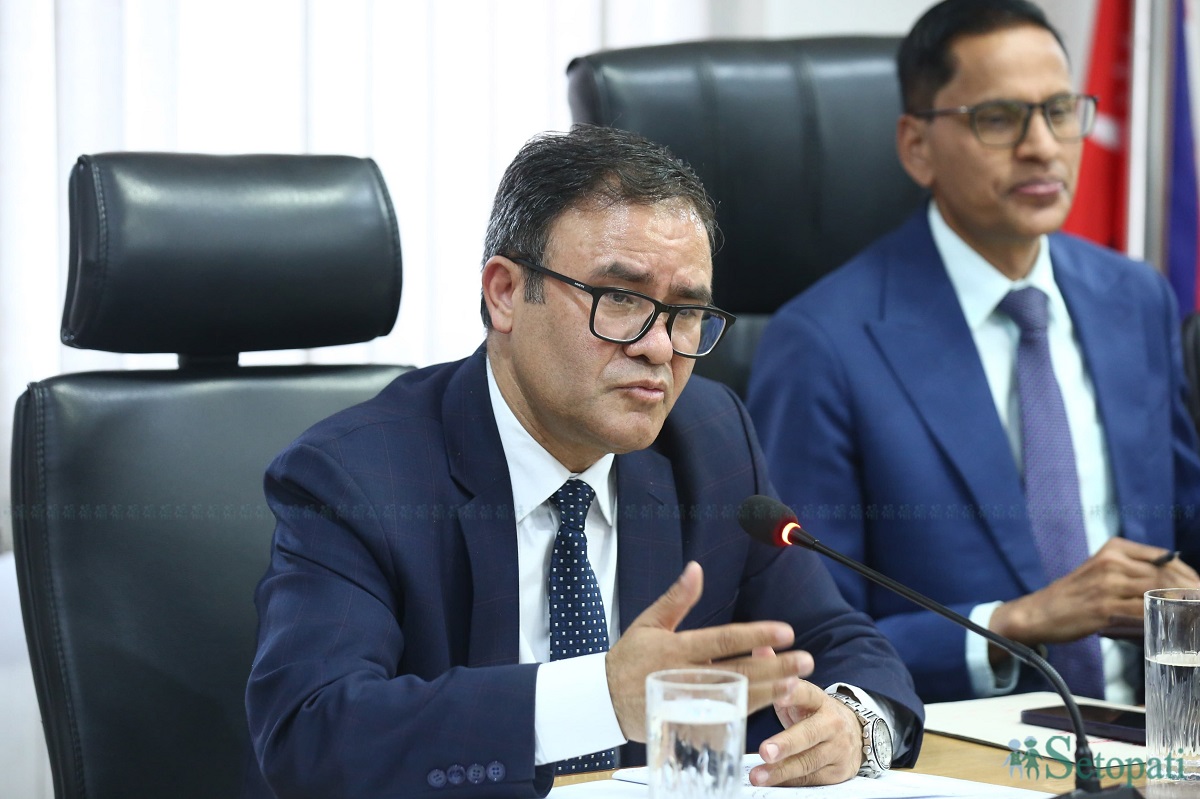
On Sunday, the Ministry of Foreign Affairs held a press conference to provide details about the number of Nepali citizens and their situation in those countries.
Joint Secretary Ramkaji Khadka, chief of the Central Asia, West Asia and Africa Division at the ministry, said that there are 1,729,288 Nepalis in the Middle East region.
Of the 10 Nepalis in Iran, four have already returned, he said.
According to the ministry, there are 6,500 Nepalis in Israel, 500 in Egypt, 25,000 in Oman, 357,913 in Qatar, 175,000 in Kuwait, 28,000 in Bahrain, 384,865 in Saudi Arabia, and approximately 700,000 in the United Arab Emirates.
Similarly, there are 1,500 Nepalis in Lebanon, 30,000 in Iraq, and 17,000 in Cyprus, the ministry said.
Joint Secretary Khadka stated that the government and the ministry are closely monitoring recent developments, prioritizing the safety of Nepali citizens there.
For this purpose, WhatsApp groups have been created for information exchange and coordination with embassies and missions in those countries, he added.
“We have started receiving updates from here. If Nepalis face any problems, they are posting in those groups. The Department of Consular Services has been told that Nepali citizens may need to be rescued,” he said.
The ministry is also preparing to launch a registration platform to collect information on the status of Nepali citizens.
The Department of Consular Services has been instructed to develop an application and make it available on the website within a few days, Khadka said.
He added that a joint emergency rescue group of relevant agencies has also been formed.
“A multi-stakeholder meeting was held this morning under the coordination of the chief secretary. Various agencies have taken on their respective roles. A process has begun to form an emergency rescue team under the coordination of Foreign Secretary Amrit Rai,” he said.
The Department of Consular Services has also decided to arrange a 24-hour hotline.
Khadka said that depending on how the conflict evolves and how long it lasts, and by observing the steps taken by neighboring countries, the government will move forward with its rescue strategy accordingly.
“The ministry understands that if the war prolongs, we may need to adopt a strategy to move Nepali citizens to safer locations, taking into account the actions of neighboring countries and the preparedness of the countries concerned,” he said.
He said Nepali citizens appear to be stranded in four ways during the conflict.
First, those stranded at Tribhuvan International Airport in Kathmandu after obtaining visas.
Second, those who departed from Kathmandu but became stranded at airports in the Middle East.
Third, those using Middle Eastern airports as transit points who are unable to leave.
Fourth, Nepali citizens working in Middle Eastern countries.
The ministry is preparing to coordinate with the Department of Foreign Employment and manpower agencies to rescue those who were about to depart from Kathmandu and are stranded at the airport.
Khadka expressed hope that foreign employment companies would take initiative through their respective firms to support rescue efforts.
The ministry has also requested Nepalis planning to travel to the Middle East to wait for some time.
Additionally, the ministry stated that it is preparing for necessary coordination with the private sector and the International Organization for Migration to facilitate possible evacuations of Nepali citizens from the Middle East.