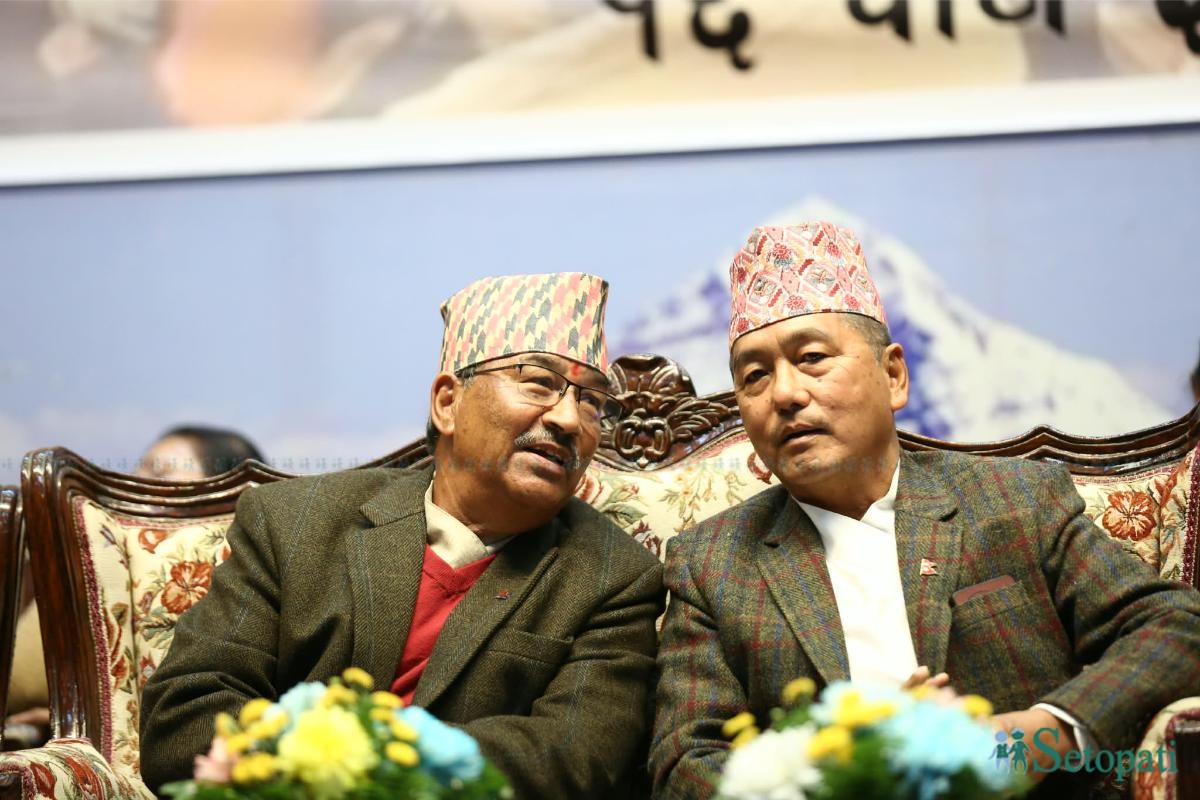
The Rastriya Prajatantra Party (RPP) has submitted a list of 110 candidates for the House of Representatives under the proportional representation (PR) system to the Election Commission.
The party is facing internal disputes after allegations emerged that some leaders who were not recommended by their respective constituencies or districts were directly included in the PR list by the central leadership. The inclusion of a leaders’ wife in the PR list has also sparked controversy.
In addition, party leaders claim that most of the names sent by the RPP-Nepal, led by Kamal Thapa, were not included in the list. Even those that were included were reportedly placed at the bottom of their respective clusters, the leaders said.
The RPP and RPP-Nepal held a unification announcement ceremony on Wednesday, after reaching a party unification agreement on December 24.
RPP spokesperson Gyanendra Shahi has publicly urged the party to correct the proportional representation list.
“I request that the proportional list within the RPP be corrected in time. There is still time to make corrections. Giving top priority to leaders’ wives and to those who left the party for opportunity is unfortunate,” Shahi wrote in a Facebook post. “The proportional system is meant for the underprivileged, not for the affluent. I urge everyone not to misuse it.”
He further said that such practices may benefit leaders’ families but do not serve the party’s interests.
Shahi’s remarks appear to be directed at Saraswati Lama—who is a leader of the RPP women’s organization and also the wife of Senior Vice-chairman Buddhiman Tamang—and leader Khushbu Oli. Saraswati Lama had not been recommended as a candidate by the RPP Dhading district committee.
In the previous election, Khushbu Oli had contested as an independent candidate in Jhapa after the RPP formed an alliance with the CPN-UML, for which the party had taken disciplinary action against her. However, her name has now been placed at the top of the Khas Arya women’s category in the PR list, sparking opposition within the party.
The RPP-Nepal had reportedly sent a list of 40 names for inclusion under the proportional system, of which only six were included. This has led to further discontent.
“We had sent 40 names, including that of Chairman Kamal Thapa, to the RPP to be included in the proportional list,” a leader said. “But I saw only six names on the list—and those too at the bottom.”
RPP had earlier decided not to nominate individuals under the proportional system who had repeatedly received PR opportunities in elections from 2007 to 2022.
“Under this criterion, Kamal Thapa wouldn’t qualify for the proportional list at all,” a leader close to party Chairman Rajendra Lingden said. “Some colleagues from the RPP-Nepal have, however, been included.”