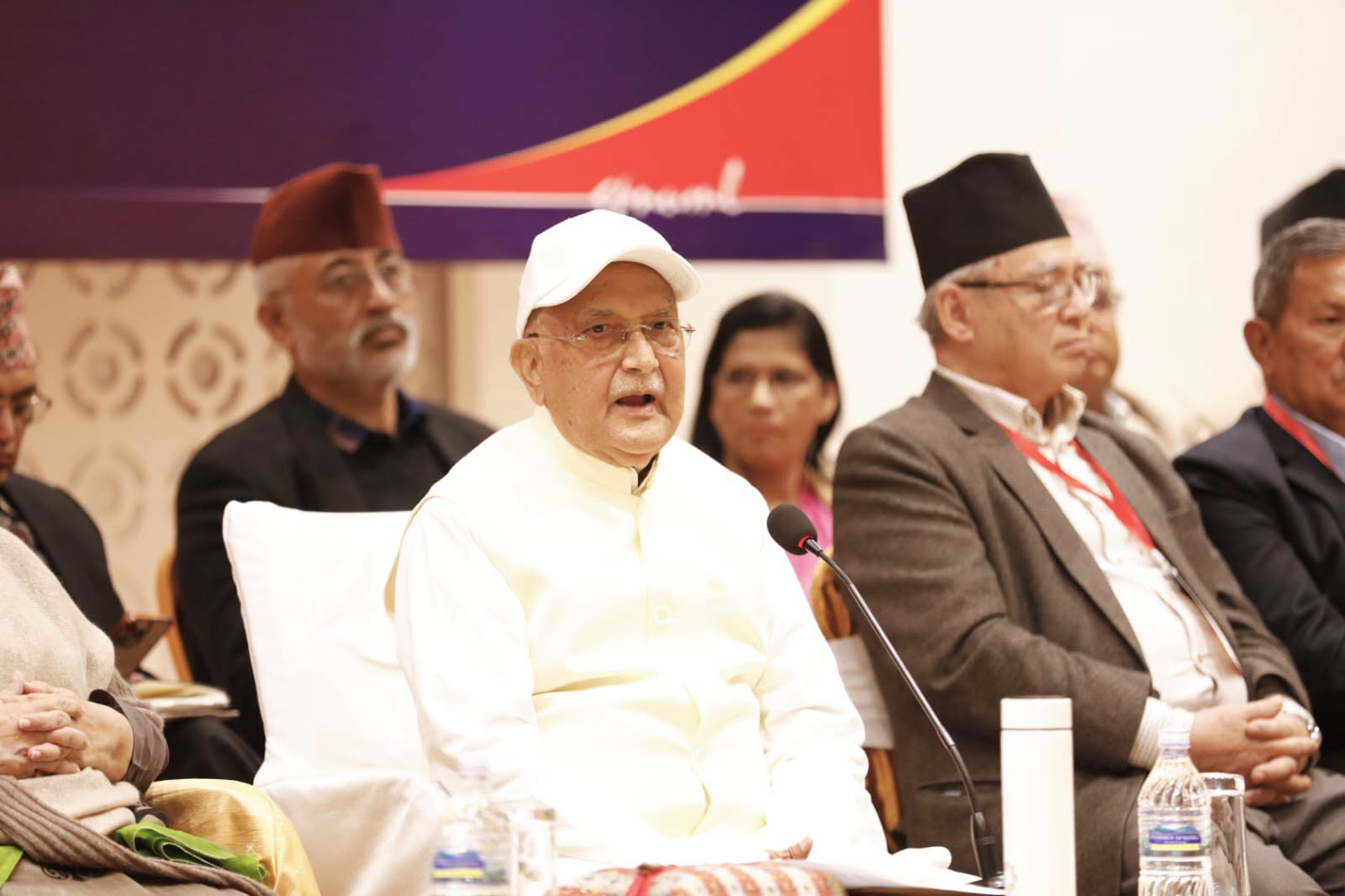
The CPN-UML’s national gathering concluded on Thursday after adopting a 21-point proposal and resolution.
The gathering, held on November 18 and 19 at Karki Banquet in Kathmandu, resolved to launch a movement, if necessary, to defend national sovereignty and restore the democratic process, according to a press statement issued on Thursday by Niraj Acharya, chief of the party’s publicity and publication department.
The event was held under the main slogan, “Our Resolve: Building a Decisive National Force, Our Destination: A Prosperous Nepal, Happy Nepalis.” It was inaugurated by party Chairman KP Sharma Oli. A total of 3,414 delegates from across the country and abroad took part in the gathering.
The gathering also decided to begin preparations for the upcoming local-level, provincial assembly, and National Assembly elections. A special resolution adopted at the gathering expressed the party’s commitment to restoring democracy, strengthening and uniting the party, expanding connections with the public, and establishing the party as a decisive national force in the upcoming elections.
Addressing the event, Chairman Oli said that the setback suffered by the party had begun not merely with the election results but with the ousted of the government. He said that the UML would lead a public reawakening to restore democracy.
Stressing the need to take seriously the events of September 8 and 9 last year and what he described as the ongoing encirclement of the party, Oli instructed party leaders and cadres to reach out to the public with renewed commitment and resolve.
Senior Leader and former president Bidya Devi Bhandari spoke about creating new energy, enthusiasm, and confidence within the party. Vice-chairman Ram Bahadur Thapa addressed issues of national sovereignty, democracy, and prosperity, while Vice-chairman Bishnu Poudel highlighted the work the UML had done for the country and its people. General Secretary Shankar Pokharel delivered a training-oriented address on party purification, organizational strengthening, and preparations for the local elections.
The proposals adopted by the gathering criticized the activities of the current government as undemocratic, arbitrary, and vindictive. The gathering expressed objections to the arrest of UML Chairman Oli, action taken against political party leaders, interference in the media, and pressure on constitutional bodies.
It called for the formation of a competent judicial commission to conduct an impartial investigation into the events of September 8 and 9. The resolution also said that the government must be sensitive to issues affecting people’s livelihoods, including the displacement of landless people, rising prices, unemployment, and intimidation of businesspeople.
The gathering also drew the government’s attention to issues of national sovereignty and foreign relations. It stressed that border disputes with India, unequal treaties, the Eminent Persons Group (EPG) report, the trade deficit, and stalled development projects should be addressed in accordance with national interests.
The gathering further called for expediting the rehabilitation of people and reconstruction of infrastructure affected by floods in the Bhotekoshi, Budhi Gandaki, and Kali Gandaki rivers. It urged the government to immediately repair bridges and roads damaged by the floods to reconnect settlements cut off from transport networks and rebuild affected settlements based on scientific studies.
The gathering also adopted various proposals concerning the reduction of road accidents, climate justice, the rights of Nepalis living abroad, world peace, and democracy.
In its special resolution, the gathering pledged to end factionalism within the party, financial and ethical misconduct, extravagant lifestyles, and tendencies that distance leaders from the public. Party leaders and cadres were instructed to listen to public suggestions, grievances, and criticism, while increasing dialogue and cooperation with younger generations.
The gathering also resolved to select candidates through healthy competition in elections, internalize party decisions, become accountable for assigned responsibilities, and actively work against violence against women, caste-based discrimination, and untouchability.