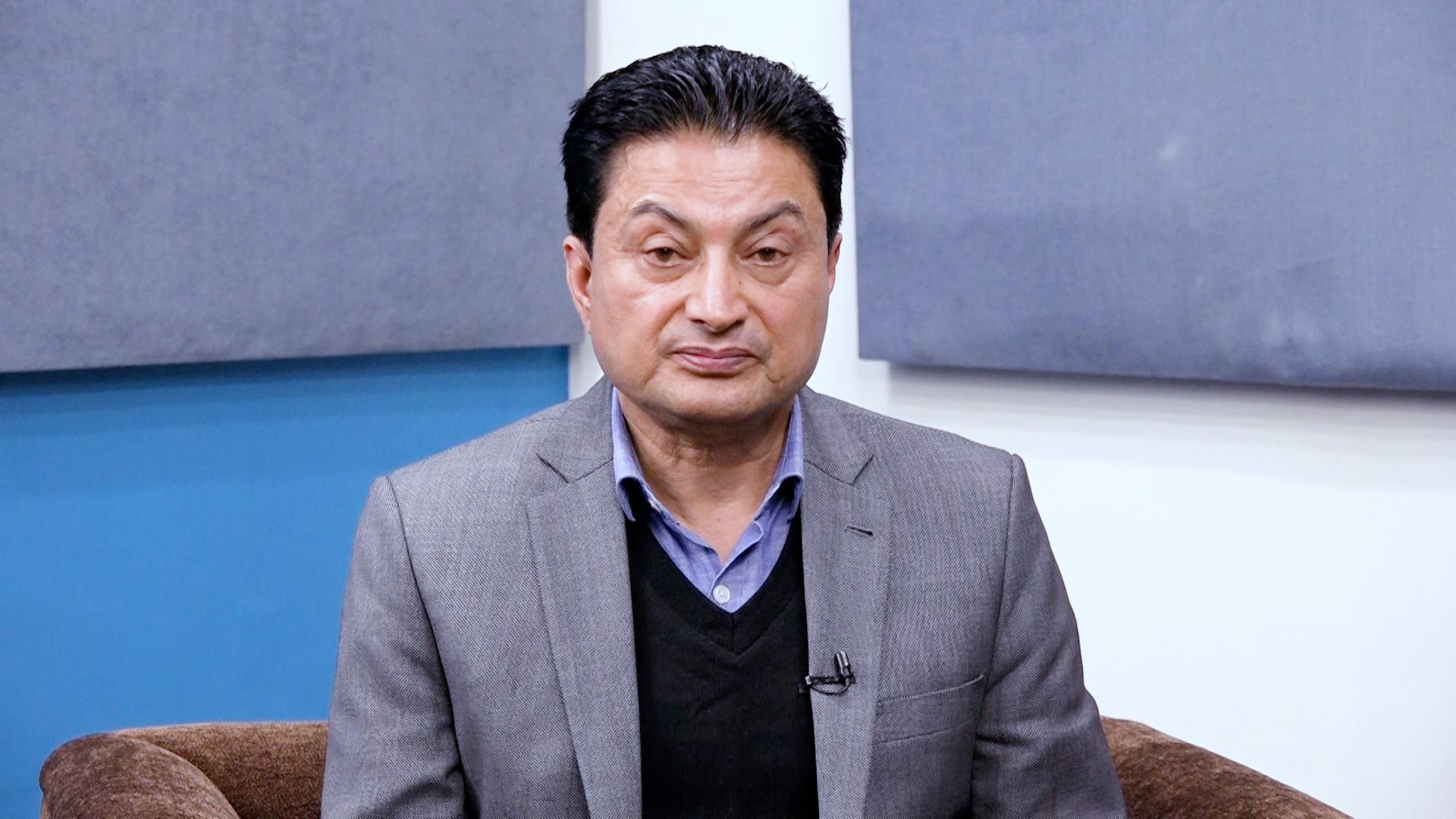
CPN-UML Vice-chairman Gokarna Bista has expressed disagreement with the inclusion in party Chairman KP Sharma Oli’s political report of a proposal to launch a movement to reinstate the House of Representatives.
Expressing his views on the political report presented by Chairman Oli at the UML central committee meeting, Bista said that it would not be politically appropriate or relevant to propose launching a movement for the reinstatement of the House eight months after participating in and losing the election.
He said that there could have been justification for a movement to reinstate the House if they had not participated in the election.
However, Bista argued, raising the issue of House reinstatement after participating in the election and being defeated by the popular mandate would raise questions about political morality and justification.
“Therefore, this kind of wording should be withdrawn. I disagree with this proposal,” he said.
Along with the issue of House reinstatement, Bista also questioned the party’s working style and decision-making process.
He objected to the fact that the long-awaited report prepared unanimously by a task force formed on the recommendation of the party chairman himself had not been presented to the central committee for discussion.
He said that the task force’s report should have been presented to the central committee for discussion and a conclusion. Failure to do so, he argued, amounted to undermining and disrespecting the central committee.
Bista said that the party should not conclude that its condition is satisfactory simply because it has repeatedly led the government.
“Regarding the party’s condition, the UML received 33 percent of the vote in the 2017 election, 27 percent in 2022, and 13 percent in 2026. In 2017, we emerged as the largest party in Parliament; in 2022, the second-largest; and in 2026, the fourth-largest. And yet, is everything fine?” he said.
He said that the party cannot move forward with its current style, thinking, and working methods, citing incomplete renewal of party memberships, the absence of majority positions in many party committees, and the party’s failure to connect with the public.
Bista said that disagreements within the party over ideology, policy, programs, working style, competition for positions, and the distribution of opportunities are natural, but that they should be resolved through established procedures, criteria, dialogue, and reason. He said that procedures and standards within the party have been weakening.
“Numbers can provide legitimacy and power, but numbers alone cannot provide every solution or wisdom,” he said.
Bista also said that the practice of collective leadership and individual accountability within the party has weakened, and that a tendency toward the centralization of power has become dominant.
Warning that the challenges ahead would become more difficult if the party cannot move forward collectively, he called for an open review of its weaknesses, followed by reforms and a new direction.