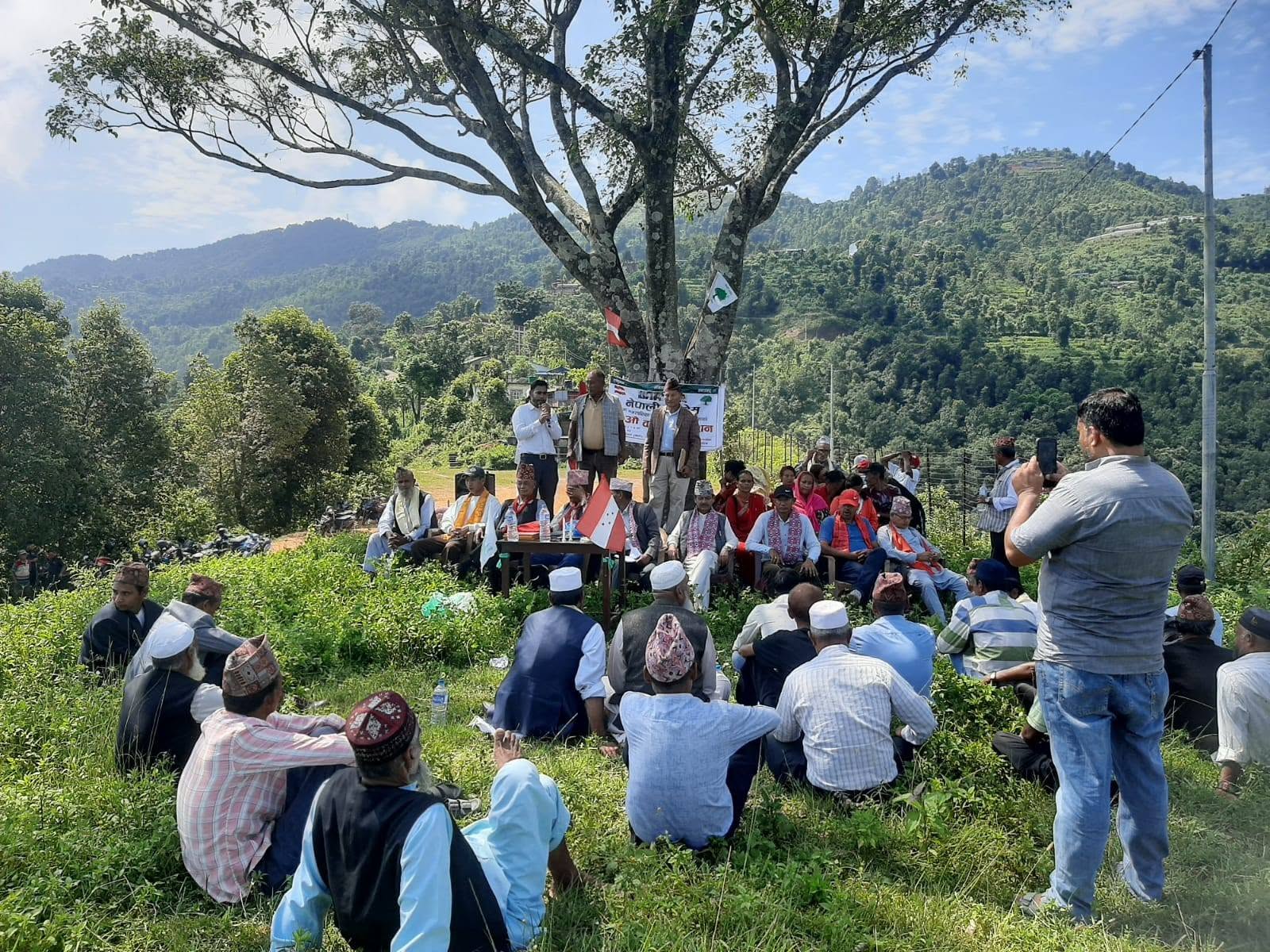
The Nepali Congress is holding municipal-level conventions on Wednesday as part of the party’s 15th general convention.
The convention process for selecting new leadership at the local level began with ward-level conventions on September 19 and has now reached the municipal level.
The Nepali Congress central election committee said that leadership has been selected peacefully in most wards across the country, with only a few isolated exceptions. The committee said that it expects Wednesday’s municipal conventions to also be conducted smoothly and amicably.
The election committee noted that it has moved forward with the convention schedule despite natural disasters and other special circumstances.
In Rasuwa, which suffered extensive damage from severe floods and landslides, conventions are being planned for a few days later, taking the exceptional circumstances into consideration, said Advocate Raju Katuwal, member-secretary of the election committee.
The committee said that there was some delay in finalizing membership lists in some areas after the party’s central committee decided to include active members whose memberships had been renewed through January 5.
According to Katuwal, the delay was not caused by political disputes or disagreements, but by a technical issue arising from the need to process a large volume of data from across the country simultaneously.
Under the party’s new statute and election guidelines, five office-bearers will be elected in each municipality through Wednesday’s conventions.
The office-bearers will include one president, two vice-presidents including one woman, one secretary, and one joint secretary. The treasurer will be nominated by the president from among the elected working committee members.
For working committee members, each ward will elect one woman and one open-category member, one woman and two open-category members from the youth cluster, and one woman and one open-category member from the Dalit community.
To make local working committees more inclusive, the rules allow the nomination of additional members: seven in rural municipality committees, nine in municipality committees, 11 in sub-metropolitan city committees, and 13 in metropolitan city committees.
When making these nominations, priority must be given to communities that were not represented through the election process.