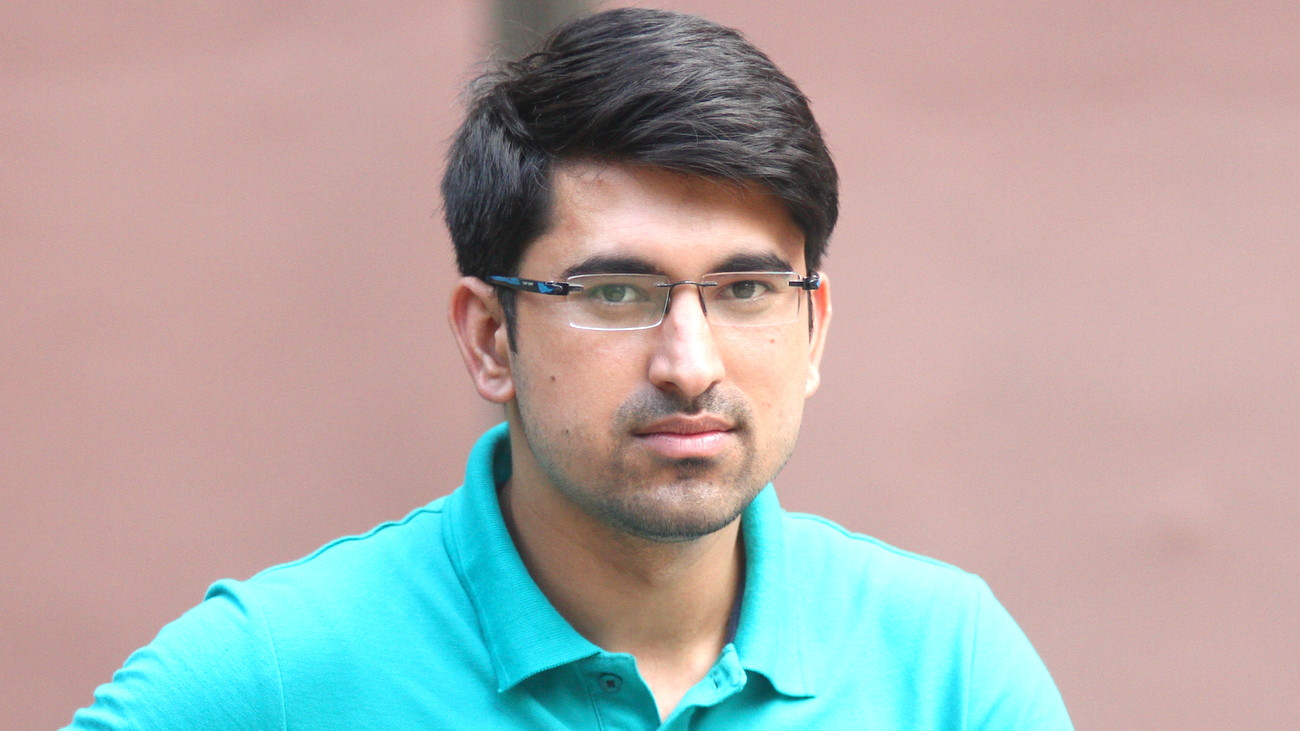
Among politicians of his generation, former prime minister and outgoing Nepali Congress president Sher Bahadur Deuba is considered one of those who speak less and lie less.
Many Nepali Congress leaders who have worked closely with him say that Deuba may hide certain things by remaining silent, but he does not easily lie when he speaks – whether in private conversations or in public.
This view is shared by leaders of other parties as well.
But at an event organized in Bhaktapur to mark BP Koirala’s birth anniversary on Wednesday, Deuba sounded different. He appeared to deliberately mislead party leaders and workers, making statements that went beyond the facts.
Deuba severely distorted facts concerning the special general convention held in January and the recognition granted to it by the Election Commission..
He claimed that the then acting chief election commissioner himself had said that he granted recognition to the special general convention after his life came under threat. This claim or remark is not of a minor nature.
Speaking at the event, Deuba said, “After the special general convention was called, we filed a case with the Election Commission. The chief commissioner of the Election Commission has said that there was a threat to his life; he has spoken. Look, it is not me saying this – it is something everyone has heard.”
However, Deuba did not disclose where or when the then chief election commissioner, Ram Prasad Bhandari, had said that his life was under threat, or where Deuba had heard such a statement.
There is no public record anywhere of Bhandari having said such a thing.
We spoke to Bhandari about Deuba’s public remarks.
“I have no idea where or how a leader of national stature heard about a death threat,” Bhandari told Setopati. “While leading the Election Commission at that time, I did not work under any fear, threat, or expectation. Nor did I act out of greed. I simply followed what is written in the Constitution and the law.”
Bhandari also said that he was unaware of the statement made by Deuba.
We also asked him, “Did supporters of the special general convention threaten to kill you in an attempt to have the convention recognized?”
“No. I don’t know,” replied Bhandari.
Deuba had built a reputation among party leaders and workers as someone who did not lie for political gain. Many are therefore questioning why he made such a statement toward the end of his political career. Some have even said that such a serious allegation should be substantiated.
What happened, and what do other Election Commission officials say?
The Nepali Congress held a special general convention in January and wrote to the Election Commission requesting that the party’s records be updated accordingly. The special general convention elected Gagan Thapa as party president.
However, then acting president Purna Bahadur Khadka and leaders including Prakash Sharan Mahat, who opposed the special general convention, approached the Election Commission and urged it not to recognize the convention.
In doing so, they also submitted to the commission a list of general convention representatives who had demanded the special general convention. Thus, the commission received documents showing that a special general convention had been demanded, while the Gagan Thapa camp submitted documents showing that the convention had been held, including attendance records.
Based on these documents, the commission recognized the special general convention that elected Thapa as party president.
On the day the commission was due to make its decision, however, tensions ran high at its office premises in Kantipath. From around 2 p.m., supporters of the special general convention and those backing a regular general convention demonstrated outside the commission premises. Police had to use force several times to disperse the two groups.
Leaders including Purna Bahadur Khadka, Bimalendra Nidhi, Prakash Sharan Mahat, Minendra Rijal, and NP Saud reached the commission premises in Kantipath to protest the decision.
We also spoke with several Election Commission officials and security sources about the tensions at the time.
Both sources contacted by Setopati said that the Election Commission commissioners had come under significant pressure from the then establishment faction led by Deuba.
“They sent a message saying, ‘Let’s see how you leave the office,’” an Election Commission official said.
A security source also confirmed this.
“We were informed that a leader at the office-bearer level from the Deuba faction, which had opposed the special general convention, had threatened the commissioners, saying, ‘Let’s see how you leave the Election Commission building without making a decision in our favor,’” a security official told Setopati.
Election Commission commissioners also alerted security agencies, saying they faced security and that the commission building could be vandalized or set on fire.
Amid the tension, after the commission decided to update its records recognizing Thapa as president elected by the special general convention, the commissioners left the commission premises in vehicles with private license plates. Only after the commissioners and secretary had left the office was the decision to recognize the Nepali Congress led by Thapa made public.
To ensure the integrity of their decision, the commissioners had also prepared and securely retained another certified copy of the decision to update the party records based on the special general convention.
Deuba also appeared to mislead the public on another issue at Wednesday’s event in Bhaktapur.
The Nepali Congress held its special general convention in Kathmandu from January 11 to 14.
The convention was organized at the demand of 54 percent of the general convention representatives and was led by then general secretaries Gagan Thapa and Bishwa Prakash Sharma.
On October 15 last year, general convention representatives had submitted their signatures to then acting party president Purna Bahadur Khadka at the party’s central office in Sanepa, demanding a special general convention. Deuba had appointed Khadka acting president only a day earlier.
Khadka left the signatures submitted in support of the special general convention untouched.
At the time, neither then party president Deuba nor acting president Khadka considered it necessary to verify the signatures because there was an ongoing debate over whether the party should hold a regular or special general convention, while a schedule for a regular general convention within December or January was being prepared.
Those who had submitted the signatures repeatedly visited the central office and requested that the signatures be verified and a special general convention be called. But the then leadership continued to ignore their demands.
Meanwhile, a schedule was announced for holding the regular 15th general convention by mid-January. But the Deuba faction was not prepared to hold the general convention, and it did not take place.
After Deuba declined to hold the regular general convention or call a special general convention, then general secretaries Thapa and Sharma took the initiative to hold a special general convention by implementing the mandatory provisions of the party statute. The special general convention was subsequently held with the support of 54 percent of the general convention representatives and under the leadership of Thapa and Sharma.
Even on the morning the special general convention opened, Thapa and Sharma visited Deuba at his residence and met him. Deuba did not want to attend the convention. Thapa recently reiterated this at a central committee meeting.
Moreover, when Deuba’s secretariat was approached with an invitation to the special general convention, the invitation letter was returned on January 10.
When Ram Paltan Sah, coordinator of the special general convention guest reception and hospitality committee, went to Deuba’s residence in Maharajgunj to deliver the invitation, Deuba’s personal secretary Bhanu Deuba read the letter but sent Sah back without letting him meet Deuba.
However, at the BP anniversary event in Bhaktapur, Deuba said that Thapa had organized the special general convention without even informing him. He also said that the signatures had never been verified.
“I am the party president. Can you [Gagan Thapa] call a special general convention? I don’t even know about it, and you call one? Get the signatures verified, verify them. He put names from his pocket,” Deuba said.
Here, Deuba appears to have presented a misleading account of the events by acting as if he did not know that the verification of submitted by 54 percent of general convention representatives was the responsibility of the party committee led by him.
The Nepali Congress statute provides that if 40 percent of general convention representatives formally demand a special general convention, stating the reasons, it must be called within three months.
Since the request was submitted on October 15, a special general convention had to be held by January 13. When the party president and acting president refused to call it, general secretaries Thapa and Sharma had to inaugurate the special general convention on January 11 in order to implement the statute.
The statute did not give Deuba the option of deciding whether or not to call a special general convention.
Article 17(2) of the party statute clearly states that if 40 percent of the members of the central convention submit a written request to the central body, citing special reasons, the convention must be called within three months.
This article did not give the central leadership the choice of calling a special general convention only if it felt like it and not calling it if it did not; rather, it was mandatory.