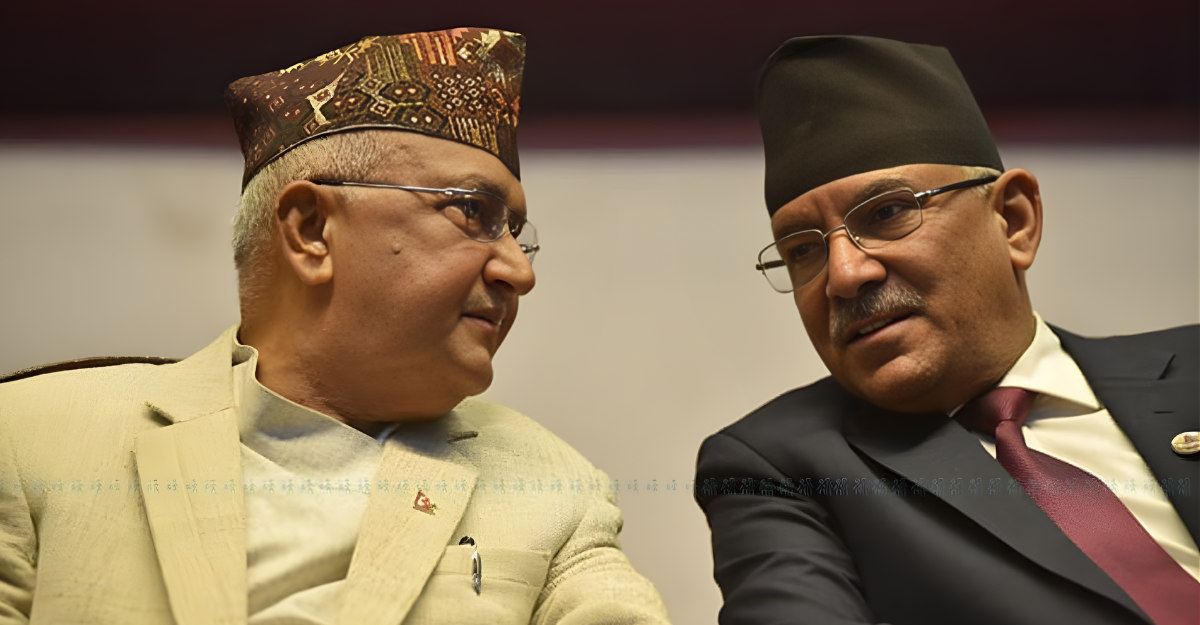
The CPN-UML and the Nepali Communist Party (NCP) have directed their provincial committees to follow a set procedure for running provincial governments and allocating ministries between the two parties.
The top leaders of the two leftist parties, who agreed on July 25 to cooperate in provincial governments, issued the directive to their respective subordinate committees on Tuesday.
To implement the three-point agreement reached between the two parties on July 25, UML Chairman KP Sharma Oli and NCP Coordinator Pushpa Kamal Dahal jointly prepared a five-point procedure and issued instructions to their subordinate bodies.
The directive, signed by both leaders, states that the number of seats won by each party in the respective provincial assembly should be the primary basis for forming provincial governments.
Under the procedure, the number of ministries allocated to each party will be determined based on the number of provincial assembly members. The positions of chief minister and speaker will also be taken into account when maintaining the overall balance of power in the government.
The two parties have agreed on a rotational system for selecting and allocating ministries. The party that does not hold the chief minister’s post will get the first choice of ministry, while the party holding the chief minister’s post will select the second ministry.
The parties will then alternate in selecting ministries until the allocation of all ministries is finalized.
In provinces where cooperation between the two parties alone does not provide a clear majority and a third party needs to be brought into the government, ministries will be allocated through mutual understanding, according to the directive. The remaining ministries, however, will be allocated using the rotational system outlined above.
The directive also calls for provincial governments to formulate and make public minimum common commitments aimed at promoting federalism, ensuring political stability, strengthening good governance and prosperity, and accelerating provincial development. Provincial governments are expected to conduct their day-to-day affairs based on those commitments.
Oli and Dahal have urged their respective provincial leaders to particularly focus on strengthening mutual understanding throughout the process and on the objective of long-term and sustainable cooperation between the two parties.
Provincial governments have been unable to expand in some provinces due to disagreements over power-sharing between the two parties, while the formation of new governments has also been delayed in some provinces.