Following a three-point agreement between the CPN-UML and the Nepali Communist Party (NCP) regarding the operation of provincial governments, an internal race to become the chief minister has begun within the UML in Koshi province.
According to the agreement reached at the center, the command of Koshi province has once again fallen to the UML. However, an internal competition has broken out within the UML over who will lead the new government.
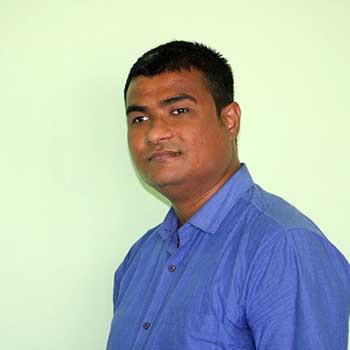
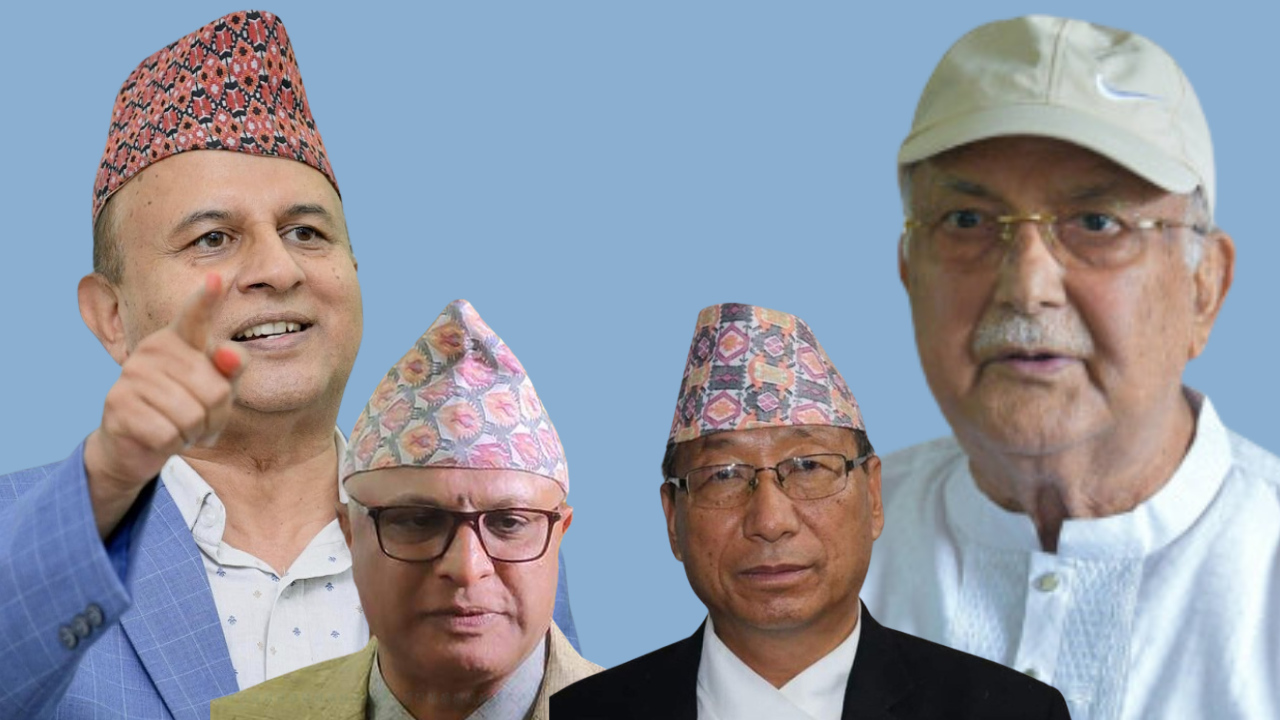
UML Chairman KP Sharma Oli is in favor of replacing current Chief Minister Hikmat Karki with Taplejung leader Til Kumar Menyangbo, who is also the deputy leader of the parliamentary party.
On the other hand, General Secretary Shankar Pokharel is adamant on repeating Karki as chief minister.
According to a UML leader in Koshi, the likelihood of Chairman Oli imposing a unilateral decision like before is low this time. Leadership will be chosen based on the party committee’s decision, and if there is a major tug-of-war between these two names, a third person might also get an opportunity, the leader said. However, another leader said that either Karki or Menyangbo is almost certain to become chief minister.
After UML Chairman Oli and NCP Coordinator Pushpa Kamal Dahal signed the agreement on Saturday, the equation for chief ministers in the provinces became clear.
According to the agreement, the UML will lead the governments in Koshi, Bagmati, and Lumbini provinces, while the NCP will get the chief minister post in Karnali and Sudur Paschim provinces. The agreement mentions that the structure of leadership and participation in Madhesh and Gandaki will be determined after holding discussions with other political parties represented in the provincial assemblies.
Until the agreement was reached at the center, the NCP had been staking claim to leadership in Koshi province. NCP leader Indra Angbo had been stating publicly that since they had repeatedly supported the UML, their party should get the leadership this time.
However, after the top leaders' agreement handed Koshi back to the UML, NCP leaders in Koshi expressed deep dissatisfaction on social media. NCP leaders Ganesh Upreti and Kul Prasad Samba, among others, openly disagreed with Dahal’s decision.
Now, a race has begun within the UML in Koshi between the continuation of Karki or the crowning of Menyangbo.
The biggest challenge for current Chief Minister Karki has been his worsening relationship with Chairman Oli.
The two leaders, who are from the same electoral constituency in Jhapa, had a very close relationship in the past. Because Karki had continuously supported Oli even when Oli was out of power, Karki received opportunities to become a standing committee member, secretary, and a three-time chief minister of Koshi.
The distance between them grew after Karki supported General Secretary Shankar Pokharel's camp in the restructuring and leadership handover debate that arose within the UML following the March 5 elections.
Oli grew furious after Karki, who had been close to General Secretary Pokharel since his student politics days, backed the general secretary's agenda instead of the chairman's. After the party’s general convention, Karki himself wanted to become the Koshi province In-charge and his brother, Deepak Karki, wanted to be the Jhapa district in-charge. However, Oli assigned those responsibilities to Sherdhan Rai in the province and Romnath Oli in Jhapa, leaving the Karki brothers disgruntled.
Oli was also upset after Karki, who had long been a trusted confidant, previously grew close to former president Bidya Devi Bhandari.
Lawmakers close to Karki are worried as the deteriorating relationship with Oli has increased the risk of them losing state office. Although Karki himself has denied it, the sequence of events confirms that the distance has grown further.
A lawmaker close to Karki says, "It is Oli's old style to give everything when the relationship is good and to try to finish you off once it deteriorates."
However, leaders claim that since General Secretary Pokharel's faction is exerting pressure for decisions to be made through committee systems, the outcome could swing in anyone's favor.