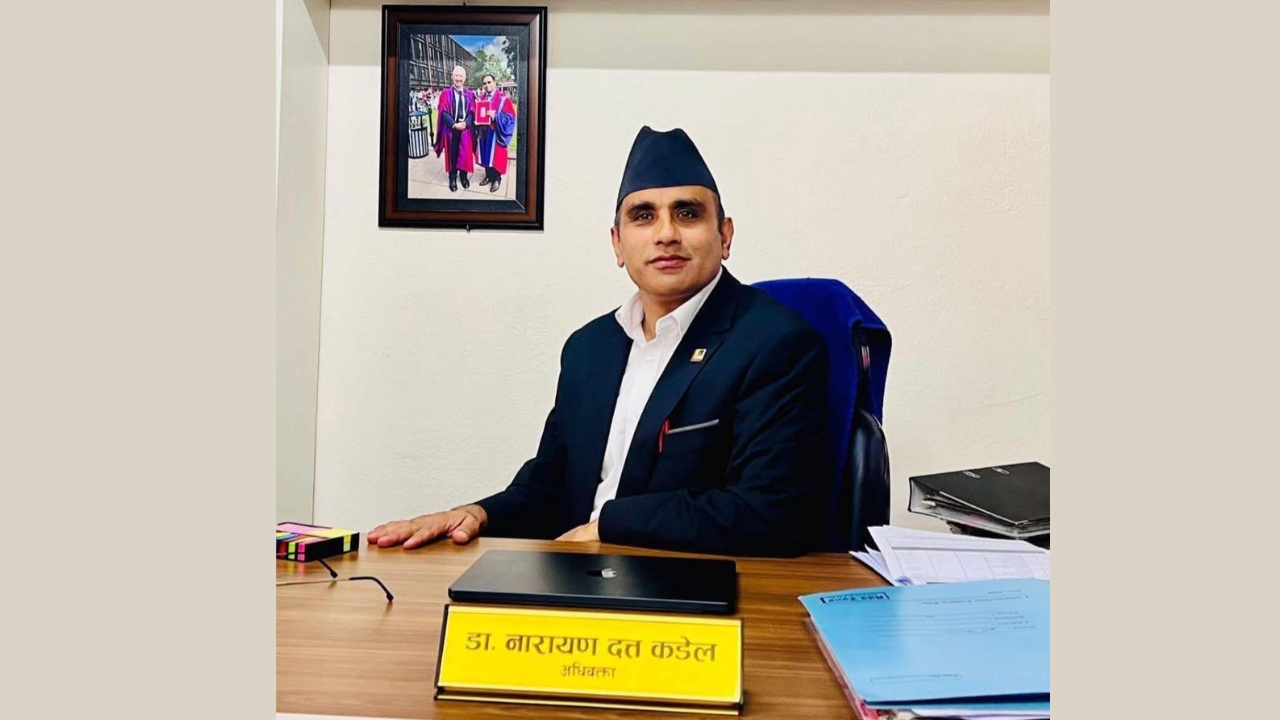
The Supreme Court has ordered the submission of Attorney General Narayan Datta Kandel's travel records between Nepal and the United Kingdom over a nine-year period in connection with petitions challenging his eligibility for the post.
On Monday, a joint bench of Justices Binod Sharma and Sunil Kumar Pokharel ordered that certified copies of Kandel's travel records between Nepal and the UK from 2015 to 2024 be obtained from the Department of Immigration and submitted to the court.
The court also ordered the submission of the file containing the decision to appoint Kandel as attorney general. The file is to be presented to the bench on the next hearing date and returned afterward.
Three separate petitions have been filed at the Supreme Court claiming that Kandel does not meet the constitutional qualifications required to serve as attorney general.
The petitioners argue that his appointment violates Articles 157(3) and 129(5) of the Constitution, which set out the qualifications for the post.
The petitions seek to annul Kanden’s appointment by the president on April 5, as well as the oath of office administered by the chief justice. They have also requested an interim order barring Kandel from performing the duties of attorney general until the case is finally decided.
A previous petition challenging Kandel's qualifications had been rejected at the registration stage.
Article 157(3) of the Constitution states that a person qualified to be appointed as a justice of the Supreme Court is also eligible to serve as attorney general. Article 129(5) outlines the qualifications required for appointment as chief justice or Supreme Court justice.
According to the constitutional provision, a person must have either practiced law continuously for at least 15 years as a senior advocate or advocate after obtaining a bachelor’s degree in law, or worked continuously for at least 15 years in the field of justice or law and earned a reputation as a distinguished legal expert to be eligible for the post of attorney general.
The petitioners contend that Kandel did not practice law continuously for the required 15-year period and therefore does not meet the constitutional eligibility criteria.