Janakpurdham is the capital city of Madhesh province. Half of the Janakpurdham Sub-Metropolitan City falls within the federal constituency of Dhanusha-3. However, in this very center of Madhesh, there is not much electoral buzz for Madhesh-based parties this time.
Rajendra Mahato of Rastriya Janata Party (RJP) was elected from this constituency in 2017 while Juli Kumari Mahato of CPN-UML won five years later.
Nepali Congress (NC) leader Bimalendra Nidhi had received only 27,847 votes when Rajendra Mahato emerged victorious from Dhanusha-3 with 30,750 votes in 2017. At that time, UML had unofficially supported Rajendra Mahato.
Similarly, UML’s Juli Kumari Mahato Mahaseth emerged victorious in 2022 with 33,388 votes while Anil Kumar Jha of Loktantrik Samajwadi Party (LSP) came second with 23,686 votes. Shambhu Nath Sah of Janamat Party was third with 7,374 votes.
The votes received by Anil and Shambhu Nath in 2022 show that Madhesh-based parties were in a position to compete in Dhanusha-3 until the last election. There is, however, not much discussion of Madhesh-based parties in this constituency ahead of the upcoming election on March 5.
UML, NC, and Rastriya Swatantra Party (RSP) are expected to be the main contenders this time around.
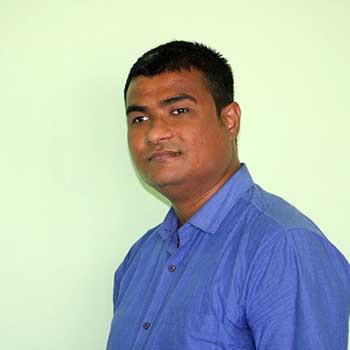
How and why did Madhesh-based parties reach such a defensive position in the very center of Madhesh? We spoke about this with Anubhav Ajit, an activist of the civil movement in the province. A researcher who has been studying the implementation of federalism in various provinces, including Madhesh, for a long time, he has been based in Janakpur for over a year conducting research.
According to him, there are several reasons why the electoral hype for Madhesh-based parties has faded this time. "First of all, they have reached a fragmented state, leading to an erosion of power," he said. "The way Madhesh-based parties split increased disappointment rather than hope among the people. Almost all Madhesh-based parties were lured by the greed for power but could not deliver anything. The impression that they are opportunists spread everywhere."
Besides that, the Madhesh-based parties, which failed to fulfill previous promises, also did not produce good results in tasks that could be done at the provincial level. "Similarly, new and promising faces could not emerge in the leadership, which has also lowered the prestige of Madhesh-based parties," Ajit said. "For these reasons, there isn't much enthusiasm for Madhesh-based parties even at the center of Madhesh this time."
According to him, while regional parties have withered in the center of Madhesh, parties like NC, UML, and RSP are putting in a lot of effort.
There are a total of 32 constituencies in the eight districts of Madhesh. Madhesh has the highest number of voters in the entire country. That is why parties have kept Madhesh as a priority. NC President Gagan Thapa is appearing for an electoral test from Sarlahi-4 this time as a prime ministerial candidate from the grand old party. Parties like UML, Nepali Communist Party (NCP), and RSP have also fielded established and popular faces in Madhesh.
RSP, projecting senior leader Balen Shah as the future prime minister, started its first program from Janakpur in Madhesh last month. RSP, which received the fewest votes from Madhesh in 2022, hopes to become strong in Madhesh due to the Balen factor.
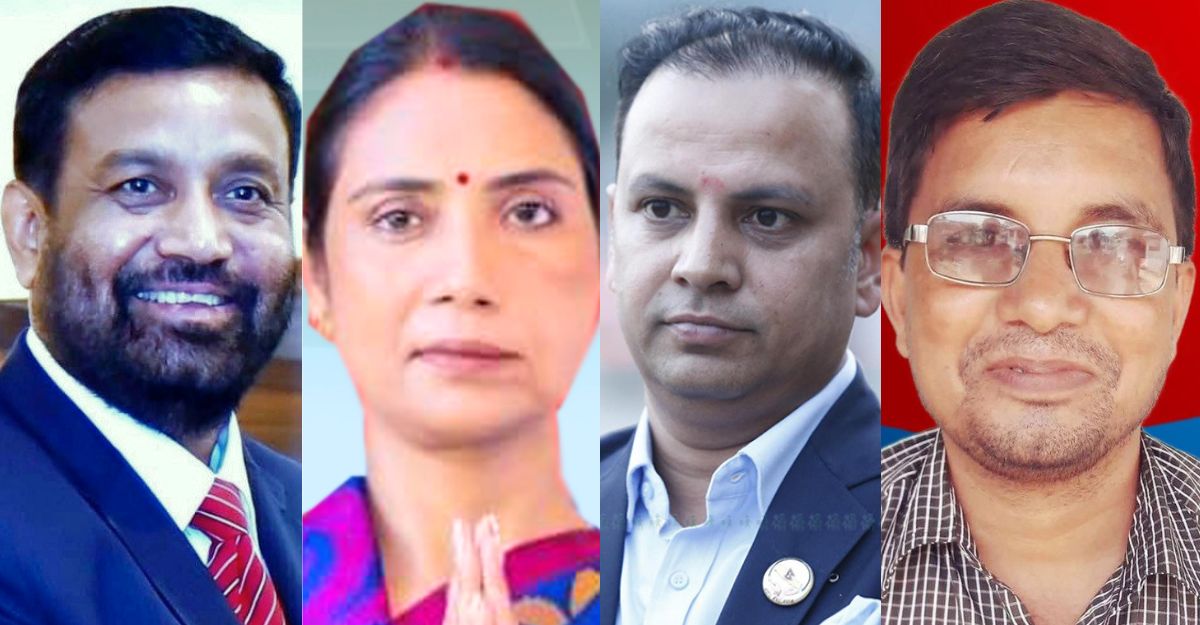
On the other hand, NC believes it can reclaim its old legacy now that the party president himself has descended to Madhesh. UML, which made a comeback in Madhesh with significantly better result in the last election, is also expecting to get stronger. Parties making their respective moves for electoral success have made Dhanusha-3 a matter of prestige, where previous winner Juli Kumari is the candidate from UML, while Bimalendra Nidhi is in the electoral field from NC.
RSP has fielded Spokesperson Manish Jha who is contesting first-past-the-post (FPTP) election for the first time.
There are a total of 45 candidates, including 16 party candidates. Ram Lalit Mandal from NCP, Hussain Kawari from Rastriya Prajatantra Party (RPP) RPP, Parmeshwar Sah Suri from Janata Samajwadi Party (JSP), Gopal Prasad Sah from Janamat Party, Amarendra Kumar Jha from Nepal Janata Party, Saddam Hussain from Shram Sanskriti Party, and Pradeep Bikram Sah from Aam Janata Party are among those on a party ticket.
Dhanusha-3, which includes Mukhiyapatti Musaharniya Rural Municipality, Nagrain Municipality, Dhanauji Rural Municipality, Ward No 9 of Videha Municipality, and Wards 1-8, 10, 12, 15, 16, 20, 23, 24, and 25 of Janakpur Sub-Metropolitan City, has a total of 125,927 voters.
NC leader Nidhi did not contest in 2022 and was elected to the House of Representatives (HoR) through the proportional representation (PR) system. NC had received the most PR votes in Dhanusha-3 then.
While NC obtained 25,195 votes, UML received 17,874, Janamat Party 8,082, JSP 5,317, LSP 4,520, Nepal Sanghiya Samajbadi Party 1,486, RPP 1,331, RSP 1,219, and Tarai Madhesh Loktantrik Party received 1,211 votes in the PR category.
NC seems to be strong in this constituency according to recent electoral mathematics while UML's Juli Mahato looks strong individually.
The candidates of the three parties considered the main competitors this time have their own strengths and weaknesses. According to researcher Anubhav Ajit, being strongly established not only in this region but nationwide, being a local, and having won some previous elections are the strongest aspects of NC leader Nidhi. "A long background, strong political history, and maintaining good relations with everyone in the constituency are his strong points," he said. "Besides that, when NC President Gagan Thapa arrived in Madhesh, it seemed to bring a kind of wave. That is also his strong point."
The crisis seen within NC due to the Special General Convention, Nidhi personally not being easily accessible to lower-level cadres, and the weakness of relying only on reporting from a limited circle are his weak points, according to Ajit. "Caste votes also play a very large role here," he said. "Nidhi is a Kayastha. The number of Kayastha voters in this constituency is low."
For Juli Kumari, UML's strong organization and victory in the last election are the strongest points, says Ajit. Besides that, the relationships she has built across the constituency through personal activity are also her strong points. "She herself is a leader representing the Suri community. The votes of this community are the highest here," he said. "As a female candidate, there is also a high possibility of Juli attracting women's votes."
She is also considered a strong candidate in terms of financial resources needed to contest an election.
Despite having such strong points, her weak points are equally significant. First of all, there is dissatisfaction within the UML ranks in Dhanusha that Mahato and her husband have always occupied one constituency each. Her husband, Raghubir Mahaseth, is a candidate in Dhanusha-4.
"The dissatisfaction that all opportunities always go to the same family is visible in a large section of UML," Ajit said. "Besides that, the biggest impact of the anti-Madhesh expressions frequently given by UML Chairman KP Oli and Secretary Mahesh Basnet seems to be faced by Juli."
Oli and Basnet made controversial expressions targeted at Balen a few days ago. Ajit says that such statemnts are having a negative impact on all UML candidates in Madhesh.
For RSP candidate Manish Jha, who is considered another competitive face in Dhanusha-3, being a young and new candidate is the strongest point, Ajit states. In the election campaign started by RSP from Janakpur, the addresses by President Rabi Lamichhane and Senior Leader Balen Shah have brought a kind of wave for RSP.
The declaration of Balen, who has filed his candidacy from Jhapa-5, as the future prime minister has also kept RSP at the center of attraction for many. This could benefit Manish Jha. "In addition, I think his practice of making strategies based on data and social media will also help," Ajit said. "However, despite being a local, being less known at the local level and the weak influence of the party are his weak points."