The government is set to issue an ordinance to amend Schedule 1 of the House of Representatives Member Election Act.
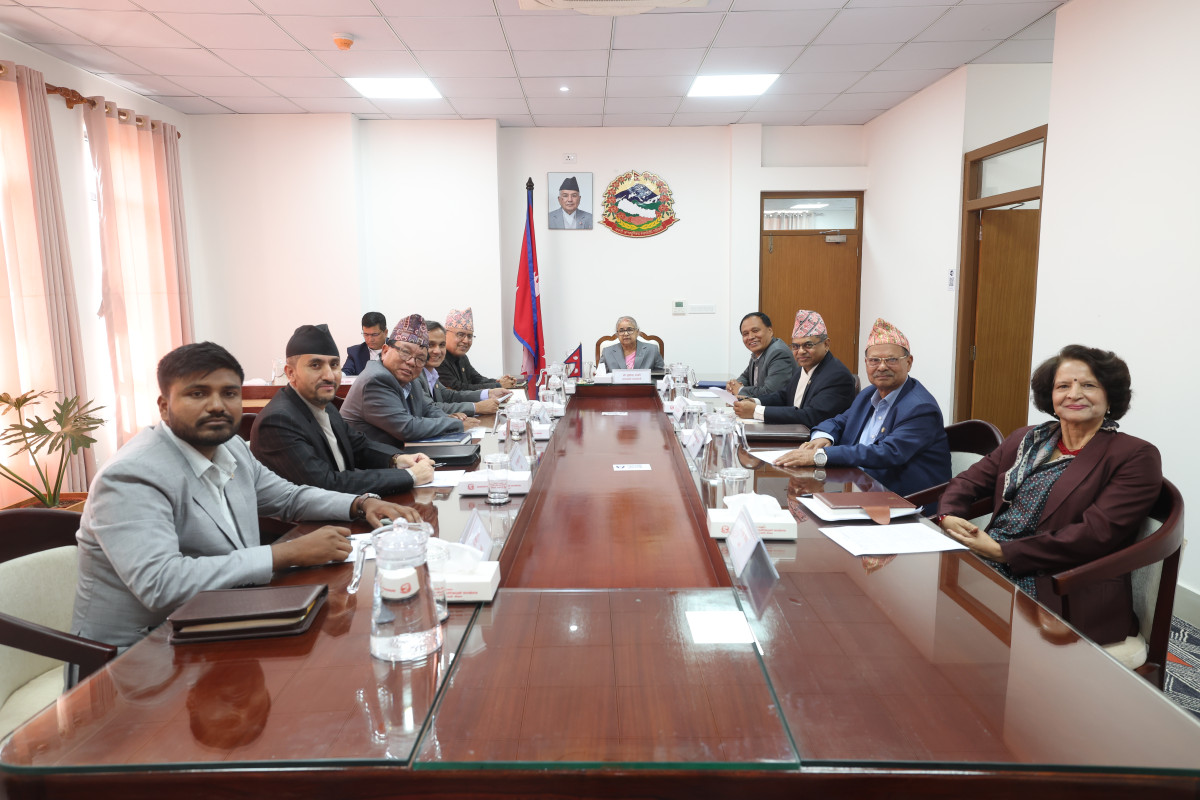
On Thursday, a Cabinet meeting decided to recommend to the president the issuance of an ordinance to determine seat numbers in proportion to the 2021 census data.
The ordinance proposes amending Schedule 1 of the House of Representatives Member Election Act, 2017, to allocate seats on the basis of the population percentages of Dalits, Indigenous Nationalities (Adivasi Janajati), Khas Aryas, Madheshis, Tharus, and Muslims.
For the election scheduled for March 5, 2026, political parties must submit their closed lists for the proportional representation system to the Election Commission by December 28 and 29.
Section 28 (5) of the House of Representatives Member Election Act requires parties to ensure representation of Dalits, Indigenous Nationalities, Khas Aryas, Madheshis, Tharus, and Muslims in accordance with the principle of inclusion when submitting their closed lists for proportional representation.
Schedule 1 of the Act, based on the 2011 census, mandates that closed lists include 13.8 percent Dalits, 28.7 percent Indigenous Nationalities, 31.2 percent Khas Aryas, 15.3 percent Madheshis, 6.6 percent Tharus, and 4.4 percent Muslims.
Through the ordinance, the government intends to incorporate into the law the population figures of these clusters based on the 2021 census.
According to the latest census, the populations of Tharus, Indigenous Nationalities, and Madheshis have increased, while the Khas Arya population has slightly decreased.
Based on the population percentages, the Election Commission will now determine seat allocation.
According to Election Commission sources, the allocation of seats for Indigenous Nationalities, Madheshis, and Muslims may change based on the new population data. The number of seats for Dalits may remain the same, while those for Khas Aryas may decrease.
“One seat may be added for Madheshis and Muslims,” an Election Commission source said. “Khas Arya seats may decrease. However, the commission will decide on this matter after the new ordinance is issued.”