Following Home Minister Sudhan Gurung’s instruction, employees at the Tribhuvan International Airport (TIA) Immigration Office have started wearing the traditional Dhaka topi (Nepali cap). However, the incident has raised questions about whether employees’ dress code can be changed based solely on a minister’s verbal directive without any formal process or official decision.
Minister Gurung gave the instruction during an inspection of the airport immigration office on Friday, after which staff began wearing the Dhaka topi.
Although the minister issued a verbal directive, the Ministry of Home Affairs has not issued any written order or decision to the Department of Immigration or its subordinate office.
This has triggered debate on whether employees’ uniforms can be changed based purely on verbal instructions without following due process, and whether wearing the Dhaka topi is mandatory.
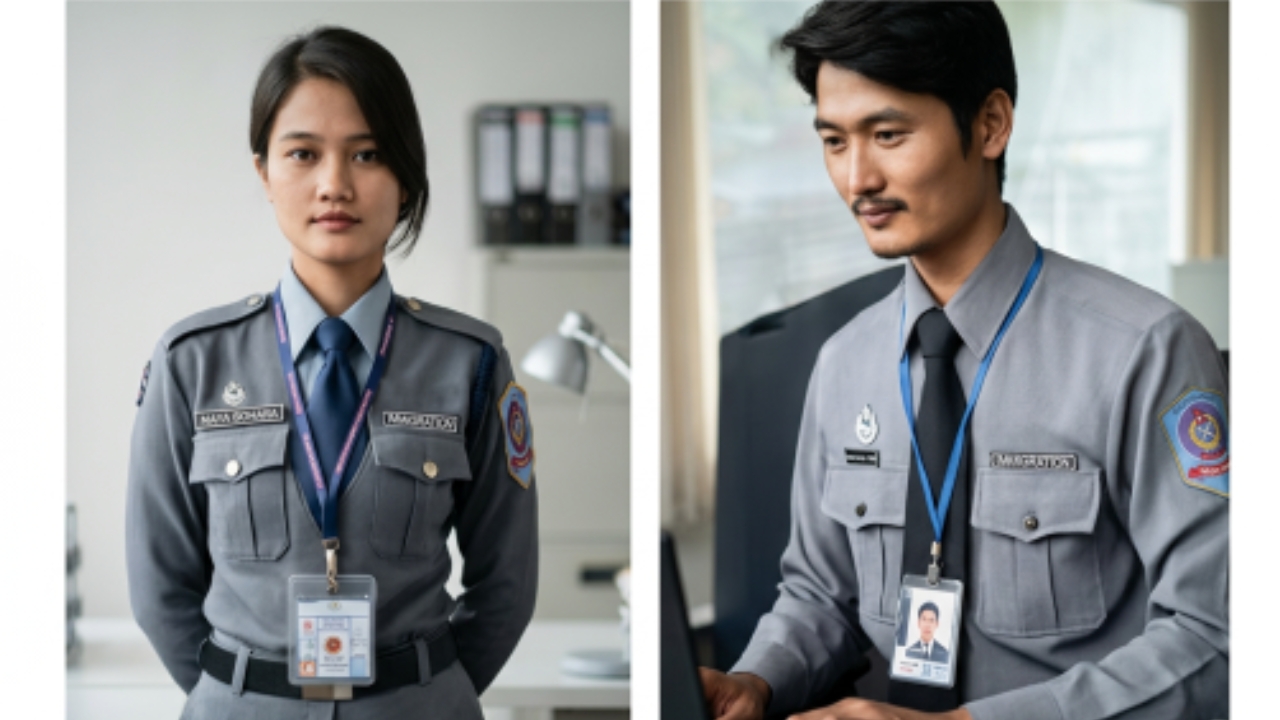
Notably, immigration office staff already have a separate prescribed uniform. A special uniform was designed for immigration officers at Tribhuvan International Airport so they could be easily identified among staff from various agencies.
Following the latest decision, immigration officers have been wearing a brown shirt with two pockets, brown pants, and a black tie.
According to Tikaram Dhakal, spokesperson for the Department of Immigration, this decision regarding the uniform was made on May 29, 2024, when Rastriya Swatantra Party (RSP) President Rabi Lamichhane was home minister.
Since then, immigration officers have been wearing this uniform at the airport and various border points. However, this dress code does not include a Dhaka topi.
Like other civil servants, immigration staff also wear a blue coat and pants.
“There are employees from many agencies at the airport, including police and airlines. The separate uniform was introduced so that immigration officers could be easily identified,” Dhakal said. “This helps service seekers avoid confusion. The same uniform has also been implemented for immigration staff at border points.”
When asked whether wearing the Dhaka topi is now mandatory following Minister Gurung’s directive, Dhakal replied that although no written order has been received, implementation will begin once the minister’s instruction is issued. He added that circulars will be sent to all offices under the department once a formal decision is made.
“No official letter has arrived from the ministry yet. Once a decision is made, we will issue circulars to all offices under the immigration department. The office will definitely implement the minister’s instructions given during inspection,” he said. “We will, and must, follow the minister’s directive. The previous dress code was also implemented after a ministerial-level decision.”
According to Rule 11 of the Regulation Concerning the Conduct of Employees of the Civil Service, 2009, civil servants must wear the uniform prescribed by their respective office.
“If any uniform has been prescribed for civil servants of a particular office, they shall wear such uniform on duty when they are in office and also when they represent their office,” Rule 11(3) states.
Additionally, on June 26, 2011, the then Ministry of General Administration had issued a circular to all ministries and subordinate bodies prescribing a standard uniform for civil servants.
For male employees, it allowed either the national dress (daura-suruwal, coat, Nepali cap, and black shoes) or a dark blue/black coat, matching pants, white shirt, and black shoes.
The circular makes it mandatory to wear a Dhaka topi with the national dress, but not with the coat-pants uniform.
For female employees, the uniform consists of a coat and pants, shirt (of the same color as prescribed for male employees), black shoes/sandals, or a sari (deep blue), with a sari border (deep purple), blouse (matching the sari border), or kurta suruwal (deep blue kurta and plain deep purple suruwal and shawl).
For employees in Himalayan regions, a jacket of the same color may be worn instead of a coat, and sports shoes are permitted. Tie and cap are mentioned as optional.