Chairman of CPN-UML and former prime minister (PM) KP Sharma Oli has consistently won elections in Jhapa-5 with the exception of the first Constituent Assembly election in 2008. Even during the previous election in 2022, the alliance between NC and CPN (Maoist Center) could not defeat Oli.
This time former mayor of Kathmandu Metropolitan City and Senior Leader of Rastriya Swatantra Party (RSP) Balen Shah has entered the field to challenge Oli in this constituency.
Between these two heavyweights, there is another competitor whose presence, though somewhat overshadowed by the buzz surrounding Oli and Shah, is certainly influential.
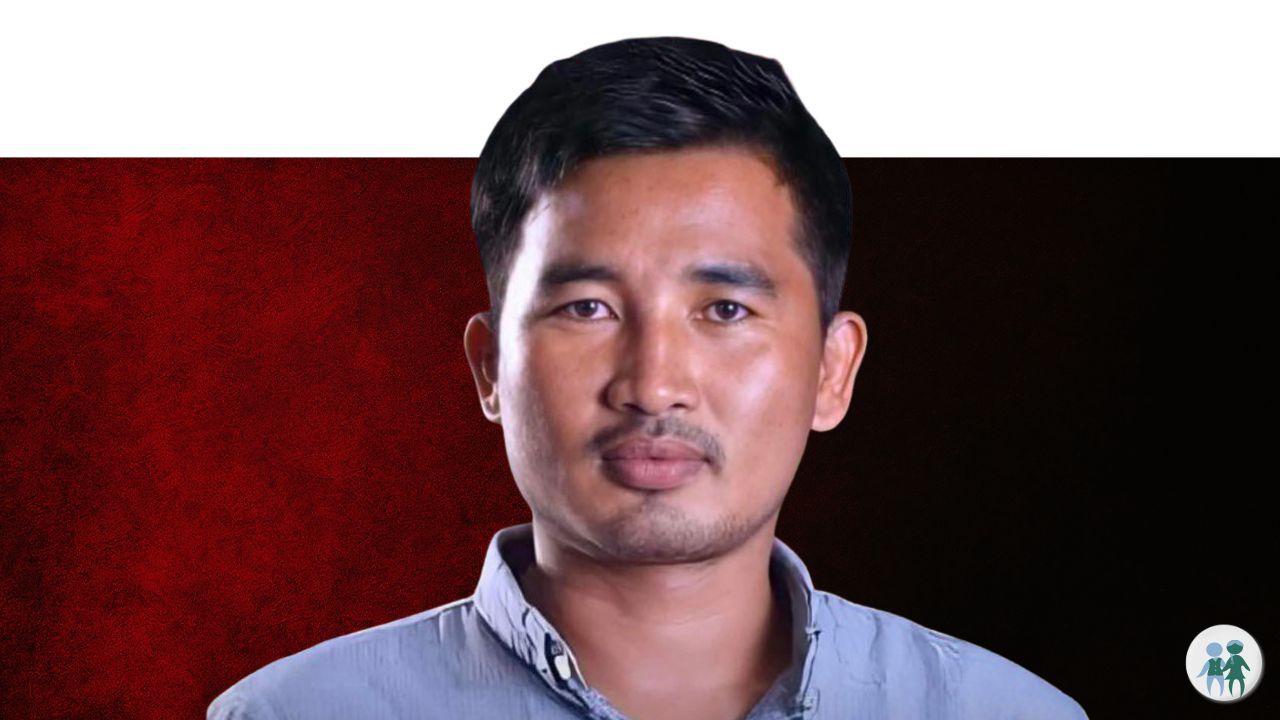
We are talking about Ranjit Tamang, the candidate from the Nepali Communist Party (NCP).
An edited excerpt of the conversation between Setopati and Tamang, a young candidate who has worked in the fraternal organization of the then Maoist Center since his student days:
How is your election campaigning going in Jhapa-5?
Currently, the code of conduct is in effect. This is a period when formal election campaigning is restricted. In the meantime, I am personally meeting with my supporters and well-wishers.
A little while ago, I had organized meetings with the public. Two days after that, my colleagues attended the Election Commission's meeting regarding the code of conduct. Since it was decided there that flags, banners, and other promotional materials cannot be carried around, only personal meetings are taking place now.
There are two heavyweight candidates in your constituency, and the discussion mostly centers on them. How do you view this?
I have observed that social media and the press are trying to create a narrative to project them as heavyweights. However, the public is not in a position to simply accept that narrative. Every candidate who comes to seek the people's mandate is a heavyweight.
Perhaps they are called heavyweights because they have held state responsibilities twice. I have not held any state role or specific responsibility so far. In that sense, my weight might not be enough to be called a heavyweight. But I have no concern with that. The people will weigh everyone themselves. It will be clear then.
What are your expectations? What kind of votes do you think you will receive? Previously, Oli received 52,000 votes. Now Shah has entered the competition. How easy is it to fight an election against them? How many traditional voters does your party have? How do you convince new voters to vote for you?
Our party (which became the Nepali Communist Party after merging with other parties) is contesting elections in this constituency after about 12 years. The old Maoists have returned to the electoral battlefield as the new Nepali Communist Party with the hammer and sickle inside a circle and a star symbol.
Over the last 12 years, general voters did not get to vote for this election symbol. In a way, it was almost forgotten. The period spent forming alliances and asking voters to vote for other symbols was a difficult time. Even in such a situation, when there was no candidate for nearly 10 years and no one asked for votes, we received 8,600 votes in the proportional representation (PR) category. That was our vote count during the absolute worst and most critical conditions. Therefore, I consider it very significant.
However, I am not in a position to accept many statistics from before September 8 and 9, 2025. They have become 'mis-statistics'. Because that period led the parties to the brink of dissolution, disintegrated the mindset of general voters, and even dissolved the core institutions of the country, the current situation is entirely new. I have reached the conclusion that something new will happen now.
Looking at the current level of voter consciousness, their ability to question candidates, and their understanding, I feel this election is a very historic one.
When asking for votes from citizens in a constituency with the most politically aware voters, what issues do you take to them? How do you explain things to them?
What I have been saying currently is that the political crisis has arisen because there are problems in the country's fundamental laws and other laws. It is politics that leads society. If politics fails, everything in society fails.
In our case, along with politics, the leaders failed; and along with the leaders, everything in the state machinery failed. The weakness of the current system is its inability to provide political stability. Because of this, a crisis emerged in society and distrust grew. Therefore, the political system must be improved first.
In that case, why and how did the current system fail to work? How will the system you intend to change deliver what the people want?
First, it could not provide political stability. We called it an improved parliamentary system, but the government changed many times within a five-year period. Political parties focused more on changing power rather than ensuring delivery and rights for the people. In that regard, we must improve the system and move toward a directly elected executive role. That will maintain political stability.
This alone is not enough. Political parties must stop the practice of spending millions of rupees to become ministers and lawmakers and encouraging corruption. If this happens, the system will improve to some extent.
There is an allegation here that whoever the rulers were, they could not provide good governance and did not try to strengthen institutions. Parliament, the CIAA, courts, and the police were all weakened by politicization. Doesn't this show the problem is with the leaders? What is the system's fault? Whether it is parliamentary or directly elected executive, isn't the intent the same?
The current parliament is such that it must perform both government formation and law-making simultaneously. If there were a directly elected executive system, the parliament would only perform legislative work. The parliament would make laws, and the government would implement them. We must also move to a system where the Cabinet required to assist the directly elected executive is formed based on expertise. Only such a system will provide acts and laws on time and ensure political stability.
Following that, the biggest problem is corruption. Corruption exists within the entire system. The political leadership has protected it, and it has become deep-rooted. Therefore, transparent and accountable political parties must be built. For that, everything from the electoral system to other laws needs to be improved.
Similarly, we must work on methods to connect unequal development and construction with production to make the youth self-reliant.
If you win the election and reach parliament, what will you do first?
The first effort will be regarding the transformation of the governance structure.
Second, I will strive to create and improve laws related to education, health, and employment necessary for the implementation of fundamental rights.
If the upcoming parliament cannot address the essence and sentiment of the new generation's rebellion, the country could fall into an accident. Within the parliament, be it with a different party or the same party, I envision my strong and effective role in making the necessity of change felt.
What are the problems in implementing fundamental rights like education and health? What is the solution?
First, the state must enact laws. The Education Act, Health Act, Civil Service Act, and Police Act must be introduced.
First, the modality according to federalism must reach the grassroots level.
Second, the investment being made in education is not organized or scientific.
Other countries have prioritized technical and vocational education. The state has taken full responsibility for public schools and made them high-quality. Based on that, the produced manpower later contributed to the nation. We can do the same here.
Health is a matter connected to daily life. But current health institutions are not organized. There is pressure in the Tarai, and a shortage of manpower in the hills. COVID-19 has already shown the reality of the health system. Therefore, a public-private partnership modality should be adopted. Additional benefits should be given to those working in remote areas.
Necessary facilities should be added for those in government service, but there should be no lack in service delivery to the people. Health insurance should be made effective through public-private partnerships.
Since the private sector is the main employer for jobs, it should be encouraged. Closed industries should be operated. The agricultural sector should be modernized and mechanized.
The Gulf nations could be a market for the food production we have. There are many possibilities, but leadership with long-term vision and willpower is needed.
There is a perception that development happened in Jhapa-5 when Oli was prime minister. What problems did you see?
Although the budget appears concentrated in Jhapa from the outside, there are remote places here like Karnali. Development has not reached everywhere. There are problems in education, health, employment, and infrastructure. Needs increase with time. Structures must be changed accordingly. There are many deficiencies here too.
There are problems facing indigenous nationalities and landless squatters. There is a question of how to bring a two-billion view tower into use. 70 percent of farmers, who depend on agriculture, are frustrated.
If you win, how will you solve them?
The first step is to make the state strong. Development must be taken forward in a single modality.
In the capacity of a people's representative, I will take initiatives in policy-making, budget allocation, and with implementing agencies. A comprehensive development modality must be prepared from the policy-making level.
Currently, there are three levels of government. Everyone must prioritize drinking water, electricity, education, and health. Policy, implementation, and prioritization are necessary for that.