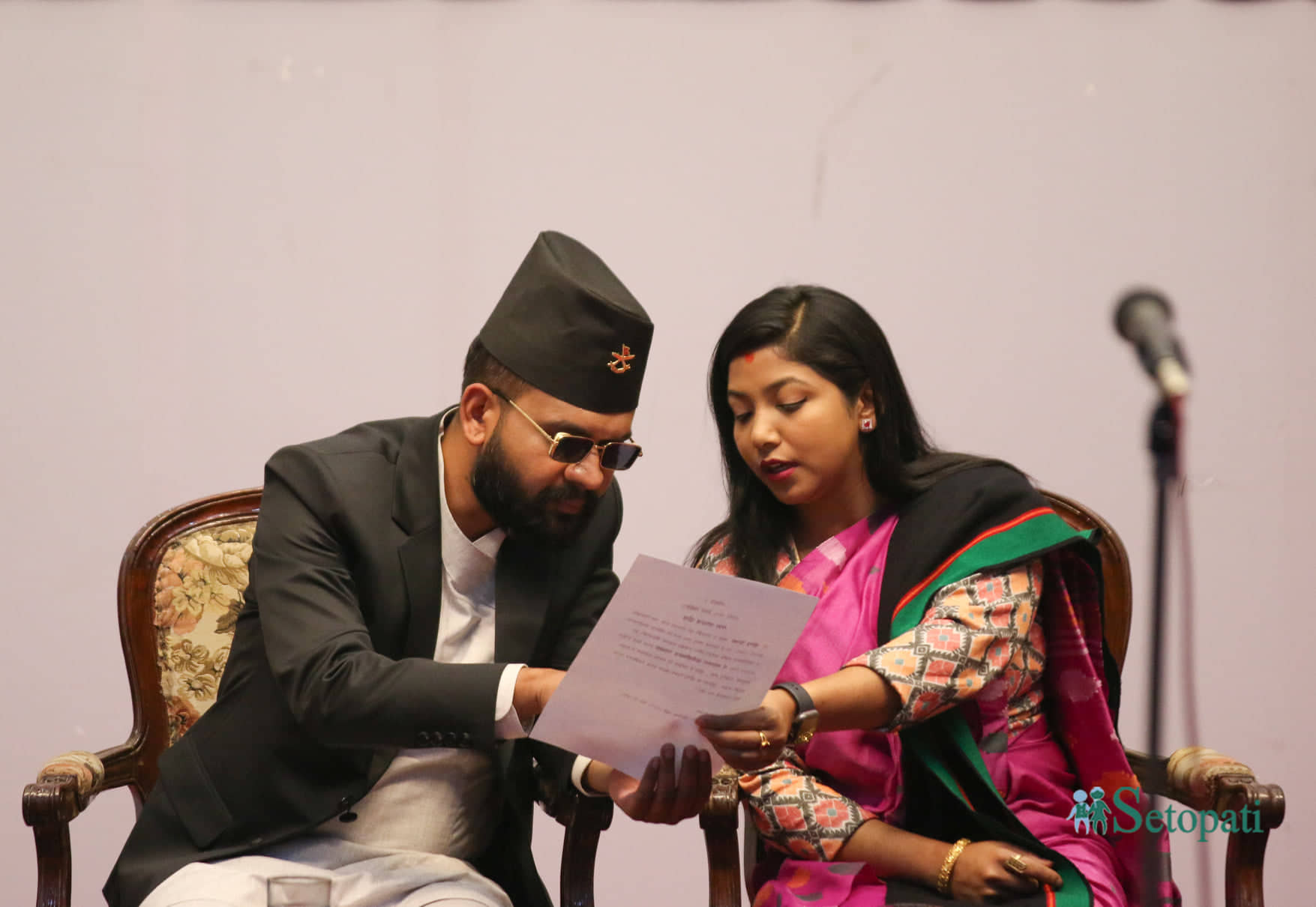
With Kathmandu Metropolitan City Mayor Balen Shah resigning about 15 months before the end of his term, questions have arisen over whether a by-election will be held to fill the post for the remaining tenure.
Shah, who has joined the Rastriya Swatantra Party (RSP) as a senior leader, resigned from the post of mayor on Sunday before visiting the party’s central office, known as “Ghantighar,” for the first time.
The Local Level Election Act provides that if the post of mayor or any elected local representative becomes vacant for any reason, a by-election must be held for the remainder of the term.
However, the same law also states that if the remaining term is less than one year, a by-election will not be conducted.
Since more than one year remains in the term of Kathmandu Metropolitan City’s mayor, the law does not prevent the holding of a by-election.
According to legal provisions, the government in office at the time must determine the by-election date in consultation with the Election Commission.
An Election Commission official said that the commission will first assess how many local levels require by-elections and then consult with the government.
“Before making any announcement, we look at how many places require by-elections. After that, the government fixes the date,” the official said.
Until a new mayor is elected through the by-election, the deputy mayor will serve as acting mayor, as stipulated by law. Kathmandu’s deputy mayor is Sunita Dangol. Following Shah’s resignation, she has automatically assumed the role of acting mayor. She was elected from the CPN-UML party.
Shah, who won the Kathmandu mayoral election as an independent candidate, resigned in order to contest the House of Representatives election scheduled for March 5 from the RSP. He submitted his resignation to Deputy Mayor Dangol, effective from Sunday.