At around 2 p.m. on Tuesday, Pulchowk Engineering Campus received news that efforts to remove the mud and debris accumulated inside the tunnel of the Chilime Hydropower Project were sluggish.
Could something be done to help the Nepal Army, which was carrying out the clearing operation?
As soon as they received the news, teachers and students at Pulchowk Engineering Campus sprang into action.
They worked through the night without sleep and had built a machine by 6 a.m. the following morning.
The machine was transported to Chilime by helicopter on Thursday.
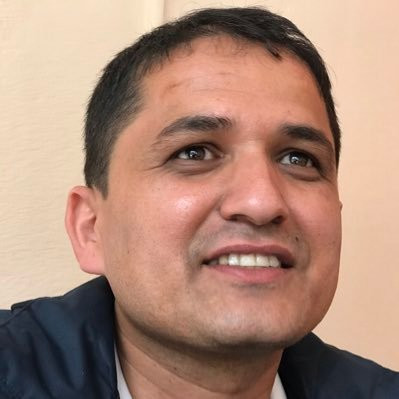
The machine is now being prepared to remove the mud and debris accumulated inside the hydropower project's tunnel, said Ramesh Chaudhary, coordinator of the Pulchowk Engineering Campus Robotics Club and a robotics instructor.
“Two of our students have reached Chilime with the machine designed to pull out the mud from inside the tunnel,” he said. “The machine has already been installed.”
We spoke with Chaudhary in detail about how the machine was built.

Less than 24 hours
According to Chaudhary, efforts were already underway to clear the mud and debris deposited inside the Chilime Hydropower Project tunnel by the flood.
The team was looking for ways to speed up the operation.
“We received inquiries from the Nepal Electricity Authority, the Chilime Hydropower Project, Shri Ram Sir (lawmaker Shri Ram Neupane), and Sagarji (lawmaker Sagar Dhakal) about whether we could do something to help,” Chaudhary said. “All of us teachers and students got together and started working.”
After about an hour and a half of discussion, the team began developing the technology.
Discussions, designing, and construction continued throughout the night.
The first machine was ready by 6 a.m. on Wednesday.
Chaudhary said that additional machines were also built in case they were needed, with the work completed by around 2 p.m.
“At that time, it was difficult to transport the machine directly to Chilime by helicopter. So arrangements were made to transport it by road to Battar in Nuwakot,” he told Setopati.
He said that the machine was taken to Chilime by helicopter after it reached Battar on Thursday morning.

Two winches, one drum
The machine taken to Chilime is equipped with two winches, named T1 and T2.
A winch is a device that uses a motor to pull or release a rope or cable.
Here, one winch releases the rope while the other pulls it.
Because the cables of the two winches are connected, one can release the rope while the other pulls it.
A returning wheel has been used to suspend and move the drum inside the tunnel. The wheel is attached to a hook inside the tunnel.
One winch releases the rope, sending the drum into the tunnel. Once the drum reaches the mud, it scoops up soil, rocks, and debris. The other winch then pulls the rope, bringing the drum back out.
“In simple terms, one winch releases the rope while the other pulls it. A sliding drum is attached to the system,” Chaudhary said. “Initially, one winch releases the rope and sends the drum inside the tunnel. Once it reaches inside, the drum starts scooping it mud and sludge, then the other winch pulls the rope to bring the drum back out.”
The Nepal Army team is currently also working inside the tunnel using plastic drums.
They are using them to dig up mud and bring it outside.
Removing mud without sending people inside
The machine's main feature is that people do not have to enter the tunnel.
“No one has to go inside. The drum goes in by itself,” Chaudhary said.
He said that the team opted for a simple technology that could be built quickly because taking large equipment into the tunnel would be difficult.
Initially, the team had also discussed forming a human chain and removing the mud using buckets. But that option was abandoned after they realized that people would have to be transported by helicopter and that another flood could create further risks.
“This should be understood as a gadget or a makeshift solution developed for an immediate need, rather than a large machine,” Chaudhary said.
He said that the machine can bring out around 1,000 kilograms of mud at a time.
“It can bring out whatever is inside – rocks, soil, and debris. Since people don't have to go inside, it also makes the work easier,” he said.
According to Chaudhary, prolonged work inside the tunnel can cause fatigue and create oxygen-related risks for workers. The machine, however, can be operated from outside, reducing the number of personnel required.
“Just as a person would scoop mud with a shovel, this machine can also scoop it up and bring it outside,” he said.

What lies beyond 150 meters?
Chaudhary is also a mechanical engineer and has visited the Chilime Hydropower Project several times.
According to him, the starting point of the tunnel is at a certain elevation, from where the tunnel slopes downward. After about 150 meters, there is another section that rises slightly.
He estimates that the mud deposited by the flood may therefore have accumulated only up to that point.
The powerhouse, meanwhile, is located at a higher elevation, he said.
“When the mud was being pushed in with force, air would also have been pushed in at the same speed. Because that air entered the tunnel, it may have supplied the oxygen needed around the powerhouse,” he said. “The structures beyond 150 meters may not have been affected much. So I see a strong possibility of a positive outcome.”
A wheeled structure has also been brought along to move the machine inside the tunnel. It has additionally been designed so that a boat can be attached to it.
This will help rotate and move the drum inside the tunnel and assist in scooping the mud, Chaudhary said.
“The winch is connected outside in a way that allows it to rotate, while the rope is about 150 meters long. The cable can be hooked onto the hooks inside the tunnel and moved back and forth,” he said.
If, as estimated, the mud has accumulated only up to around 150 meters and the machine works as expected, Chaudhary expects the team to reach the powerhouse within two days.
Team of 15-20 people
A team of 15 to 20 people – including Pulchowk Engineering Campus chief Ajay Kumar Jha, head of the Department of Mechanical and Aerospace Engineering Sudeep Bhattarai, and teachers and students from the Robotics Club – was involved in building the machine.
The Robotics Club includes students of mechanical, electrical, computer, and robotics engineering.
Because of the limited time available, the team could not first prepare a detailed design and then proceed with construction. Instead, Chaudhary said, they built the machine through continuous discussion, testing, and modifications based on immediate requirements.
“We didn't have much time. We moved forward while working and discussing things along the way,” he said.
The budget required to build the machine was raised through the alumni network of Pulchowk Engineering Campus, he said.