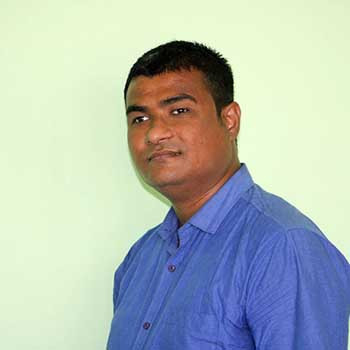
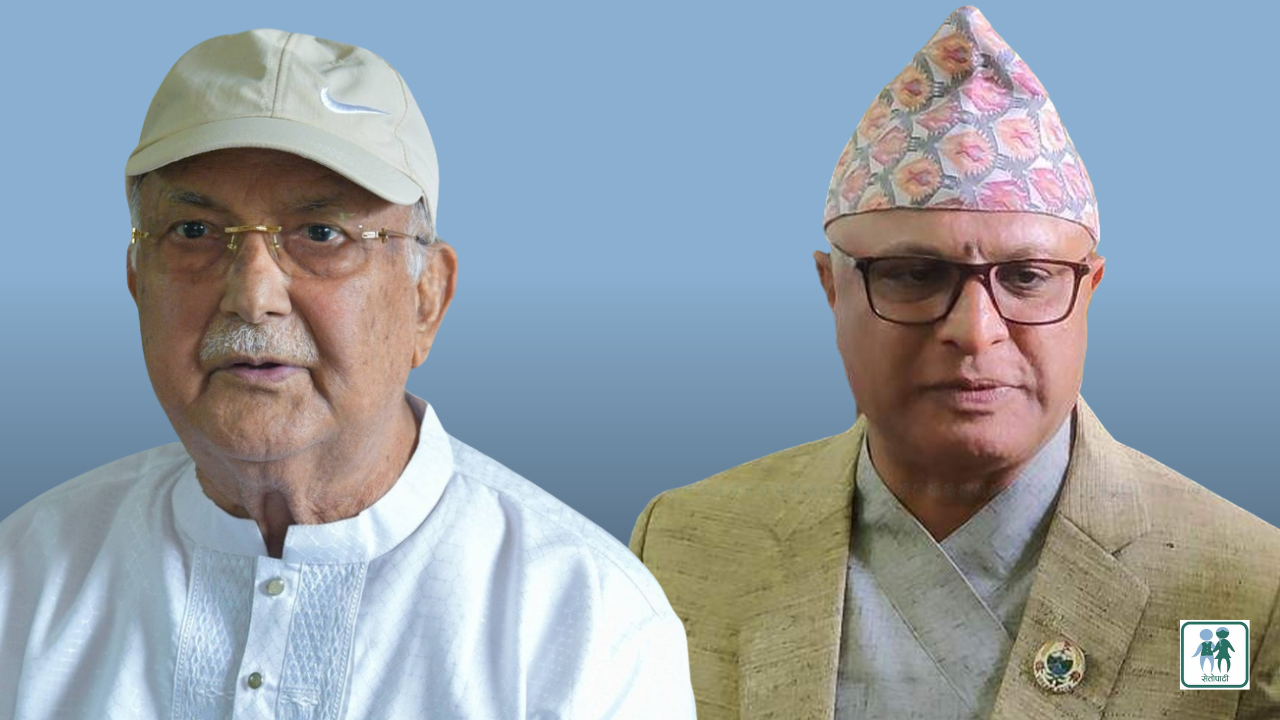
As CPN-UML Chairman KP Sharma Oli is intensifying pressure to remove him from office, Koshi Chief Minister Hikmat Karki has begun political dialogue with the ruling coalition partner, the Nepali Communist Party (NCP).
After efforts to find an alternative to him began within the UML itself, Karki has held discussions with top provincial leaders of the NCP over the past few days.
During the talks, he discussed attempts within the UML to replace his government.
A meeting held on Tuesday at the Office of the Chief Minister and Council of Ministers was attended by Karki, Minister for Economic Affairs and Planning Bidur Kumar Lingthep, UML lawmaker Rewati Raman Bhandari, NCP provincial in-charge Rajendra Rai, parliamentary party leader Indra Bahadur Angbo, and provincial coordinator Harka Bahadur Nembang. Minister for Water Supply and Irrigation Tilchan Pathak also joined the discussion for some time.
Amid speculation that UML Chairman Oli could agree to remove Karki and appoint parliamentary party deputy leader Til Kumar Menyangbo as chief minister, the NCP has assured Karki of strong support.
While Karki has sought to gauge the coalition partner’s stance on the dispute within his own party, the NCP has also signaled that it will not readily accept the UML’s internal decision.
NCP parliamentary party leader Indra Bahadur Angbo said that his party believes the government should not be changed at this time. He said that the current government should continue until the elections.
“At a time when provincial structures are being criticized as hubs for manufacturing chief ministers and ministers, it is not appropriate to be involved in the game of changing governments again,” Angbo said. “This is going to create major problems, and we are not ready to bear the blame for them.”
He also indicated that the NCP would not support the UML’s move to remove Karki and appoint another leader as chief minister. If such a situation arises, he said, the NCP could work with other parties to initiate the formation of a government under its own leadership.
While the NCP has maintained that the current government should continue, it has also kept open the possibility of forming a government under its own leadership if a change becomes inevitable. In other words, the party appears to be pursuing two options simultaneously: supporting Karki for now while keeping its own claim to the chief minister’s position alive.
This is not the first time efforts have been made within the UML to remove Karki as chief minister. Similar attempts were made in July, ranging from changing the parliamentary party leadership to replacing the provincial government’s leadership.
At the time, dissatisfied lawmakers had collected signatures. Their proposal was to remove Karki and appoint parliamentary party deputy leader Menyangbo as chief minister.
UML provincial in-charge Sherdhan Rai, provincial chairman Ghanashyam Khatiwada, and dissatisfied lawmakers were actively involved in the effort. After the dispute reached party Chairman Oli, discussions were held with Karki also present. However, no concrete decision on leadership change was reached at the time.
The dissatisfied faction claims that Karki had pledged to pave the way for a leadership transition at an appropriate time.
Oli had also expected Karki to hand over leadership voluntarily. However, the dispute resurfaced as no timeline was set for Karki to step down.
Last Wednesday, Rai, Khatiwada, and other leaders met Oli at his residence in Gundu, Bhaktapur, and reiterated their proposal to remove Karki.
They demanded that Menyangbo be appointed chief minister. According to sources, Oli did not make an immediate decision but indicated that he would take necessary steps after the national gathering of party cadres concluded.
Following Oli’s indication, debate over changing the chief minister has intensified again within the UML in Koshi. The dispute, which had subsided for some time, has now reached a stage where leaders are awaiting a decision from the party leadership.
Chief Minister Karki, however, does not want to limit himself to dealing with pressure from within his own party this time.
Tuesday’s meeting with NCP leaders suggests that he is seeking to strengthen political understanding with his coalition partner to ensure the continuity of his government.
The Koshi Provincial Assembly has 40 UML lawmakers and 17 NCP lawmakers. The Nepali Congress has 29 seats, the Rastriya Prajatantra Party (RPP) has five, and the Janata Samajwadi Party (JSP) has one. With 92 members in the provincial assembly, a government needs 47 votes to secure a majority.
Karki received 57 votes in the provincial assembly on August 24. UML and NCP lawmakers voted in his favor at the time.
Karki is confident that even if UML lawmakers attempt to gather a majority to remove him as parliamentary party leader, that would not automatically vacate his position as chief minister. He has maintained that he also commands a majority within the parliamentary party.
Karki was appointed chief minister under Article 168(5) of the Constitution, meaning his position as parliamentary party leader and his position as chief minister are not linked through the same constitutional process.
Therefore, even if Menyangbo secures a majority within the UML parliamentary party, a separate constitutional process would have to be completed for him to become chief minister.
If Karki does not resign, any attempt to remove him must proceed through the process stipulated by the Constitution and the arithmetic of the provincial assembly.
On the other hand, if the NCP withdraws its support, Karki would have to demonstrate that he still commands a majority in the provincial assembly.
Under Article 188(2) of the Constitution, if a party participating in the government withdraws its support, the chief minister must seek a vote of confidence within 30 days. The NCP’s support is therefore Karki’s most important political lifeline at present.
According to NCP leaders, one reason the party is advocating continuity of Karki’s government is to ensure stability in the provincial government. It is also signaling that it wants to safeguard its own political position amid the UML’s internal dispute.
UML provincial assembly member Rewati Raman Bhandari has criticized the current debate over changing the government, calling it untimely.
According to him, at a time when the party needs to improve its image among the public, activities that stir up trouble in provincial governments are not appropriate.
“The public has developed a negative perception of the UML at present. At such a time, the game played by the leadership to meddle with every provincial government, push the UML out of them, and pit leaders and cadres against one another is a matter of grave concern,” Bhandari said.
His remarks indicate that there is dissent within the UML itself over efforts to remove Karki. However, with the provincial in-charge and provincial chairman actively pushing for a leadership change, pressure on Karki within the party remains substantial.
According to sources close to the chief minister, Karki is currently focused on two main tasks.
The first task is to secure support from UML leaders and lawmakers to prevent the party from deciding to remove him.
The second is to strengthen his relationship with the NCP to ensure a majority in the provincial assembly.
Although Oli continues efforts to remove Karki, the outcome cannot be determined solely by the UML chairman’s wishes. The UML will have to build consensus within its parliamentary party to appoint Menyangbo as chief minister. It will also need to demonstrate that it can command a majority in the provincial assembly.