Responding to Nepal's long-standing demand, India has agreed to make the Kathmandu-Bhairahawa-Lucknow air route bidirectional.
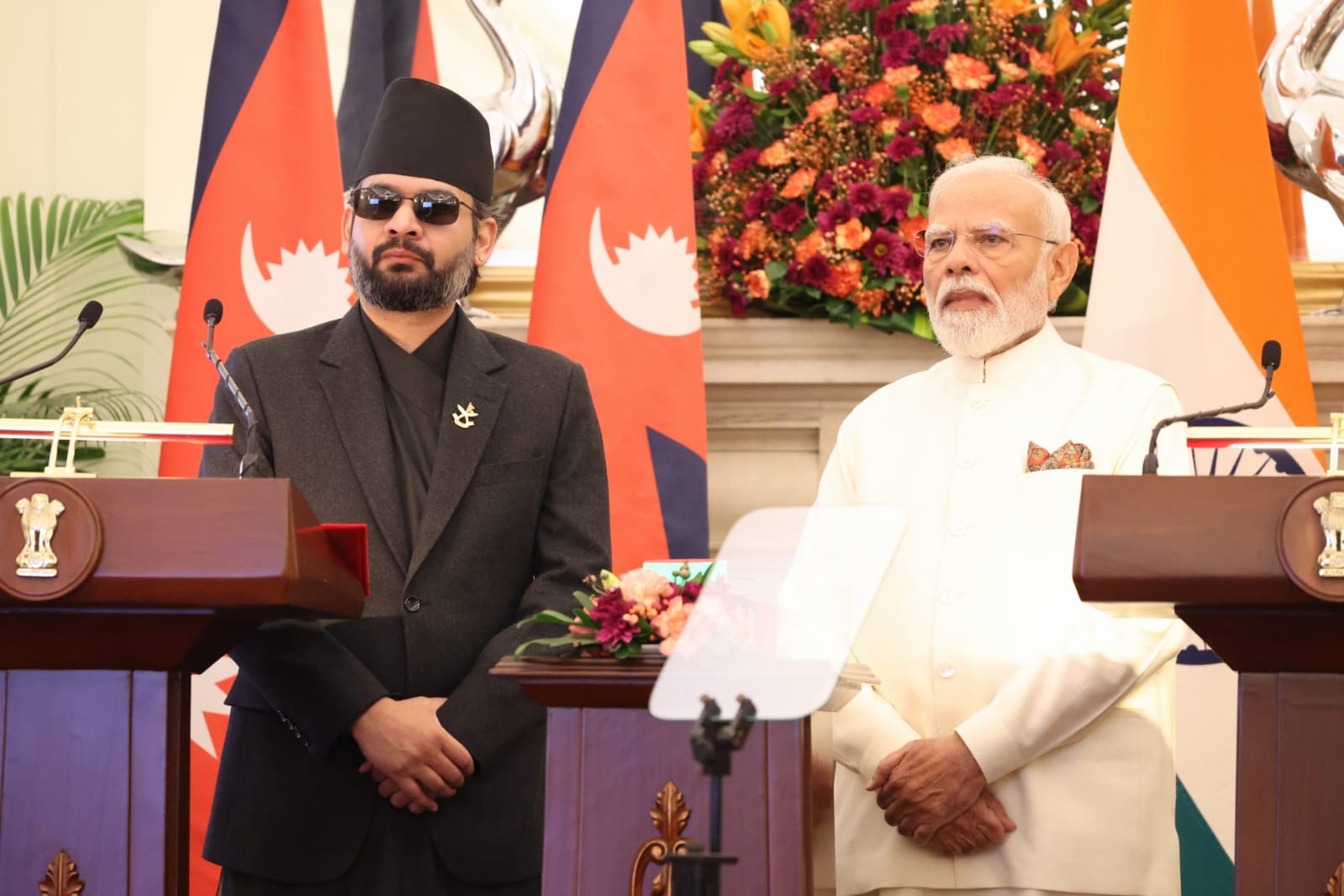
The agreement, reached during Prime Minister Balen Shah's visit to India on Monday, has particularly excited aviation and tourism entrepreneurs.
But is this the only air route Nepal has sought from India? What technical hurdles could emerge during consultations to implement Monday's agreement? And how much could the new route benefit Nepal's overall aviation and tourism sectors, including Bhairahawa and Pokhara international airports?
Along with the construction of international airports, Nepal had been requesting India for additional air entry routes from the western side of the country. In particular, Nepal had requested permission for international flights to enter its airspace through Mahendranagar, Nepalgunj, and Bhairahawa.
Currently, international flights approaching Nepal from the west are required to enter through Simara. They then have to turn westward to reach Bhairahawa or Pokhara, increasing flight distances, travel time, and fuel costs.
The Nepal-India joint statement issued on Monday mentions an agreement to make the B345 Kathmandu-Bhairahawa-Lucknow air route, which currently operates in only one direction, bidirectional. This will allow aircraft flying from India to Nepal to enter Nepali airspace through Bhairahawa as well. Previously, the route could only be used by aircraft flying from Nepal to India.
However, Nepal has not secured all the entry routes it had requested. The agreement covers making the Bhairahawa route bidirectional, while its requests for entry routes through Mahendranagar and Nepalgunj remain pending.
Similarly, Nepal had proposed direct air services on routes such as Bhairahawa-Kushinagar, Pokhara-Varanasi, and Nepalgunj-Delhi. No announcements have been made regarding these proposals.
Although an agreement has been reached at the political level to make the Kathmandu-Bhairahawa-Lucknow air route bidirectional, it will not come into operation immediately. Technical consultations between aviation authorities from Nepal and India are still required to finalize matters related to air traffic management, aircraft flight altitudes, and operational procedures.
The joint statement also says that technical consultations will be held to finalize the agreement. It adds that other civil aviation proposals currently under discussion between the two countries will also be addressed through the same process.
According to officials at the Civil Aviation Authority of Nepal (CAAN), the Indian side had informally indicated in previous discussions that it might impose conditions regarding aircraft flight altitudes. If India requires aircraft entering Nepal to fly only at a specified altitude, the route's usability could be restricted.
Former CAAN director general Raj Kumar Chhetri says that while the route could be convenient for aircraft departing Nepal, strict altitude restrictions on incoming flights could prevent Nepal from achieving the expected benefits.
CAAN officials also argue that altitude requirements could pose a problem if India imposes them. During previous informal discussions, the Indian side had indicated that there might be no issue if aircraft maintained an altitude above a certain threshold.
"If India requires aircraft entering Nepal to fly at a fixed altitude, such as 39,000 feet, problems could arise. There should be an arrangement allowing aircraft to enter at the altitudes required by Nepal," a CAAN official said.
According to Chhetri, reaching an agreement to make the route bidirectional is a positive development, but the technical consultations will ultimately determine how effective it will be.
"Getting the route is not enough. The technical arrangements governing its operation are equally important," he said.
How much time and money could be saved?
If the route comes into operation after the technical procedures are completed, its immediate benefit would be a reduction in flight distance and travel time. Currently, aircraft entering Nepal through Simara must cover additional distance to reach Bhairahawa or Pokhara. The new route would eliminate this requirement.
According to Chhetri, flights to Bhairahawa could save approximately 19 minutes, while flights to Pokhara could save around 14 minutes. He says the route would help the operations of both international airports.
"This route would be a major boost for both Bhairahawa and Pokhara international airports. Reduced flight distances and travel times would also lower airlines' operating costs," Chhetri said.
Shorter flight times would reduce fuel consumption and the duty hours of pilots and cabin crew. This could lower airlines' operating expenses. Airlines could also save on charges associated with using Indian airspace.
According to CAAN officials, narrow-body aircraft flying to Bhairahawa or Pokhara via Simara and returning can incur additional costs of up to approximately US$3,000 per round trip.
Chhetri says lower operating costs could also make it easier for airlines to expand services to new destinations. Airlines may also be able to offer lower fares if their expenses decline.
Another significant benefit of the route would be increased utilization of Bhairahawa and Pokhara international airports.
Bhairahawa serves as the gateway to Lumbini. With easier access for international flights, Buddhist pilgrims and tourists from India and other countries could fly directly to Bhairahawa.
This could benefit hotels, travel companies, transport operators, and other tourism businesses in the Lumbini region. Although investments have been made in hotels and tourism infrastructure in Bhairahawa and surrounding areas, tourist arrivals have yet to reach expected levels.
Regular international flights could increase hotel occupancy rates. Tourism entrepreneurs also expect visitors to stay longer and spend more. In particular, easier access would help develop tourism packages targeting Buddhist travelers and promote Lumbini in international markets.
Hotel operators who have invested in the region are also encouraged by the agreement. They expect regular international flights to help revive the currently sluggish hotel and tourism sectors.
The agreement could also create favorable conditions for Pokhara International Airport. However, it does not provide a separate entry route specifically for Pokhara. Nevertheless, experience gained from operating the Bhairahawa route and technical cooperation with India could make it easier for Nepal to pursue additional air routes for Pokhara.
Implementation of the political-level agreement is the first requirement. Regular flights will then depend on airlines' commercial interests, passenger demand, and the facilities and services available at the airports.
Although reaching an agreement on the air route is a significant achievement, the next challenge will be translating it into regular international flights, increased tourist arrivals, and greater commercial activity.