Nepal has requested India to send 160 bullet tanker loads of LPG daily for at least a week to help ease the ongoing gas shortage.
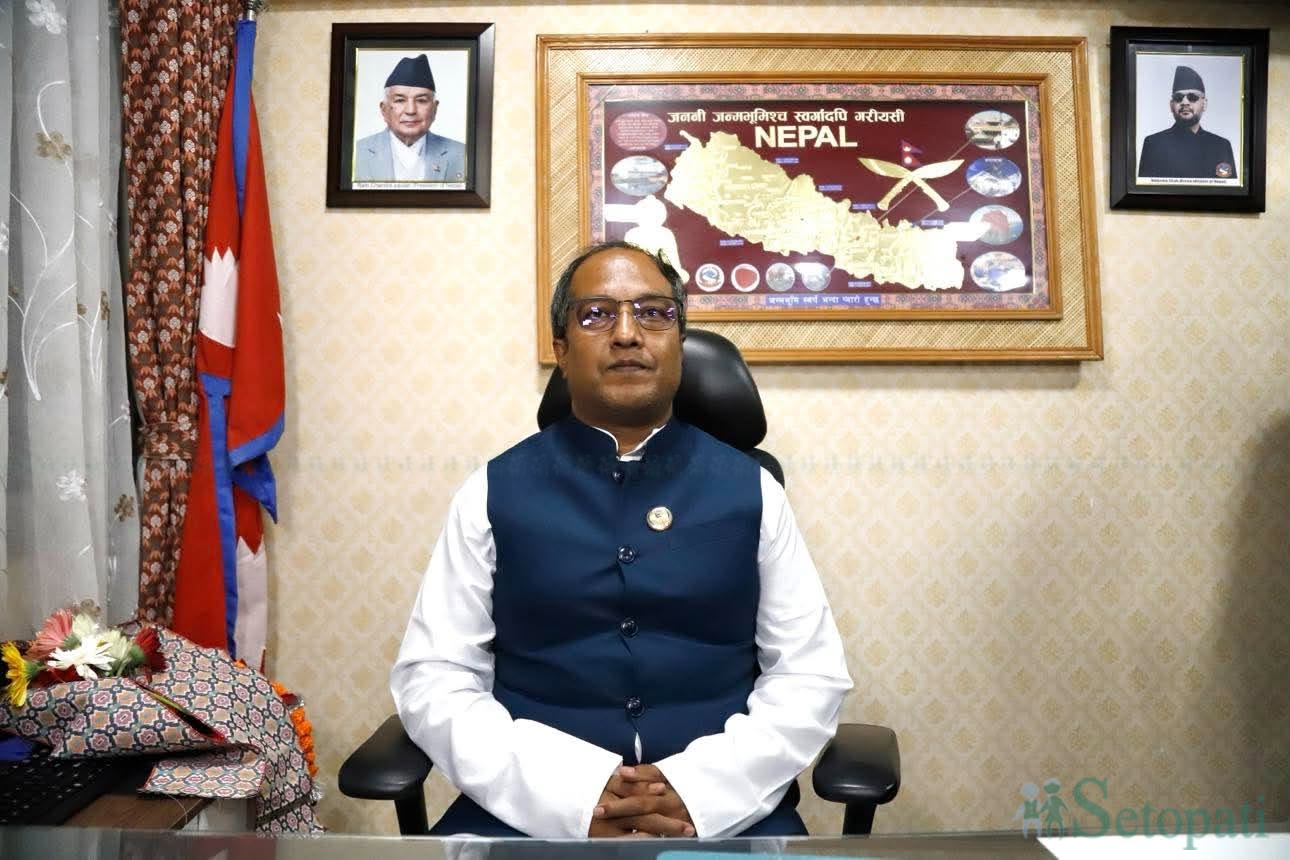
Minister for Industry, Commerce, and Supplies Dipak Kumar Sah has instructed officials of the Nepal Oil Corporation (NOC) to hold talks with representatives of the Indian Oil Corporation (IOC) on increasing LPG supplies.
The government has adopted a strategy of bringing in and releasing as much LPG as possible into the market to immediately address the shortage. For this purpose, Minister Sah has pursued a plan of importing larger quantities of gas from India and supplying it to the market.
The Nepali side held a telephone conversation with IOC representatives and subsequently sent an email requesting that 160 LPG tanker loads be dispatched to Nepal every day.
According to government estimates, a daily import of 100 bullet tankers is sufficient for Nepal. In recent times, around 109 bullet tankers have been arriving almost daily.
After the shortage began, 162 bullet tankers arrived from India on August 29 and 150 on August 31. However, imports have fluctuated sharply, with some days seeing no tanker loads at all and others receiving fewer than 100.
No LPG tanker was loaded on August 23. Similarly, only 62 loads were dispatched on September 6, while 66 loads were dispatched on August 28.
The government believes that if 160 bullet tankers enter Nepal continuously for a few days, the gas shortage will be resolved.
“We need to release a large amount of gas into the market to address the current shortage,” Minister Sah told journalists. “For that, we have also asked India to send us more gas.”
The government believes the current LPG crisis has been exacerbated by public fears of a shortage. Its objective, therefore, is to bring in additional supplies to ease those fears and stabilize the market.
Following an extreme shortage of LPG, lawmakers from the ruling Rastriya Swatantra Party (RSP) itself had demanded the resignation of then-industry minister Gauri Kumari Yadav. She subsequently resigned.
Sah assumed office as minister on the same day Yadav stepped down.
Soon after taking charge, Sah formed a task force to recommend short-term and long-term measures to resolve the LPG crisis. He gave the task force only three days to submit its recommendations.
Minister Sah said that the government was working to ease LPG supplies within a week.
“We have begun work to ensure gas is readily available within a week,” Sah said. “But until people actually get gas, the problem will not be solved merely on the basis of our assurance that we will ease it.”
Sah has also initiated efforts to address delays at customs points that are affecting the entry of LPG into Nepal.
Nepal and India currently process customs clearance through Integrated Check Posts (ICPs).
Even LPG tankers that arrive at customs in the morning sometimes do not enter Nepal until the evening. The ministry has therefore begun coordinating with customs offices to streamline and shorten the clearance process.