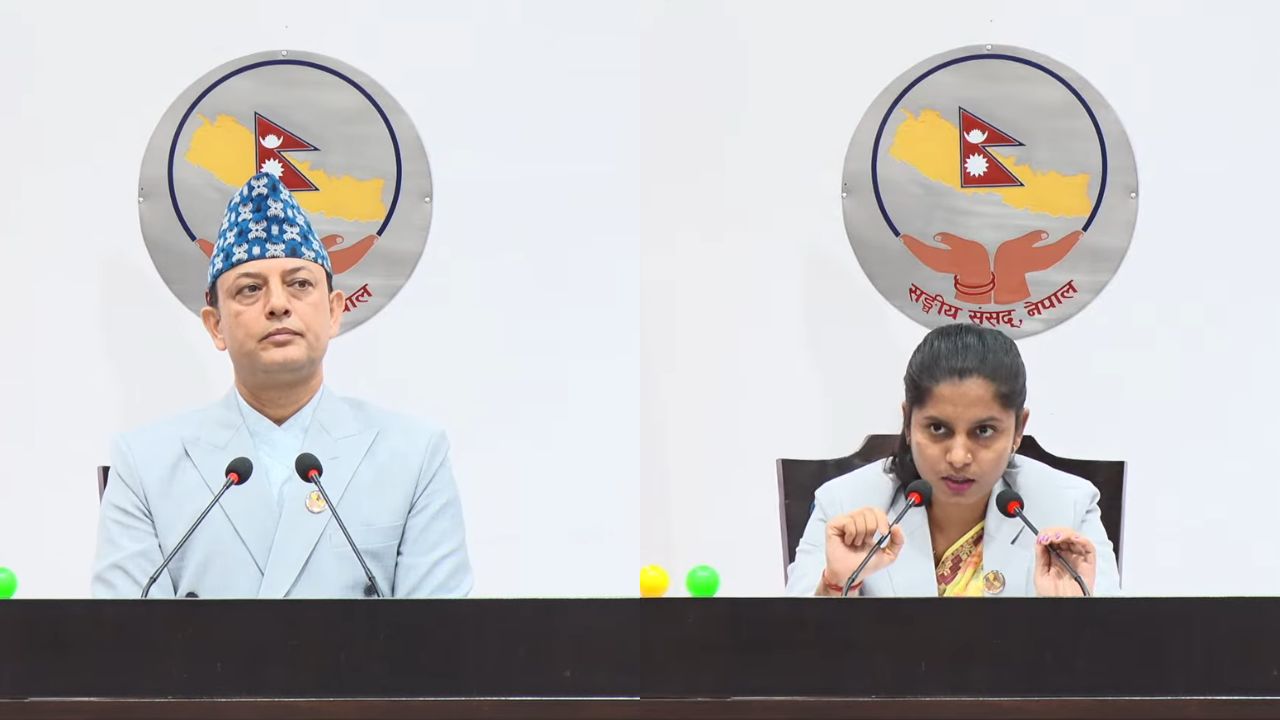
Speaker Dol Prasad Aryal has postponed the House of Representatives meeting until Wednesday following the death of his mother-in-law.
The House meeting had been scheduled for 1 p.m. on Tuesday.
After his 90-year-old mother-in-law, Shiva Kumari KC, died early Tuesday morning, Speaker Aryal rescheduled the meeting for 1 p.m. on Wednesday.
KC had been receiving treatment at Tribhuvan University Teaching Hospital in Maharajgunj, Kathmandu, and was taken home on Saturday.
Following her death, Speaker Aryal instructed the Parliament Secretariat to issue a notice regarding the change in meeting schedule.
Under Rule 6 of the House of Representatives Regulations 2026, the speaker is responsible for announcing the opening and adjournment of each House meeting.
However, the rules also allow the deputy speaker to announce the commencement or adjournment of a meeting if the speaker gives written instructions, or if circumstances beyond the speaker’s control prevent them from attending. The deputy speaker may also adjourn a meeting that was started by the speaker.
In other words, Speaker Aryal could have assigned the responsibility of conducting Tuesday’s meeting to Deputy Speaker Ruby Kumari in writing according to the rule rather than postponing it.
However, Speaker Aryal did not consult the deputy speaker about the circumstances that prevented him from attending the meeting.
“I suddenly learned that the meeting had been postponed,” the deputy speaker told Setopati. “Our regulations allow a meeting to be postponed in case of an emergency.”
A Parliament Secretariat official claimed that the deputy speaker has not yet developed the capacity to conduct a House meeting from beginning to adjournment.
“The speaker himself has been giving her opportunities to conduct parts of meetings. She has also gained confidence in running the proceedings,” the official said. “But she is not yet in a position to take full command of a meeting.”
According to the official, the deputy speaker is currently studying Nepali. Her mother tongue is Maithili.
“She is working very hard to learn the language,” the official said. “Her maturity in conducting meetings is increasing, and her command of the language is also getting stronger.”
Meetings conducted by deputy speakers and vice-chairpersons
On January 20, 2020, then deputy speaker Shiva Maya Tumbahamphe conducted a meeting of the House of Representatives.
Speaker Krishna Bahadur Mahara had been jailed in connection with a rape case. The ruling Nepal Communist Party (NCP) then decided to appoint Agni Prasad Sapkota as speaker.
Tumbahamphe was also seeking the speaker’s position. Since the Constitution prohibits the speaker and deputy speaker from belonging to the same party, she was required to resign as deputy speaker for the election of a new speaker.
At the time, the House of Representatives Regulations 2017 also required the speaker to conduct and conclude House meetings.
Tumbahamphe, however, insisted on conducting the proceedings, stating that the rules allowed the deputy speaker to conduct meetings in the speaker’s absence. Amid the political dispute, she conducted one meeting and then announced her resignation from the post during that meeting.
There are also precedents of vice-chairpersons conducting and concluding meetings in the National Assembly.
On July 3, 2023, National Assembly Vice-chairperson Urmila Aryal opened and concluded a meeting. National Assembly Chairperson Ganesh Prasad Timilsina had given her written authorization to conduct the meetings scheduled for July 3 and 4.
Timilsina authorized her because he was outside Kathmandu and unable to return to the capital. The meeting that day included discussions on the budget appropriation bill passed by the House of Representatives.
Similarly, on September 7, 2018, National Assembly Chairperson Timilsina commenced a meeting and left. Vice-chairperson Shashikala Dahal then concluded the meeting. At that time, the National Assembly Regulations did not contain a provision allowing the vice-chairperson to open and conclude meetings.
After Vice-chairperson Dahal concluded the first meeting, she attempted to conduct the second meeting later that day. However, the opposition Nepali Congress prevented her from doing so, arguing that the regulations did not provide for it.
Provisions were subsequently incorporated into the rules of both the House of Representatives and National Assembly allowing deputy speakers and vice-chairpersons to conduct meetings when circumstances beyond the control of the speaker or chairperson make it impossible for them to do so.