Kathmandu-7 is significant for Rastriya Swatantra Party (RSP) for two primary reasons.
First, RSP secured a victory here in 2022 breaking into what was previously a leftist stronghold.
Second, among the 6,743 wards across the country, Kathmandu Metropolitan City Ward No 16 is the only one where RSP has an elected representative. Rejina Shrestha, a member of RSP (formed in June 2022), was elected ward chairperson in the by-election held on December 2, 2024.
With a total of 67,411 voters, the constituency has historically shifted between constituencies 4, 5, and 7 during various redistricting processes. Nevertheless, this northwestern region of Kathmandu has remained an area of leftist influence.
The then-influential Nepali Congress (NC) leader Ganesh Man Singh had won this seat in 1959. Since then, NC has not been able to win a parliamentary election here. In the 1991 election, when this area was part of Kathmandu-4, Sahana Pradhan—a UML leader and head of the United Left Front during the 1990 Janaandolan—was elected.
Parts of this area fell under Kathmandu-5 in 1994 after the number of constituencies in Kathmandu was increased to seven. Rajendra Shrestha of UML was elected from Kathmandu-5, followed by Mangal Siddhi Manandhar from the same party in 1999.
Both Shrestha and Manandhar left UML after the Second Cosntituent Assembly Election in 2013. Manandhar has since passed away, while Shrestha is currently with the Nepali Communist Party (NCP) and is a candidate for Kathmandu-7 again.
The then CPN-Maoist had recorded a victory here in the first Constituent Assembly Election in 2008 with Hisila emerging victorious. Yami contested again in the Second Constituent Assembly Election in 2013 but lost as the public mandate returned to UML.
Ram Bir Manandhar, who had served as the ward chairman of Kathmandu-16 in the first two local elections after restoration of democracy in1990, was first elected as lawmaker in 2013. He was re-elected in 2017.
Kathmandu-7 remained an impregnable fortress for the leftists until 2017. However, the public mandate shifted in 2022 when RSP, participating in national elections for the first time, registered victory. RSP’s Ganesh Parajuli was elected with 8,743 votes, while UML had to be content with second. UML candidate Shyam Kumar Ghimire received just 6,800 votes while Manushi Yami Bhattarai finished third with 6,063 votes, followed by Dhruva Bikram Malla of Rastriya Prajatantra Party (RPP) with 2,863 votes and independent candidate Yadav Lal Kayastha (2,782). Rajendra Shrestha, running from Janata Samajwadi Party (JSP), secured 2,461 votes, and Ram Bir Manandhar, running as an independent, received 1,215 votes.
Kathmandu-7 encompasses 10 wards. This includes the large voter base of Kathmandu Metropolitan City Ward No. 16, as well as wards 17, 18, and 25. It also includes wards 1, 2, and 3 of Nagarjun Municipality (the former Ichangunarayan VDC) and wards 3, 4, and 5 of Tarakeshwar Municipality.
Among these 10 wards, UML won Ward 18 of Kathmandu while NC won wards 17 and 25. RSP won ward 16. In Nagarjun Municipality, NC won ward 1, while UML won wards 2 and 3. In Tarakeshwar Municipality, NC won ward 1 (Jitpurphedi) and ward 5 (Goldhunga), while UML won ward 4.
Ward-wise analysis shows that in the last local elections in 2022, NC won six wards and UML won four. UML lost Ward 16 in the by-election. Despite this, UML claims to have a strong voter base here, particularly in Tarakeshwar-3, 4, and 5, Nagarjun-2 and 3, and Kathmandu-16 and 18.
UML leaders believe that Ram Bir Manandhar running as an independent in the previous election cost the party dearly. They claim that factors like Manandhar’s candidacy led to the loss of ward 16 in and that internal disputes during the by-election allowed the RSP to benefit.
UML won the provincial assembly seat for Kathmandu-6 (B) with Prakash Shrestha in 2022. Shrestha, who was also elected in 2017 and served twice as a minister in Bagmati province, was asked to resign from the provincial assembly to run for the House of Representatives this time due to his strong local roots in Ichangunarayan.
Ram Bir Manandhar, who had left the party, returned to UML during the local by-elections. Santosh Aryal, a UML district committee member, stated that based on previous vote analysis and the current voter base, there is no reason for UML to lose, especially with a candidate well-embedded in the local community.
There are 27 candidates competing in Kathmandu-7 for this election, including 17 from political parties and 10 independents.
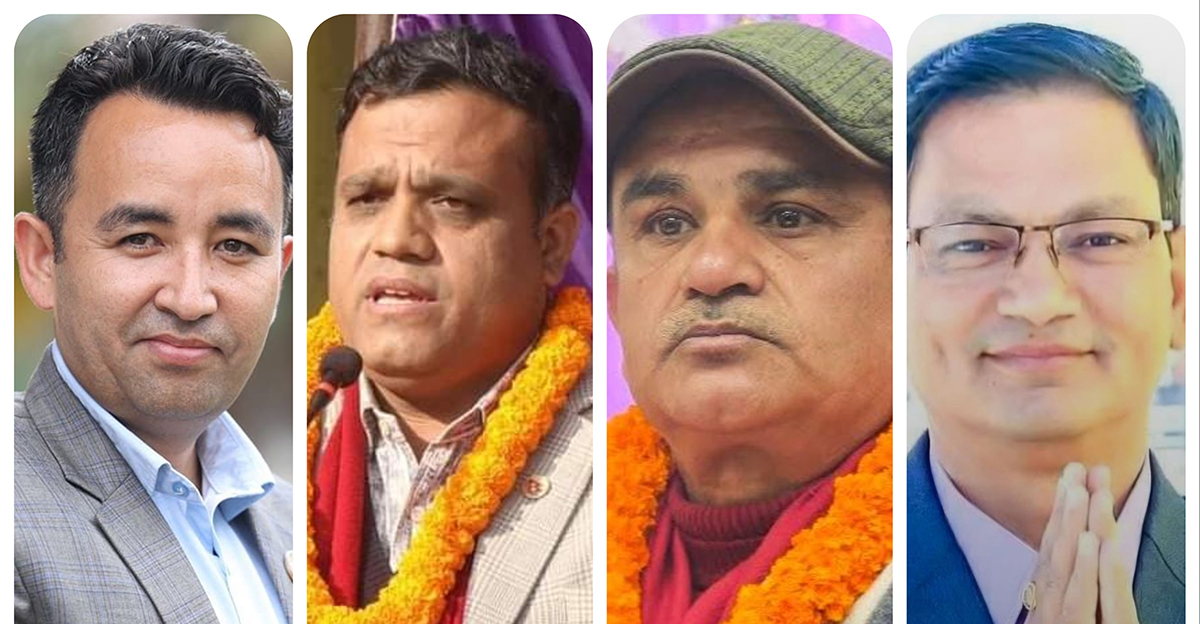
NC is fielding a candidate in Kathmandu-7 for the first time since 2013. In 2017, NC supported Bikram Bahadur Thapa of RPP who received 10,079 votes. The alliance of NC, Maoist Center, and Unified Socialist supported Manushi Yami Bhattarai in 2022. This time, NC has fielded Pramod Hari Guragain, a central committee member and former vice president of the Nepal Student Union who previously taught at Saraswati Multiple Campus.
Nepali Communist Party (NCP), formed after uni9fication of Maoist Center, Unified Socialist and other parties, has fielded Basanta Manandhar, a two-time provincial assembly member who also resigned from his provincial seat to run for federal parliament.
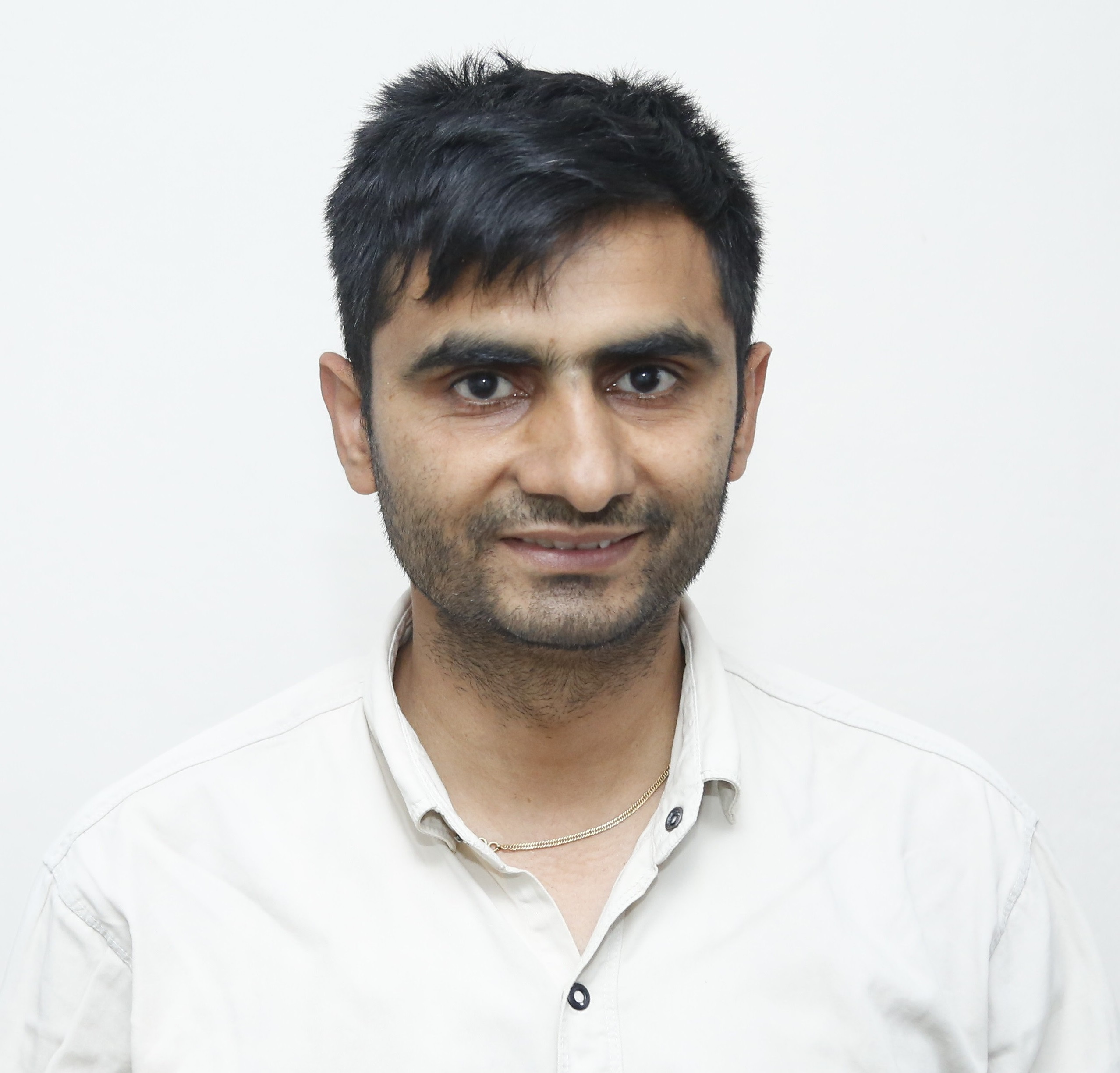
Ganesh Parajuli is running again for RSP. Confident after his previous wide-margin victory and the recent by-election win in Kathmandu-16, Parajuli believes the citizens are happy with the efficient services and infrastructure initiatives provided since the local by-election win. He expressed confidence that the nationwide wave of change and the evaluation of his two-and-a-half years of work will lead to a victory.
Other candidates include Lal Kumar Lama (RPP), Baburam Lama (JSP Nepal), and Bimala Lama (Ujyalo Nepal).
Analysis of the proportional representation (PR) votes from the last election shows a significant transfer of NC and UML votes to RSP. In the last election, RSP received 10,588 PR votes, UML 6,299, NC 5,040, RPP 4,629, Unified Socialist 2,278, Hamro Nepali Party 1,672, Maoist Center 1,668, and JSP 1,407.
In the provincial assembly elections, however, UML received the highest number of votes at 7,676, followed by RPP (7,215), NC (5,622), Hamro Nepali Party (3,475) AND Unified Socialist (3,192).