During Nepal's transition toward a republic, I worked as an interpreter at the Indian Embassy in Kathmandu, including during the historic 2008 Constituent Assembly elections. One observation from those years has stayed with me. Nepali political leaders would sometimes wait for hours to meet Indian diplomatic officials, even as some of the same political forces publicly denounced Indian interference and championed national sovereignty.
There was nothing inherently contradictory about engaging Indian diplomats while criticizing Indian policies. Diplomacy often requires precisely that. What struck me was the political significance attached to access to the Indian establishment.
Nearly two decades later, that experience raises a more fundamental question: Why has Nepal's political class so often treated its relationship with India as a source of political legitimacy, even while invoking national sovereignty to assert its independence?
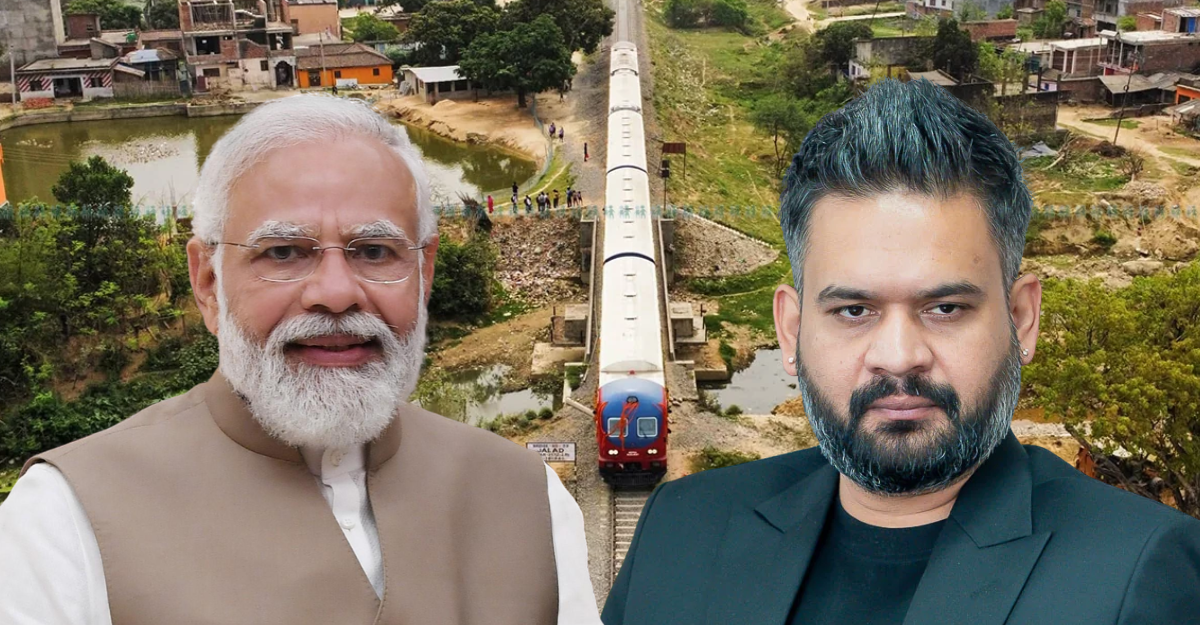
Prime Minister Balendra Shah’s just-concluded visit to India brings this question into renewed focus. His government enjoys substantial public support and an opportunity to reconsider longstanding diplomatic practices.
The challenge is not simply to improve relations with India, but to reconsider how Nepal understands and exercises its own diplomatic agency. Differences in economic and geopolitical power are undeniable, but they do not necessarily determine the terms of bilateral engagement. Power asymmetry is a structural reality; the extent to which it translates into diplomatic deference also depends on political choices and institutional capacity.
Beyond defiance and deference
Finance Minister Swarnim Wagle recently argued in New Delhi that the era of defining Nepali nationalism through anti-Indian sentiment was over. His criticism has merit. Nepali political parties have frequently exploited nationalist grievances for domestic legitimacy while failing to address the economic vulnerabilities underlying them.
But abandoning confrontational nationalism does not automatically produce independent diplomacy. There is an equally problematic tradition of treating India's goodwill as an achievement in itself.
These seemingly opposing tendencies share an assumption: Nepal's political identity must be established through its relationship with India, whether by opposing it or seeking its approval.
Both obscure the more consequential question of what Nepal can negotiate and accomplish.
India possesses vastly greater economic, military, and diplomatic resources. Nepal depends heavily on Indian markets, transit infrastructure, and energy networks. Yet asymmetry does not mean that one country possesses all the leverage while the other possesses none.
The open border, interconnected communities, shared rivers, and expanding electricity trade make the relationship mutually consequential, although not equally so.
India's security concerns are legitimate, particularly given its strategic relationship with China. Nepal should take them seriously. But geographical proximity also creates responsibilities for India to recognize Nepal's development priorities.
If proximity requires Nepal to respect India's security sensitivities, it equally requires India to take Nepal's economic vulnerabilities seriously. Reciprocity cannot operate in only one direction.
When development depends on another country's decisions
Consider Nepal's international airports at Bhairahawa and Pokhara. Their commercial prospects remain constrained partly by unresolved arrangements for additional air-entry routes through Indian airspace, despite requests extending back to 2014.
India has raised aviation-security and operational concerns. These cannot simply be dismissed. Yet more than a decade of negotiations raises questions about whether technically feasible solutions have been pursued with sufficient urgency.
The agreement reached during Shah’s visit to allow two-way traffic along the Kathmandu-Bhairahawa-Lucknow air route represents welcome progress, although technical arrangements remain to be finalized. India has also reportedly sought access to portions of Nepali airspace for its own aviation connectivity.
This illustrates a neglected possibility: geographical interdependence can create reciprocal bargaining opportunities. Such opportunities do not automatically constitute leverage; they must be translated into credible proposals and negotiated commitments.
Hydropower reveals a different problem.
India has opened significant opportunities for Nepali electricity exports. Yet market access remains governed by approval arrangements that raise questions about Nepal's freedom to choose development partners.
The domestically financed 456-megawatt Upper Tamakoshi project has not received Indian export approval. Chinese participation in its construction has reportedly complicated the issue, although the precise reasons for withholding approval require greater transparency.
The question extends beyond one project. If electricity exports depend partly on the nationality of companies involved in developing Nepal's infrastructure, what happens to Nepal's ability to make independent investment and procurement decisions?
Pancheshwar illustrates a third problem. Thirty years after the Mahakali Treaty, disagreements over water entitlements, irrigation benefits, and cost-sharing continue to obstruct the multipurpose project.
These are substantive disputes involving competing interests, not simply evidence of Indian unwillingness. Decades of negotiations without resolution raise serious questions about the capacity of bilateral institutions to reconcile those interests.
The three cases reveal different mechanisms: regulatory dependence in aviation, conditional market access in electricity, and contested benefit-sharing in water governance.
Together, they expose a common predicament. Nepal can invest in infrastructure, develop resources, and negotiate agreements, yet realizing their economic value often depends on decisions beyond its territory.
This is not merely a diplomatic inconvenience. It concerns the practical meaning of economic sovereignty.
Sovereignty is more than territorial control
Nepal's nationalist imagination has historically emphasized territorial integrity and resistance to external interference. These concerns remain indispensable. Unresolved disputes involving Kalapani, Limpiyadhura, Lipulekh, and Susta cannot be dismissed as obsolete nationalism.
But territorial sovereignty alone offers an incomplete understanding of contemporary power.
A country may control its rivers yet depend on another country's market to realize their economic value. It may construct airports within its borders yet depend on external aviation arrangements to make them viable. It may possess formal trade rights yet lack the productive capacity and regulatory access necessary to benefit from them.
Sovereignty is therefore not merely the legal authority to make decisions. It is also the practical capacity to shape the relationships through which those decisions acquire economic meaning.
Nepal's political economy illustrates this transformation. Millions of Nepalis sustain livelihoods across international borders, and remittances remain fundamental to the national economy. Nepal's economic life is already profoundly transnational.
Yet its foreign policy discourse often remains constrained by an understanding of national power defined primarily through territorial size and geographical vulnerability.
The more consequential question is how Nepal can govern its interdependence rather than merely endure it.
India's regional leadership faces its own test
India's investments in cross-border railways, petroleum pipelines, electricity transmission, and other infrastructure demonstrate that bilateral relations cannot be reduced to obstruction or interference.
The newly inaugurated Janakpur-Ayodhya railway service illustrates the possibilities of cooperation grounded in shared cultural and economic interests.
But regional leadership requires more than financing projects or maintaining political influence.
For a country aspiring to greater international prominence, an important measure of neighborhood diplomacy is whether smaller neighbors experience cooperation as an expansion of their economic choices.
India's concerns about Chinese involvement in Nepal are understandable. Yet viewing Nepal's development partnerships primarily through geopolitical competition risks making its economic choices dependent on rivalries it does not control.
Nepal should not romanticize China as an automatic counterweight either. Chinese-financed infrastructure raises its own questions about debt, commercial viability, and political influence.
The objective should not be artificial equidistance between two vastly different relationships. It should be the ability to evaluate each partnership according to Nepal's development priorities without surrendering independent judgment to either neighbor.
Nepal's greatest constraint may be political
It would be convenient to attribute Nepal's predicament entirely to Indian policies. It would also be misleading.
Successive Nepali governments have failed to develop coherent negotiating strategies, maintain institutional continuity, and strengthen domestic productive capacity. Political instability has repeatedly weakened the implementation of agreements.
This is why Shah's political mandate matters, but also why it should not be exaggerated.
Public support can strengthen a government's authority to articulate national priorities. But electoral legitimacy is not equivalent to diplomatic leverage. That requires technical preparation, credible alternatives, domestic consensus, and the capacity to sustain negotiations beyond individual leaders.
The unresolved Eminent Persons Group report, the unfinished review of the 1950 Treaty, and longstanding development disputes require precisely such institutional engagement.
While India's announcement of Rs 240 billion in development assistance is welcome, the success of the visit should not be measured primarily by assistance packages, ceremonial declarations, or the number of projects inaugurated.
A more meaningful outcome would be transparent approval procedures, credible implementation timelines, and mechanisms capable of resolving disputes without repeatedly returning to political deadlock.
Nepal should also be willing to scrutinize its own development choices. Poorly planned infrastructure cannot become economically viable simply through more favorable Indian policies. Independent diplomacy requires domestic competence as much as external assertiveness.
The power Nepal has yet to exercise
Looking back on my years at the Indian Embassy, what remains troubling is not that Nepali leaders engaged Indian officials. It is the political culture in which proximity to the Indian establishment could appear to confer significance at home.
That habit reflects a deeper failure to distinguish acknowledging unequal power from accepting political subordination.
Nepal cannot negotiate as though it possesses India's material capabilities. But it need not negotiate as though its interests carry less legitimacy.
Its geography creates vulnerabilities, but also mutual interests. Its economic dependence constrains choices, but does not eliminate bargaining opportunities. Its small size limits certain forms of power, but does not predetermine the quality of its diplomacy.
Swarnim Wagle is right to challenge the political exploitation of anti-India nationalism. But Nepal must also abandon the equally damaging habit of mistaking diplomatic accommodation for statesmanship.
Prime Minister Shah's visit has opened an opportunity to move beyond both traditions. The real test will not be whether India recognizes Nepal as an equal in material power, but whether Nepal can negotiate with the confidence, preparation, and institutional capacity necessary to defend its interests.
Nepal does not need to become more powerful than India to defend its interests. It needs to stop treating the difference in their power as a reason to underestimate its own.
(Hari KC, PhD, is a research fellow at Toronto Metropolitan University and a lecturer in peace and conflict studies at Conrad Grebel University College, University of Waterloo. He is also a fellow at the Balsillie School of International Affairs. His research focuses on migration, global governance, international political economy, and South Asian politics.)