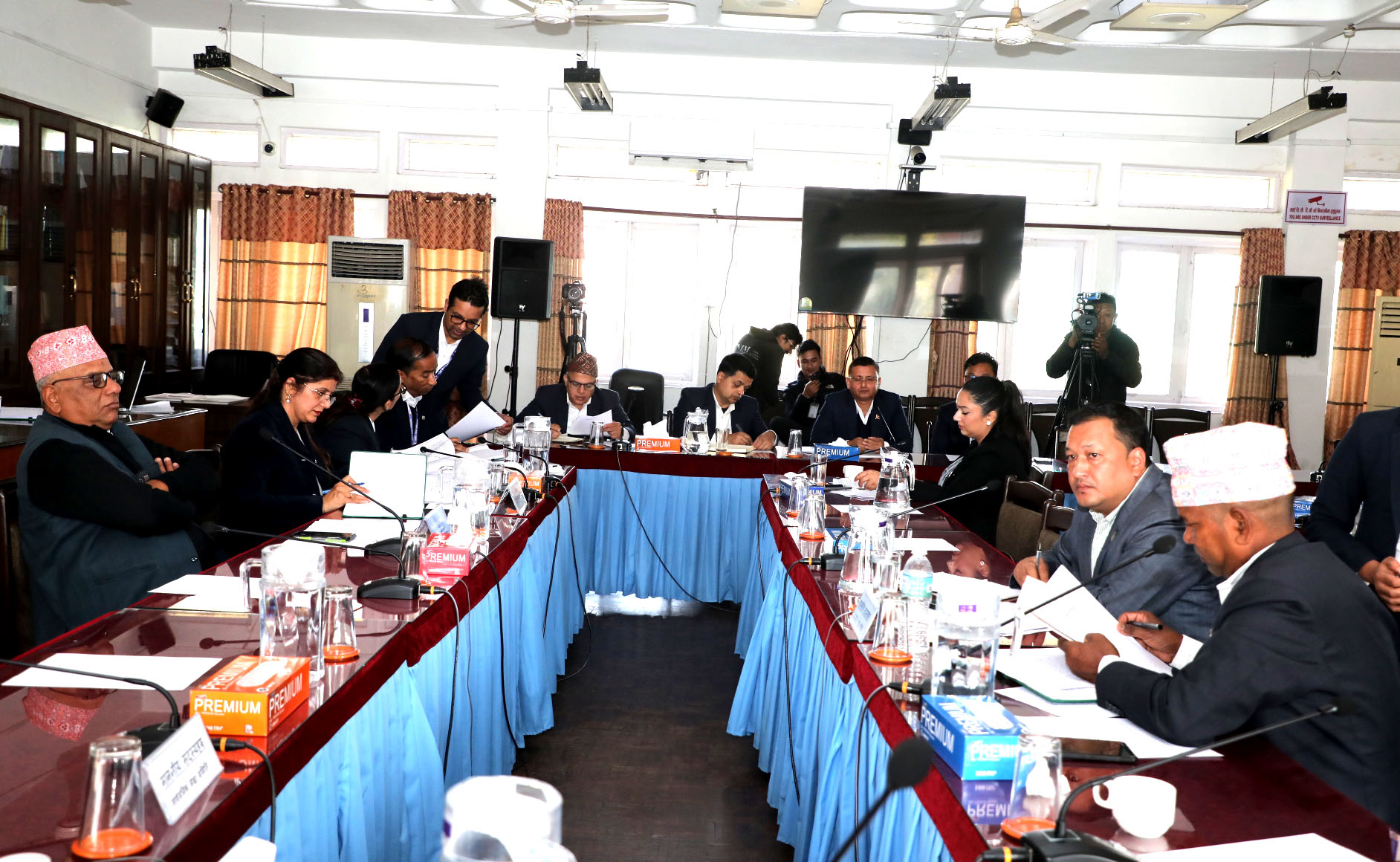
The Public Accounts Committee of the House of Representatives has directed the Ministry of Energy, Water Resources, and Irrigation to submit relevant documents within seven days regarding the cancellation of the contract for the Sunkoshi-Marin Diversion Multipurpose Project.
During a committee meeting, lawmakers Manish Jha and Khusbu Oli questioned the reasons behind the contract cancellation, delays in the project, and whether there had been any political or administrative interference. They called for an investigation and legal clarification regarding the matter.
Lawmaker Oli questioned reports and social media discussions suggesting that Dinesh Rajouria, director general of the Department of Water Resources and Irrigation, had visited the Prime Minister’s Office in connection with the decision to cancel the project contract.
"Did you visit the Prime Minister's Office or not? I want an answer," she said.
In response, Director General Rajouria confirmed that he had visited the Prime Minister's Office but denied experiencing any interference.
"I did visit the Prime Minister's Office, but I did not feel that there was any interference," he said.
During the meeting, lawmaker Jha sought a clear explanation for the suspension of work on the Sunkoshi-Marin project, noting that it is a national-pride multipurpose project.
The project aims to provide irrigation facilities to approximately 180,000 bighas of farmland across Bara, Rautahat, Sarlahi, Mahottari, and Dhanusha districts. It also aims to generate 28 megawatts of electricity.
Pointing out that the 13.3-kilometer tunnel had already achieved a breakthrough in May 2024, Jha questioned why the project had failed to gain momentum even after the completion of the tunnel excavation.
He demanded clear answers on why the project had stalled, why the contract had to be terminated, and how the project would move forward.
"Madhesh does not have mountains to showcase, nor does it have sufficient resources for large-scale hydropower generation. The hope of providing irrigation to the available cultivable land is tied to this very project," he said.
Jha warned that the project's uncertainty could affect plans to provide irrigation to hundreds of thousands of bighas of farmland in Madhesh. He urged the authorities to clarify the project's future action plan and completion deadline.
Simply canceling the contract, he argued, would not resolve the problem.
At the meeting, Sushil Acharya, joint secretary at the Ministry of Energy, said that although progress on tunnel construction had been satisfactory, construction of the headworks had been delayed.
According to him, preparations are underway to complete the necessary procurement procedures, invite fresh bids, and move the work forward through a new contract process.
He said that the government would not suffer major financial losses simply by terminating the existing contract and assigning the work to another construction company. He also informed the committee that procurement-related authority had been delegated to the department.
Similarly, Director General Rajouria informed the committee that Rs 1.2 billion had been recovered through the bank guarantee process following the contract termination.
Lawmakers also raised questions about whether the delays and problems in the project had resulted from shortcomings on the part of the contractor or failures on the government's side.
The committee directed the ministry to submit, within seven days, all relevant documents concerning the reasons for canceling the contract, the decision-making process, the legal basis for the decision, and the project's future action plan.